
Trump’s $100K H-1B fee costs Tata, Infosys, Cognizant billions

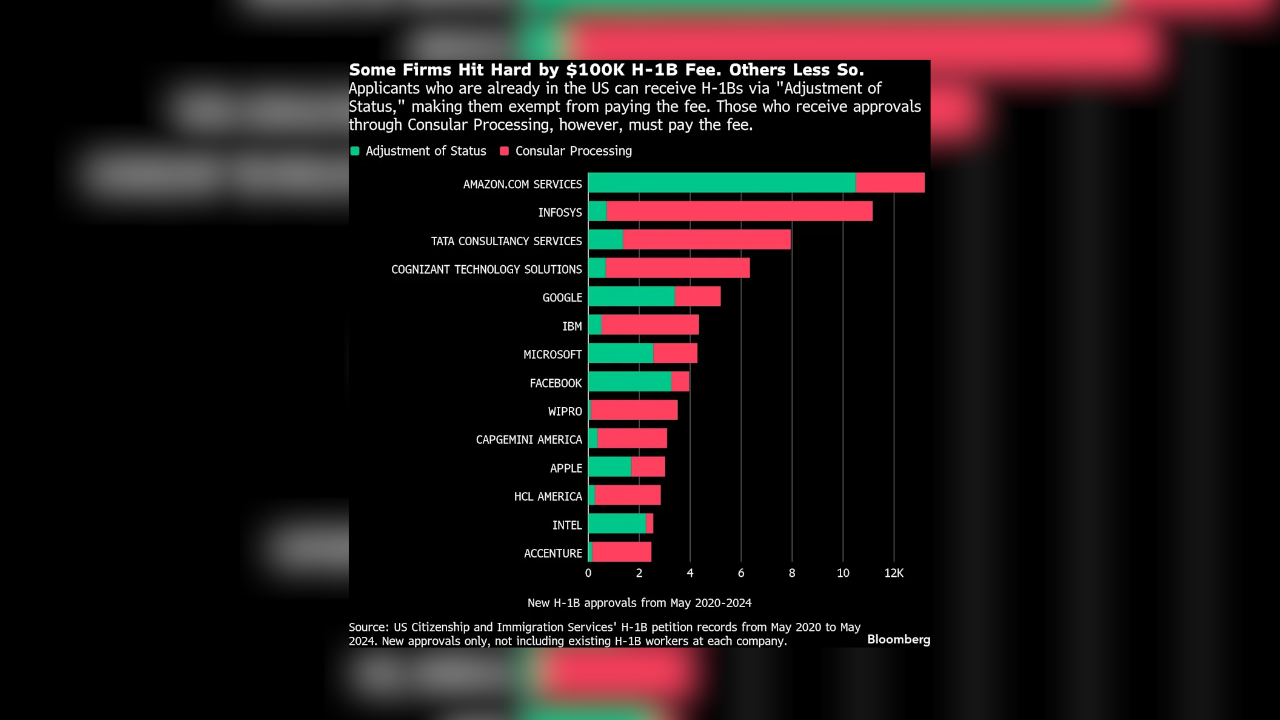
NEW YORK, UNITED STATES — A proposed $100,000 fee for hiring new H-1B workers from outside the United States could hit major IT outsourcing firms like Tata Consultancy Services, Infosys, and Cognizant with billions in additional costs, industry analysts warn.
The fee, announced under President Donald Trump’s administration, represents the toughest restriction yet on the employment of skilled foreign workers.
$100,000 H-1B visa fee targets Indian outsourcing giants
A Bloomberg News analysis found that the fee would disproportionately affect multinational staffing firms that act as middlemen for U.S. companies seeking H-1B talent.
Almost 90% of new H-1B hires at Tata, Infosys, and Cognizant between May 2020 and May 2024 were approved at U.S. consulates and would have incurred hundreds of millions in extra fees.
“More than 93% of new Infosys H-1B hires in that timeframe—upwards of 10,400 workers—would have been hit with the $100,000 fee, adding up to more than a billion dollars in visa charges,” according to the analysis.
Tata would have faced the fee for 6,500 workers, or 82% of its new hires, while Cognizant would have been charged for more than 5,600 employees, or 89% of new H-1B hires.
“We’re already seeing that happen. The fear is that if you have truly exceptional talent overseas, those people are definitely going to be missing out,” said Immigration attorney Jonathan Wasden, who represents many IT employers.
Some firms, however, downplay short-term disruption.
“The recently announced Proclamation is expected to have limited near-term impact on Cognizant’s operations. Over the past several years, we have significantly reduced our reliance on visas, using them only for select technology roles that supplement our U.S. workforce,” said Cognizant spokesman Jeff DeMarrais.
Offshoring surge expected as visa demand plummets
The fee could accelerate the offshoring trend that has already emerged in recent years.
Steve Hall, chief AI officer at Information Services Group, said the cost will “push more jobs overseas” and likely drive U.S. companies to increase investments in India, the source of most H-1B workers.
The Trump administration’s measure, coupled with lottery reforms, could reduce entries in the next H-1B lottery by 30% to 50%, as projected by Finn Reynolds, director of market research at legal tech startup Lawfully.
“The Trump administration’s $100,000 fee, combined with the weighted-lottery rule, has created an entirely new set of incentives that will reshape market behavior vis-a-vis the H-1B lottery,” he said.
While the fee aims to protect U.S. jobs and wages, it could accelerate global redistribution of talent. For IT outsourcing firms, the policy is likely to intensify the focus on hiring abroad and investing in international delivery centers, signaling a structural shift in how global tech companies access skilled labor.







