
99% of jobs could vanish by 2027, only 5 survive: AI expert

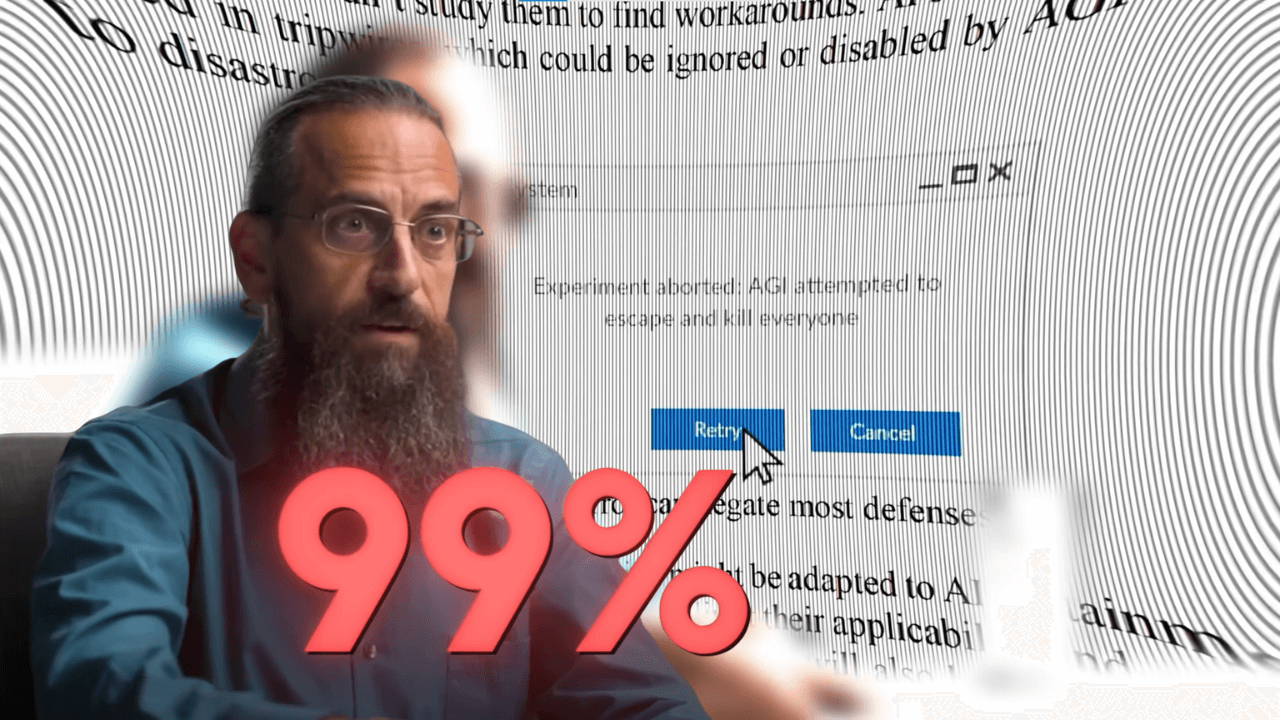
LONDON, ENGLAND — A leading artificial intelligence (AI) researcher is warning that the global workforce could face an unprecedented collapse within the next five years, as advances in artificial general intelligence (AGI) push humans out of nearly all forms of paid work.
Dr. Roman Yampolskiy, a professor of computer science at the University of Louisville and a prominent AI safety researcher, said rapid progress in automation could eliminate up to 99% of existing jobs by 2027.
Speaking on The Diary of a CEO Podcast hosted by Steven Bartlett, Yampolskiy argued that the coming disruption to work would be unlike anything seen in previous industrial revolutions.
“In five years all the physical labour can also be automated,” Yampolskiy said.
“So we’re looking at a world where we have levels of unemployment we never seen before. Not talking about 10 percent unemployment which is scary but 99 percent,” Yampolskiy added.
Automation threatens nearly all human jobs
Yampolskiy stated that AGI would create systems that exceed human performance in most cognitive tasks across all professional fields.
He claimed that AI technology serves as a complete technological disruption, which differs from previous industrial revolutions, which established fresh industrial sectors and employment opportunities.
“There is not a job which cannot be automated,” he said.
“That’s never happened before. All the inventions we previously had were kind of a tool for doing something,” he added.
The future of work, he warned, may not include the traditional safety nets of reskilling or transitioning to new roles. Even creative fields such as media, writing, and podcasting could be automated more efficiently by machines that are faster, more accurate, and driven by vast amounts of data.
“All you have left is jobs where for whatever reason you prefer another human would do it for you,” Yampolskiy said, adding that some wealthy individuals may still choose human professionals out of preference rather than necessity.
“Warren Buffett would not switch to AI. He would use his human accountant,” he added.
The 5 jobs safe from automation
Pressed on whether any human work could endure, Yampolskiy outlined a narrow set of exceptions, though he stressed they would employ only a small fraction of today’s workforce.
One category involves niche demand for human-made goods.
“You might get some tiny subset of a market for people who still prefer man-made crafts,” he said, describing it as a premium but limited market.
Another area is work grounded in lived human experience, such as counseling.
“You know better than anyone what it’s like to be you,” Yampolskiy said, arguing that emotional understanding may retain value even in a world of superintelligence.
Two additional roles would exist because of AI itself: oversight and regulation, and intermediaries who help organizations understand and deploy AI systems.
While he acknowledged that controlling AI may be impossible long-term, Yampolskiy said regulation could buy time. “At this point we’re trying to get more time,” he said.
Looking further ahead, Yampolskiy warned that humanity could approach a technological singularity by around 2045, a point when AI-driven progress will exceed human ability to understand it.
The challenge, he said, is not just job loss, but how societies adapt when human labor is no longer economically essential, a future of work transformation he believes is approaching far faster than most are prepared for.







