
UK firms adopt 4-day week after successful trial

LONDON, UNITED KINGDOM — A new study reveals that most companies in the United Kingdom participating in a six-month trial of a four-day workweek in 2022 have made it permanent.
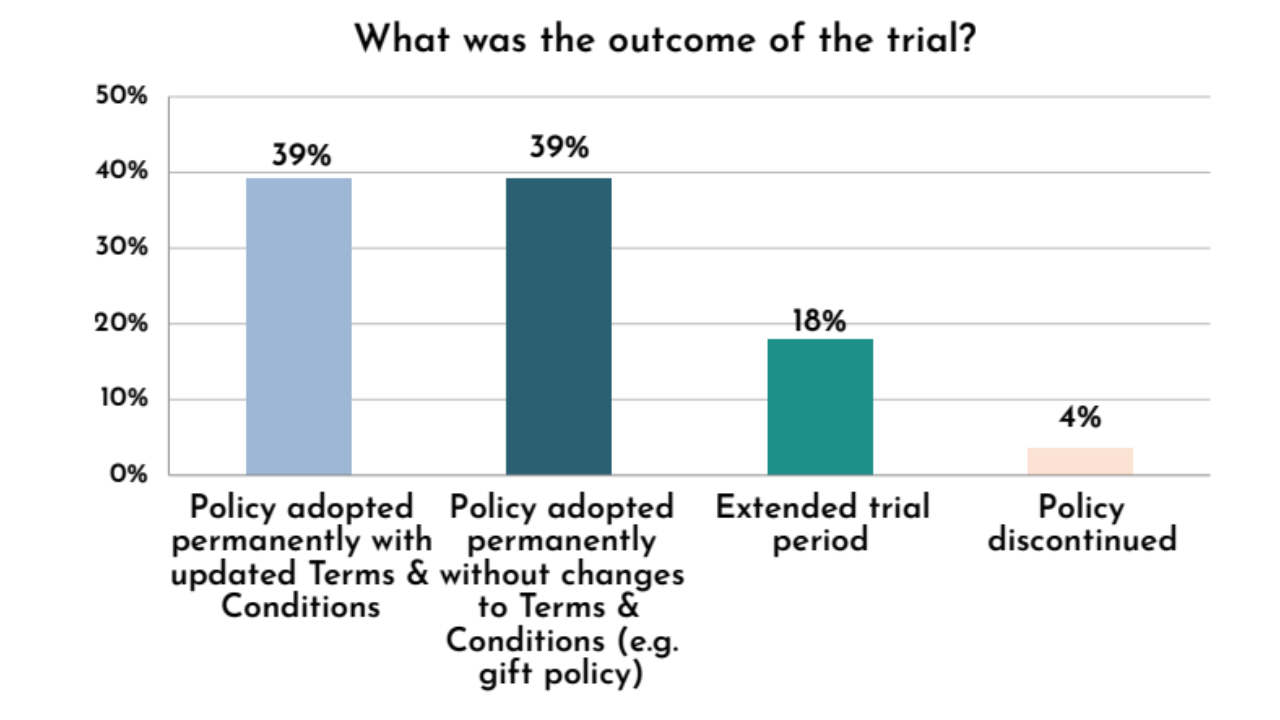
The research, conducted by think tank Autonomy, found that of the 61 companies in the trial, 89% still have a four-day week policy in place one year later. Over half, or 51%, have formally made the shortened week permanent.
The companies involved spanned a range of industries, including marketing/advertising, arts/entertainment, finance, healthcare, manufacturing, social work, architecture, and professional services, among others.
On average, they reduced employee working hours by 6.6 hours to reach an average 31.6-hour week, usually through an additional day off.
The study found overwhelmingly positive impacts from the four-day week, with 55% of managers rating it as very helpful for their organization. Benefits cited included 82% reporting positive effects on staff wellbeing, 50% reducing staff turnover, and 32% improving recruitment.
Employees also reported it benefited their personal lives (96%), made them perform better at work (86%), and reduced their stress levels (41%).
🚨 NEW – 'Making It Stick: The UK Four-Day Week Pilot One Year On' 🚨
Our new follow-up study shows that 1 year on from our groundbreaking #4dayweek pilot, participating companies have found significant & lasting success 📈
Thread of key findings 👇 https://t.co/WPvqbIIBSm pic.twitter.com/iFcZYo154j
— The Autonomy Institute (@Autonomy_Inst) February 21, 2024
Some challenges were working with external stakeholders on different schedules and uneven implementation between teams. Keys to success were clear communication of the policy, co-design between staff and management, and adapting work processes.
“In this study, it has been clear the four-day week is not just a flash in the pan: companies around the UK have successfully been ‘making it stick’. As a result, we look forward to more and more organizations bringing the benefits of shorter working hours to their workplaces,” the report said.
Aside from the UK, Germany also launched a major six-month trial of a four-day workweek across 45 companies, allowing employees to work one less day per week on full pay.
Around 31% of European employees are willing to move to another country just to have a four-day workweek, according to strategic insight agency Opinium Europe.
Although no country has fully adopted a four-day workweek, some are experimenting with the arrangement, including the United States, Australia, and Japan, among others, according to 4dayweek.io.
Related news
- Affordable workforce housing thrives in select U.S. cities · 1 Mar
- U.S. housing shortage reaches 7 million homes – Realtor.com · 1 Mar
- Banks grapple with remote work policies divide · 6 Mar
Disclosure: Outsource Accelerator uses AI tools in the backend of its editorial workflow. Every article is reviewed and verified by a human editor before publication.
Stay ahead of the outsourcing industry. Join thousands of business leaders who rely on Outsource Accelerator for the news, trends, and expert insights that matter. Subscribe to our free newsletter and never miss an update.








