
U.S. call center bill threatens Belize’s $150Mn BPO sector

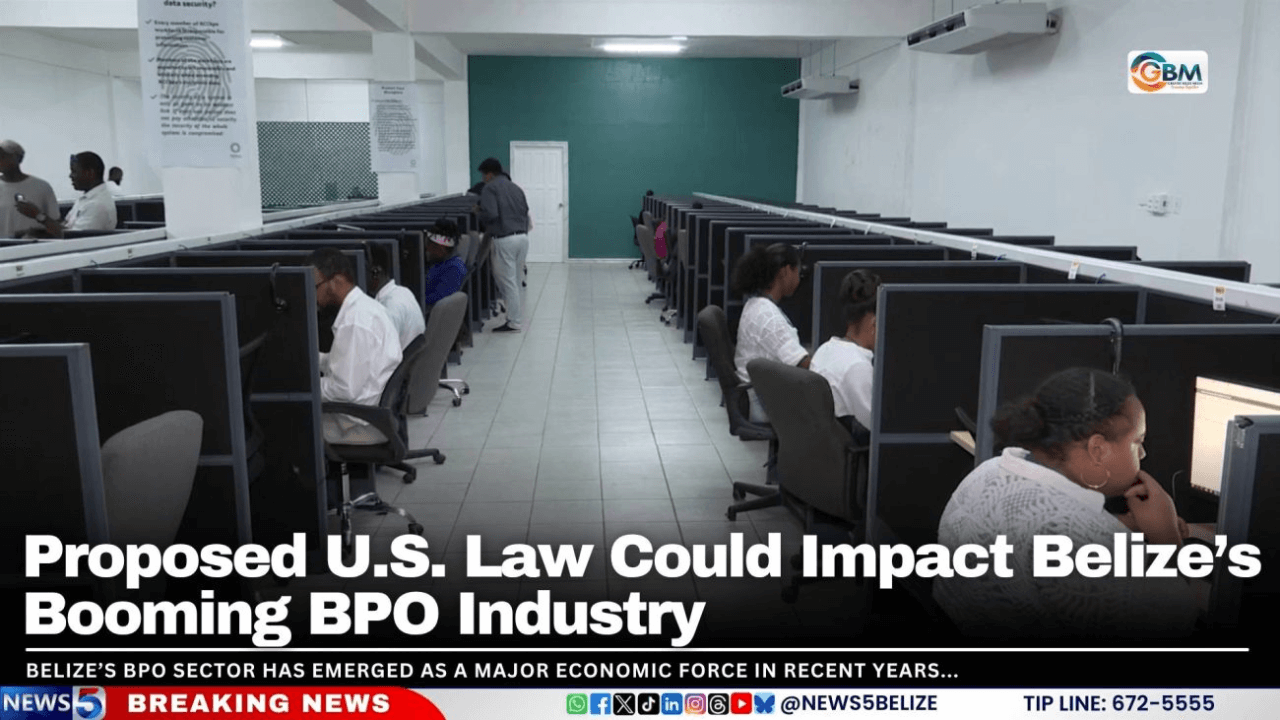
BELIZE CITY, BELIZE — A proposed United States Senate bill could disrupt Belize’s thriving business process outsourcing (BPO) sector by restricting or penalizing American companies that offshore call center jobs.
The Keep Call Centers in America Act of 2025—backed by bipartisan senators—would impose strict disclosure rules, block federal contracts for offshore operators, and jeopardize Belize’s BPO industry.
Risk in Belize’s BPO growth
The bill, introduced by Senators Ruben Gallego (D-AZ) and Jim Justice (R-WV), would force U.S. companies to disclose offshore relocations 120 days in advance and make them ineligible for federal grants—measures that could deter outsourcing to Belize’s cost-efficient, English-speaking workforce.
According to Greater Belize Media, with annual salaries totaling $150 million and 16,000 jobs at stake, the proposed law may stifle an industry that has thrived on serving American clients.
Belize’s BPO sector has grown by offering 60% cost savings, cultural alignment, and favorable time zones for U.S. and Canadian firms.
However, if American companies face penalties for offshoring, Greater Belize Media says the country could see reduced investment, stalled job creation, and pressure to pivot to non-U.S. markets.
Industry experts have warned that federal contract restrictions—mandating all government-related call center work remain in the U.S.—could deliver the sharpest blow, not only to Belize’s outsourcing firms but to others as well.
“Trying to stop outsourcing is detrimental because it lessens options for business owners, especially startups, to grow their business efficiently via accessing talent across the globe,” stressed Michael Bian, Chief Executive Officer (CEO) of Six Eleven, speaking exclusively to Outsource Accelerator (OA).
Economic adjustments amid outsourcing policy shifts
With the threat of U.S. policy changes, Greater Belize Media projects that the Belize BPO industry might be forced to broaden its client base and requirements for the competitiveness of its workforce.
Due to these shifts, Belizean companies might need to find new markets in Europe, Australia, or any other region that will not be as severely affected by the changes made to the U.S. legislation.
The improvement of training programs and the increase of services, such as AI-based support of higher value, could reduce losses, too.
Other operators have already taken steps to ensure stricter regulations by making their operations more transparent and technologically prepared, which includes sharing the locations of their agents as required by another rule in the bill.
Yet, the long-term viability of Belize is in their hands, their ability to provide value that cannot be matched, and this value consists of other elements, such as a talented workforce, as well as solutions besides cost reductions.
Related news
- U.S. praises India’s arrests in bust of call center scamming Americans · 12 Aug
- Conduent shows mixed Q2 2025 results, EBITDA up 54% amid revenue dip · 11 Aug
- Miami hotel’s Indian virtual front desk ignites job outsourcing debate · 9 Aug
Disclosure: Outsource Accelerator uses AI tools in the backend of its editorial workflow. Every article is reviewed and verified by a human editor before publication.
Stay ahead of the outsourcing industry. Join thousands of business leaders who rely on Outsource Accelerator for the news, trends, and expert insights that matter. Subscribe to our free newsletter and never miss an update.








