
U.S. states struggle with cuts to federal health care funding

VIRGINIA, UNITED STATES — The Trump administration’s sweeping cuts to federal health care spending are sending shockwaves through U.S. states, leaving leaders scrambling to plug funding gaps and brace for deeper reductions in the years ahead.
States face steep Medicaid cuts
States are already dealing with immediate losses while facing the looming prospect of even larger cuts to Medicaid.
“They’ve already seen tens of millions of dollars cut. For example, the Trump administration is clawing back about $11 billion just in funding that was given to states to help them cope with the pandemic,” Armour told PBS.
According to KFF Health News senior correspondent Stephanie Armour, many of those dollars had been earmarked for public health programs, forcing states to cut services midstream.
Looking ahead, the administration’s “One Big Beautiful Bill Act” reduces federal Medicaid spending by nearly $1 trillion over the next decade.
That burden, Armour said, is falling squarely on state governments: “Right now you’re seeing states grappling not only with the cuts that are happening right now, but what are they going to do down the line.”
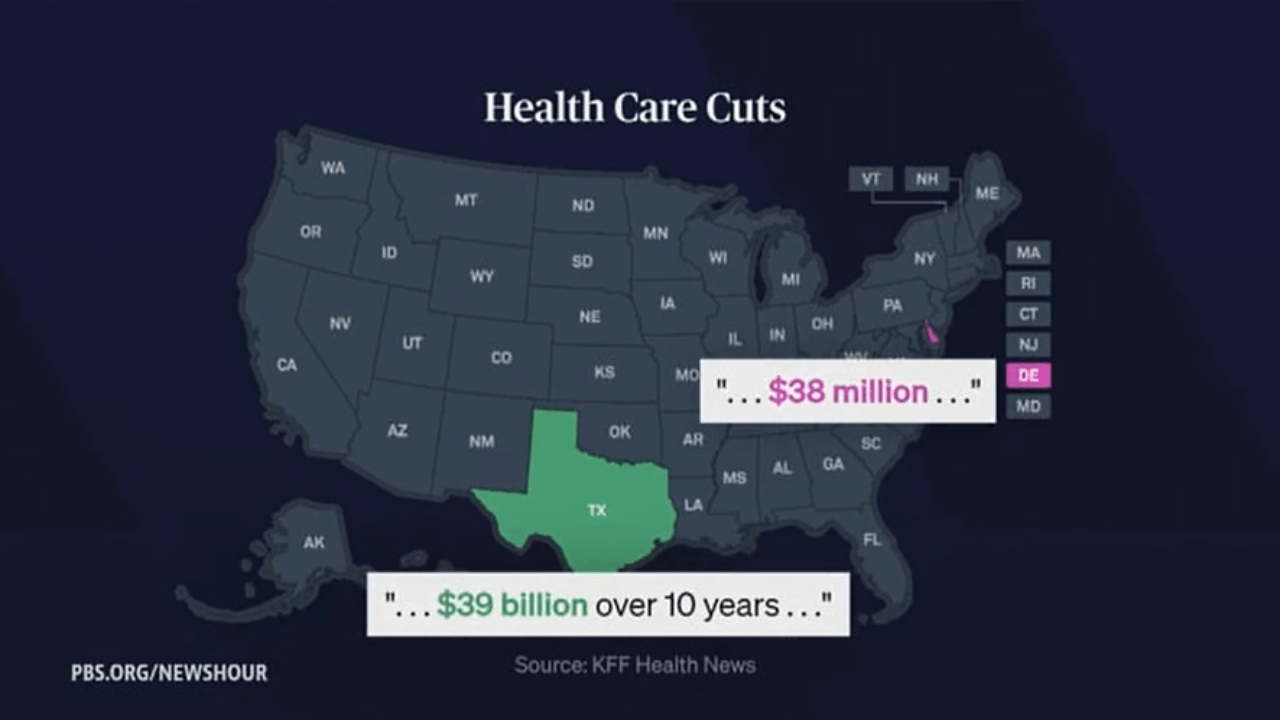
Delaware has already cut $40 million from its public health budget, and Texas anticipates losing $40 billion in Medicaid funding. Some states, such as New Mexico, are striving to mitigate the impact by establishing trust funds to maintain Medicaid.
But others, Armour noted, simply lack the resources. “For some states, there’s not much they can do. They don’t have a lot of other resources, so they’re going to have to cut programs.”
Funding cuts ripple effects
As Republicans argue that the cuts will stabilize Medicaid and enforce stricter measures against fraud, states are bracing for new federal requirements, including work rules for Medicaid enrollees, could add new layers of bureaucracy.
Armour warned that this could “cause people to drop off the roles, that they’re just not going to be able to contend with the paperwork.”
The broader consequences, she emphasized, won’t stop at Medicaid recipients. The Congressional Budget Office estimates more than 7 million Americans could lose insurance coverage.
“What happens when that occurs is hospitals, for example, they’re still required under federal law to treat anyone who comes in their emergency room, but you’re going to have more people who don’t have insurance coming in,” Armour explained.
Armour added that the change is expected to increase what is referred to as uncompensated care, leaving hospitals responsible for covering some of the costs. To fill that gap, premiums for individuals with private or employer-based insurance may rise.
As states work to manage the fallout, the debate continues over whether these cuts signal much-needed reform or a troubling step back in support for vulnerable communities.
What is clear is that the effects will ripple across the country, touching millions of Americans, regardless of whether they have insurance.
Related news
- U.S. Senate passes bill cutting Medicaid, threatening rural hospitals · 9 Jul
- Mass General Brigham to cut jobs amid $250Mn deficit · 14 Feb
- Rural telehealth needs innovation beyond technology, experts say · 23 Oct
Disclosure: Outsource Accelerator uses AI tools in the backend of its editorial workflow. Every article is reviewed and verified by a human editor before publication.
Stay ahead in healthcare outsourcing. Join thousands of healthcare and business leaders who rely on Outsource Accelerator for the news, trends, and expert insights shaping medical BPO and the future of care delivery. Subscribe to our free newsletter and never miss an update.








