
65% of U.S. workers stuck in ‘ghost growth’: MyPerfectResume survey

GUAYNABO, PUERTO RICO — A new survey by MyPerfectResume reveals that 65% of United States employees are experiencing “ghost growth”—the illusion of career advancement without promotions, raises, or real authority.
The survey, which polled 1,000 employed U.S. adults using Pollfish on August 7, 2025, highlighted rising frustration, burnout, and turnover among workers who say employers are offering performative growth instead of meaningful progress.
Social and workplace pressures fuel illusion of progress
This refers to career progress in name only, where employees assume more responsibilities but experience no promotions, raises, or increased authority.
In fact, 78% of respondents reported being assigned new duties without a corresponding raise or promotion, while only 15% received pay that matched their increased responsibilities over the past year. More than half—53%—said they had been promised promotions or opportunities that never materialized.
Actually, 78% of the surveyed individuals stated that they had been given new responsibilities without a promotion or pay increase, with only 15% receiving compensation based on their expanded role in the previous year. Over 53% of them said they had been given promotions or opportunities that never materialized.
The findings reveal a troubling disconnect between employer promises and employee realities. Sixty-six percent believe their employers engage in “growth theater,” where companies appear to support career development but fail to deliver tangible outcomes.
For 49% of respondents, career plateaus are being masked by superficial opportunities. The mismatch between expectations and reality has left many employees demoralized, with 35% stating that they have never been adequately compensated for an increased workload.
Career stagnation linked to burnout, frustration, and turnover
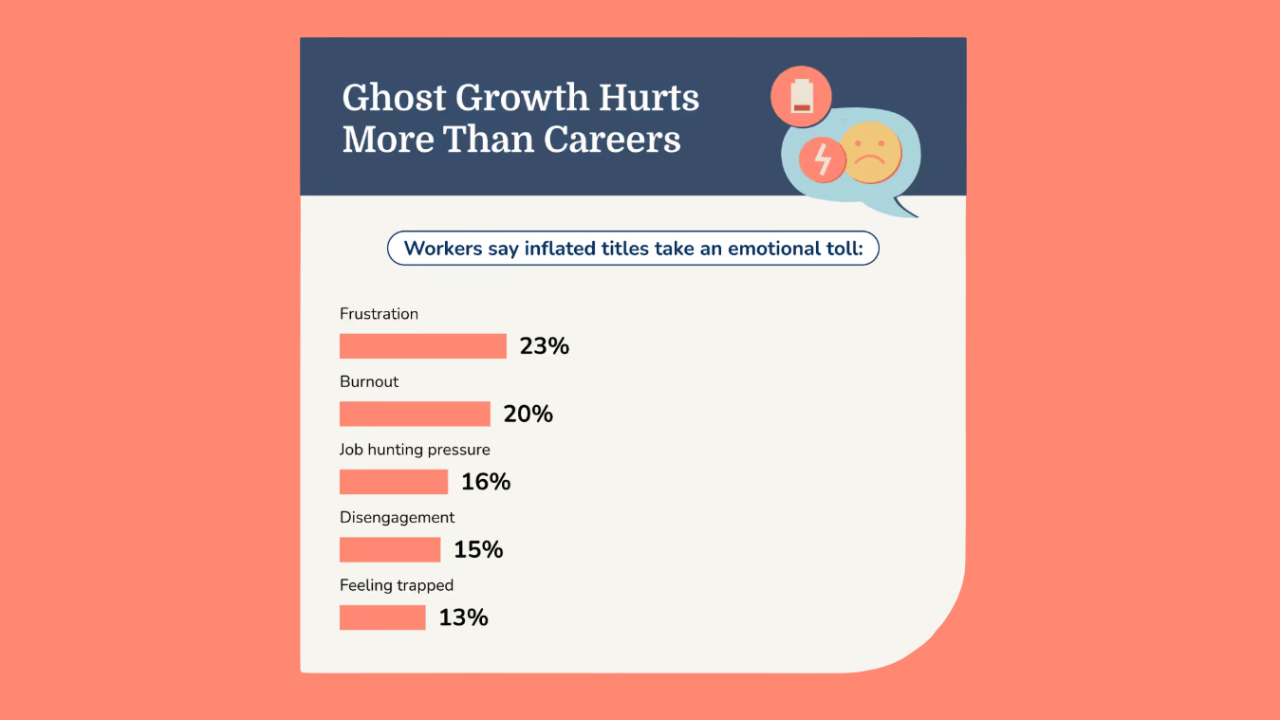
The emotional toll of ghost growth is significant, with 23% reporting that it left them frustrated and 20% experiencing burnout. Others felt driven to act—16% started job hunting, 15% became disengaged, and 13% felt trapped in their roles.
Jasmine Escalera writes that when employees internalize stalled advancement as personal failure, it creates a destructive cycle of self-doubt, overwork, and exhaustion. Instead of motivating staff, unrecognized labor erodes morale and trust.
The dissatisfaction is leading directly to higher turnover. The survey reveals that 68% of workers considered quitting due to performance issues, while 27% actually left their jobs because of these issues. Another 41% stayed but admitted they considered resigning.
For those who remained, many continued to shoulder extra responsibilities—39% reported taking on additional work in hopes of advancement that never came, with 31% describing the experience as “disappointing.”
Why employees fake career progress
The survey also highlights social and professional pressure on employees to appear as though they are advancing, even when they are not. Fifty-two percent of workers admitted that they felt compelled to appear as though they were progressing in their careers.
This pressure came from multiple sources:
- 19% said it was employer-driven
- 16% pointed to peers or social media
- 17% cited both
In a culture that glamorizes hustle, employees said standing still in their careers often felt like failure, regardless of whether their employer was at fault.
When asked what real growth should look like, workers prioritized concrete changes. A majority pointed to higher pay (27%), better work-life balance (18%), leadership roles or a clear promotion path (16%), and new skill-building opportunities (15%). Only 8% said autonomy alone defined meaningful progress, while just 1% cited “other.”
The data shows employees can easily identify genuine advancement, and they recognize when companies substitute job titles and tasks for compensation and career trajectory.
Employers risk losing talent without real change
The study warns that “growth theater” may be undermining the very loyalty employers hope to cultivate. By dangling promotions or titles without raises, companies risk accelerating attrition rather than retaining staff.
Workers increasingly see through empty gestures: 65% acknowledged that their career progress was largely for show. For employees, slow or superficial growth is not simply uninspiring—it feels deceptive, damaging trust in the employer-employee relationship.
According to the survey, what employees want is clear: higher pay, recognition, and genuine opportunities to advance. Without these, companies are at risk of losing talent to competitors who can offer more than window dressing.
MyPerfectResume’s findings make one point clear—if employers want to retain their workforce, they must stop performing and start delivering real career growth.
Related news
- 58% of U.S. employees admit to ‘ghostworking,’ Resume Now reveals · 26 Nov
- AI models pass CFA exam’s toughest level, study finds · 3 Oct
- Employee caught working on train sparks remote work debate · 3 Oct
Disclosure: Outsource Accelerator uses AI tools in the backend of its editorial workflow. Every article is reviewed and verified by a human editor before publication.
Stay ahead of the outsourcing industry. Join thousands of business leaders who rely on Outsource Accelerator for the news, trends, and expert insights that matter. Subscribe to our free newsletter and never miss an update.








