
Healthcare cyberattacks put patient safety at risk: Omega Systems

NEW YORK, UNITED STATES — Hospitals and clinics may be saving lives every day, but many are putting those same lives at risk by overlooking one critical area: cybersecurity.
Healthcare organizations continue to treat cybersecurity as a “back-office issue,” despite growing evidence that digital vulnerabilities directly threaten patient safety.
Cybersecurity still lags amid rising digital threats
Healthcare IT leaders are stretched thin by juggling rising operational costs, expanding digital services, and new privacy regulations. But Omega Systems’ findings reveal that in this balancing act, cybersecurity often falls behind.
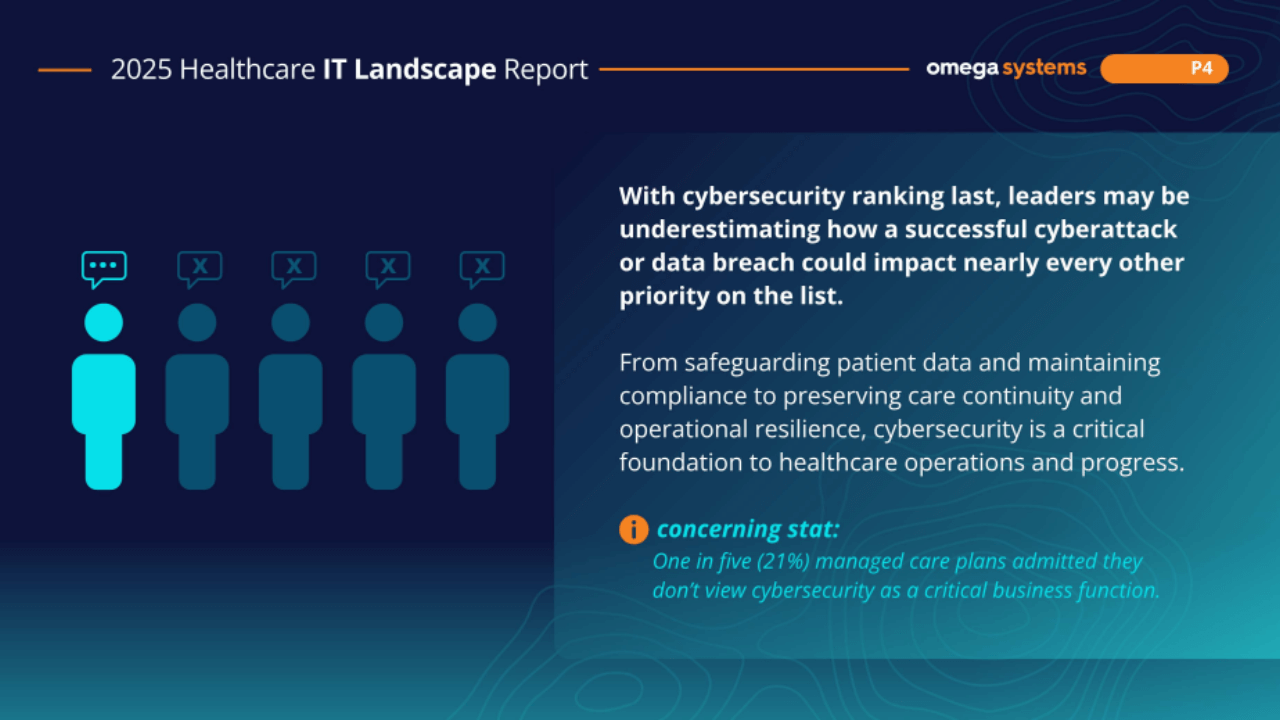
According to Omega Systems’ 2025 Healthcare IT Landscape report, “From safeguarding patient data and maintaining compliance to preserving care continuity and operational resilience, cybersecurity is a critical foundation to healthcare operations and progress,” the report warned.
The consequences are already visible. Most healthcare organizations were targeted by cyberattacks in the past year, with some being hit multiple times. The most common threats, such as phishing, ransomware, and business email compromise, don’t just disrupt IT systems; they can delay treatment, compromise records, and, in severe cases, endanger patient outcomes.
Despite these risks, many executives remain overly confident in their preparedness. Omega system reports that outdated systems, inconsistent vulnerability assessments, and insufficient response planning as key weaknesses. Staffing shortages and poor employee training further compound the problem.
Outsourcing cybersecurity becomes a vital defense strategy
As the threat landscape intensifies, outsourcing cybersecurity is becoming a crucial strategy for many healthcare organizations. The report found that those partnering with managed security service providers (MSSPs) perform better on several key measures. These include faster threat detection, stronger compliance readiness, and more frequent vulnerability assessments.
MSSPs help fill staffing and skills gaps that internal teams struggle to cover.
“MSSPs deliver robust solutions and proven expertise that allow C-Suite and IT leaders to focus on their core business functions rather than managing cybersecurity and compliance programs on their own,” the report stated, emphasizing that outsourcing isn’t just a cost-saving measure; it’s becoming essential to patient safety and regulatory compliance.
However, the report also highlights disparities. MSSP use is most common among medical practices and least common among ambulatory care centers, suggesting that smaller and more resource-constrained providers remain at higher risk.
Ultimately, Omega Systems frames cybersecurity not as a technical issue but as an extension of patient care. “More than just a safeguard, cybersecurity (when done properly) is a strategic asset that fuels growth, protects patient trust, and sets forward-thinking organizations apart,” the report concludes.
For healthcare leaders, the message is clear: cybersecurity can no longer wait for a crisis or a budget cycle to get the attention it deserves.
Related news
- Telehealth coalition urges DEA to finalize remote prescribing rules · 2 Aug
- Healthcare cybersecurity improves, but legacy risks persist – Fortified · 19 Jul
- Healthcare sector faces 130 ransomware attacks in 90 days: CYFIRMA · 27 Jun
Disclosure: Outsource Accelerator uses AI tools in the backend of its editorial workflow. Every article is reviewed and verified by a human editor before publication.
Stay ahead in healthcare outsourcing. Join thousands of healthcare and business leaders who rely on Outsource Accelerator for the news, trends, and expert insights shaping medical BPO and the future of care delivery. Subscribe to our free newsletter and never miss an update.








