
Philippines moves to shield BPO jobs from U.S. anti-outsourcing bill

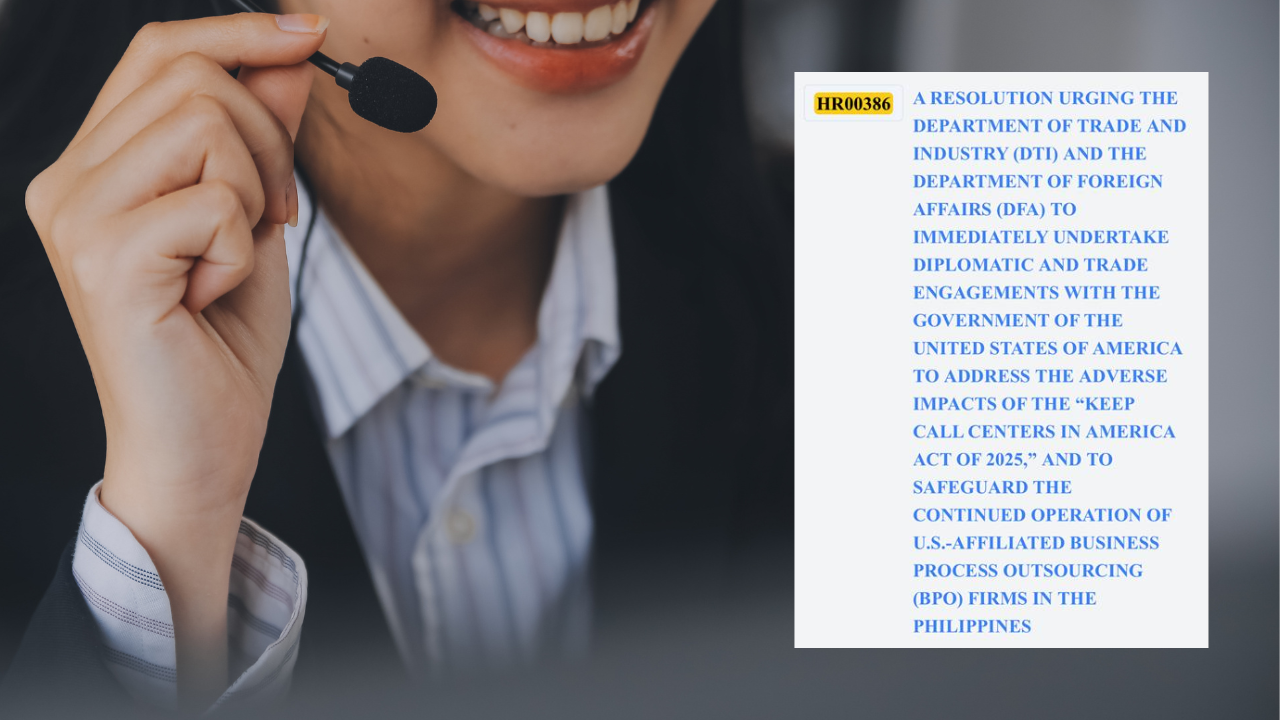
CEBU, PHILIPPINES — The Philippines is moving to safeguard its business process outsourcing (BPO) industry as Cebu representative Vincent Franco Frasco filed House Resolution No. 386, urging the government to open talks with the United States over the proposed Keep Call Centers in America Act—a bill that could penalize U.S. companies for outsourcing customer service jobs overseas.
House resolution pushes talks to protect BPO sector
According to a report from BusinessWorld, Frasco’s resolution calls on the Departments of Trade and Foreign Affairs to “immediately initiate dialogue” with their U.S. counterparts to seek exemptions for American BPO firms operating in the Philippines.
The proposed U.S. measure aims to discourage offshoring by making U.S. firms that outsource call center operations ineligible for federal grants and loan guarantees.
“The urgency of the situation demands proactive and high-level diplomatic action and trade engagement to ensure that the interests of Filipino workers and U.S.-affiliated firms operating in the Philippines are protected from the US bill’s unintended economic consequences,” Frasco said.
The Philippines remains one of the world’s leading outsourcing hubs, with about 1.7 million Filipinos employed in the BPO sector—many of them servicing American companies.
Frasco warned that the proposed U.S. law poses a “direct threat” to the stability of the industry, which could result in job losses and weakened investor confidence.
Industry and trade officials weigh possible impact
Philippines Trade Secretary Ma. Cristina Roque said her department is coordinating with industry representatives to evaluate the potential effects of the U.S. legislation.
The Information Technology and Business Process Association of the Philippines (IBPAP), which is comprised of 70% members from the U.S., has voiced similar worries, stating that the imposition of restrictions on outsourcing could cause the interruption of current operations and thus affect both employment and foreign investment inflows.
On the other hand, the BPO industry continues to be a major player in the Philippine economy, raking in billions of dollars annually and creating thousands of job opportunities spread across the country.
Diplomacy seen as key to sustaining confidence
The decision indicates that the Philippines will actively defend its economic interests through diplomacy and cooperation with industry.
According to analysts, the country’s competitive advantages in human resources, cost, and service quality will be critical to its survival as protectionist policies are reapplied.
The Keep Call Centers in America Act, which seeks to put U.S. workers first, also brings out the conflict between domestic job security and global efficiency.
By diplomatically engaging the Philippines, not only is its workforce protected, but also its commitment to remaining a trusted player in the global outsourcing ecosystem, where policies may shift but mutual growth is still possible.
Related news
- Filipinos steer Japan’s robots as AI jobs move offshore · 27 Oct
- AI will boost entry-level jobs globally, Cognizant CEO says · 29 Oct
- Critics say Trump’s $100K H-1B fee hurts small firms, spares giants · 30 Oct
Disclosure: Outsource Accelerator uses AI tools in the backend of its editorial workflow. Every article is reviewed and verified by a human editor before publication.
Stay ahead of the outsourcing industry. Join thousands of business leaders who rely on Outsource Accelerator for the news, trends, and expert insights that matter. Subscribe to our free newsletter and never miss an update.








