
U.S. HIRE Act threatens India’s IT exports, former RBI governor warns

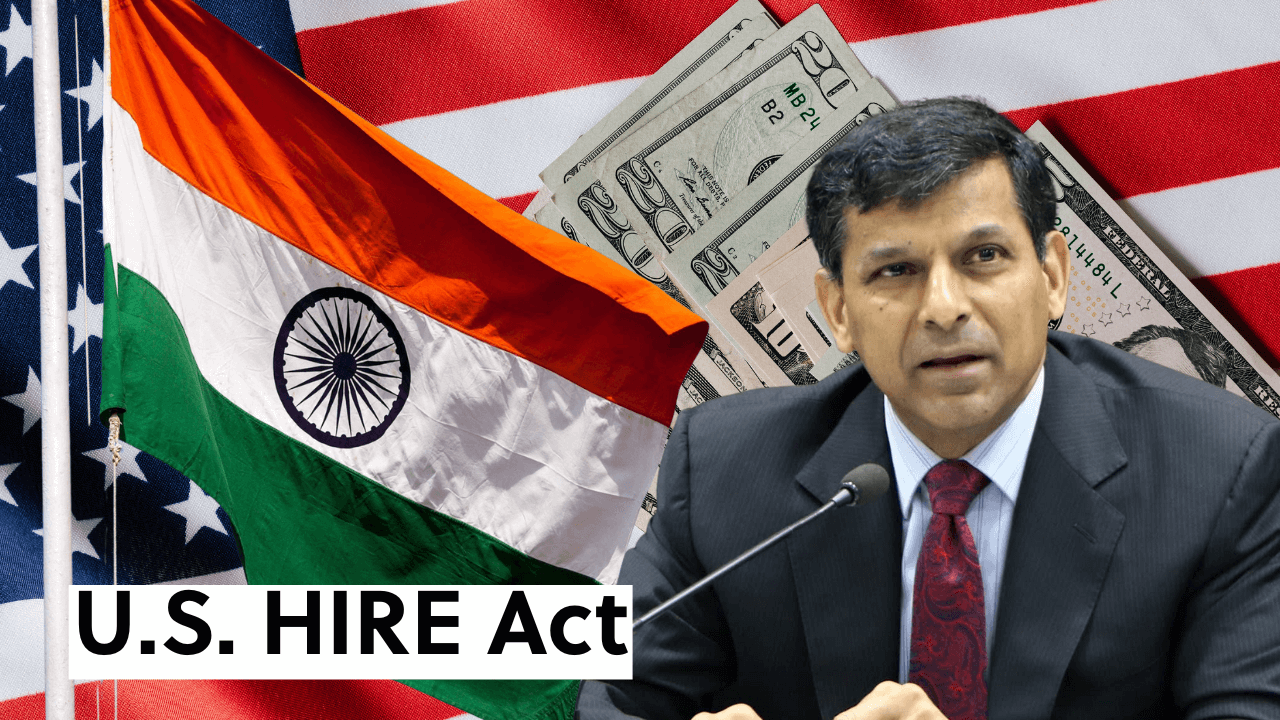
NEW DELHI, INDIA — Former Reserve Bank of India (RBI) Governor Raghuram Rajan has cautioned that the proposed United States HIRE Act could pose a more serious threat to India’s booming service exports than the recent hike in H-1B visa fees.
Rajan said the legislation under debate in the U.S. Congress may have far-reaching consequences for India’s outsourcing and technology sectors, which rely heavily on American clients.
Proposed U.S. law aims to curb offshoring
According to a report from Mint, the Halting International Relocation of Employment (HIRE) Act of 2025 seeks to discourage U.S. companies from sending jobs overseas by imposing a 25% excise tax on payments made to foreign workers or entities.
It would also remove tax deductions for expenses related to outsourced services. According to media reports, if the bill passes before December 31, 2025, the tax would apply to overseas payments starting January 1, 2026.
The revenue from these measures would fund reskilling and workforce development programs for U.S. citizens. However, Rajan warned that such protectionist steps could disrupt global trade in services.
“One of our biggest concerns is not so much the goods tariffs but if they try and find ways of imposing tariffs on services. This is a threat. There’s the HIRE Act, which Congress is debating, which will try and put tariffs on outsourced services,” Rajan said, as quoted by DeKoder.
The bill could affect a wide range of sectors, including IT services, BPO, consulting, global capability centers (GCCs), and freelance work.
With nearly 70% of India’s IT export revenues coming from the U.S., Indian tech firms such as Tata Consultancy Services, Infosys, and Wipro are expected to face higher costs and potential business loss if the legislation becomes law.
India urged to strengthen resilience in outsourcing
Rajan also noted that the HIRE Act presents a greater challenge than the H-1B visa fee hike, as companies are increasingly relying on virtual operations rather than the physical deployment of workers.
“Over time, the need for H-1B visas for Indian companies has been diminishing because a lot more can be done through virtual networks rather than by physical presence,” he said.
He added that while Indian firms could adapt by hiring local U.S. talent or scaling India-based teams, the creeping extension of tariffs beyond goods to services remains a major concern.
Rajan urged India to continue negotiating for lower tariffs and to safeguard its labor-intensive export industries from long-term disruptions.
Global implications for cross-border outsourcing
If enacted, the HIRE Act could reshape how U.S. companies manage offshore operations.
Experts note that rather than halting outsourcing entirely, it may accelerate the shift toward digital collaboration models, boosting India’s value as a remote talent hub.
In the evolving outsourcing landscape, India’s IT and BPO sectors could turn potential setbacks into opportunities—strengthening domestic operations, expanding global capability centers, and reinforcing their role as indispensable partners in the world’s digital economy.
Related news
- H-1B fee, HIRE Act accelerate global shift in tech jobs · 25 Oct
- U.S. firms turn to India GCCs as Trump’s H-1B visa curbs tighten · 4 Oct
- U.S. drives 62% of India’s IT outsourcing revenue: IBEF report · 23 Sep
Disclosure: Outsource Accelerator uses AI tools in the backend of its editorial workflow. Every article is reviewed and verified by a human editor before publication.
Stay ahead of the outsourcing industry. Join thousands of business leaders who rely on Outsource Accelerator for the news, trends, and expert insights that matter. Subscribe to our free newsletter and never miss an update.








