
Executives champion hybrid work focused on outcomes

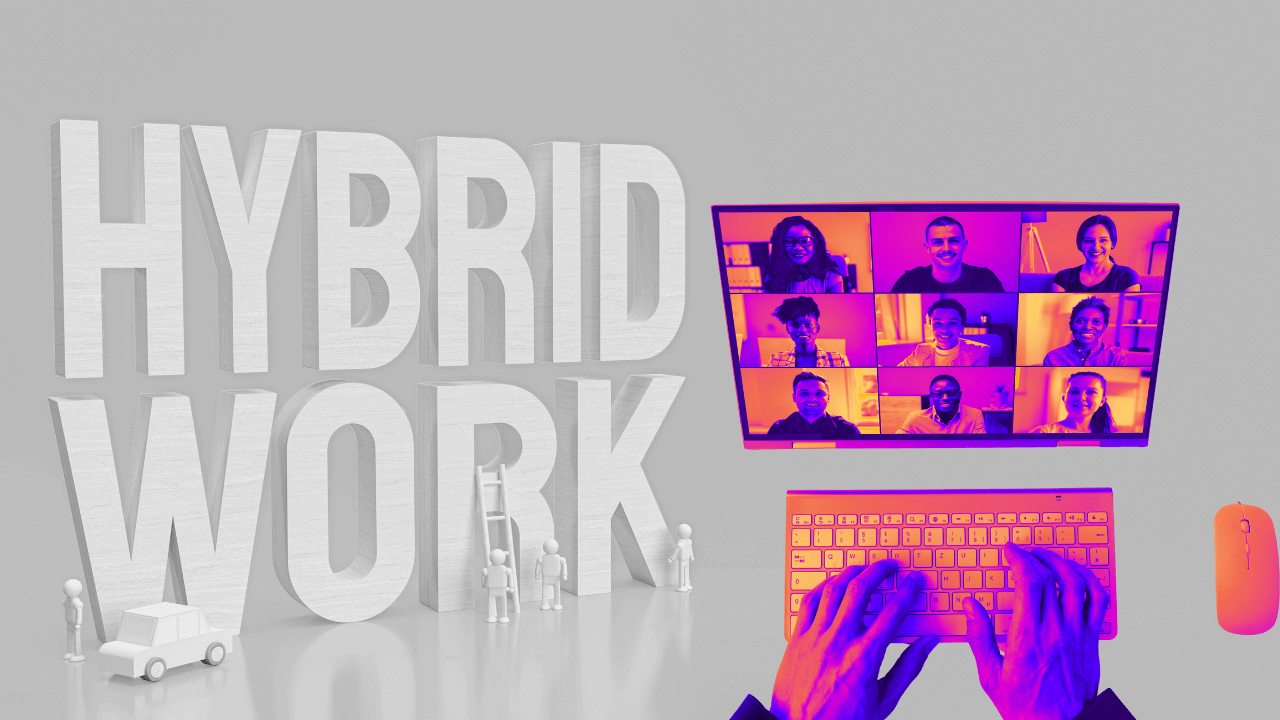
NEW YORK and MASSACHUSETTS, UNITED STATES — Business executives are challenging rigid return-to-office (RTO) mandates, advocating instead for a strategic model built on quarterly in-person gatherings and a focus on measurable outcomes.
Companies like Toptal, Airbnb, Synchrony Financial, and Atlassian are demonstrating that success in hybrid work hinges on empowering teams, measuring results instead of presence, and leveraging flexibility as a key talent advantage, moving beyond the debate over weekly office attendance.
Rethinking hybrid frequency
In a report by Business Insider, Toptal Chief Executive Officer (CEO) Taso Du Val advocates for a radical reinterpretation of hybrid work, proposing an “80/20” model where fully remote teams gather in person only quarterly for intensive collaboration.
The core of Du Val’s argument is that companies are fundamentally misinterpreting the concept of hybrid work by focusing on weekly or daily office attendance. “Hybrid needs to be thought of as yearly,” Du Val said.
Instead of the compulsory in-office days, this viewpoint emphasizes the strategic and planned face-to-face meetings that are held due to the special, high-value teamwork.
Du Val’s model translates into quarterly team and managerial off-sites spanning roughly three days, which he describes as “super productive.” These gatherings are designed for energized group brainstorming and large-scale decision-making that does not typically occur on a workday.
He contrasts these activities with the inefficiency of daily in-person tasks, such as legal reviews or individual marketing work, where physical proximity offers no added benefit.
Remote work becomes a talent magnet
Remote work is an effective means of saving costs and a great tool for attracting and retaining top talent.
Du Val not only presents remote work as an added benefit but also as a tactical advantage, which, in a separate article on MIT Sloan by work experts Brian Elliott, Nick Bloom, and Raj Choudhury, aligns with the thoughts of companies like Airbnb, which applied the policy of working and living anywhere to hire the best designers in companies with stricter policies. This approach opens access to a wider, more diverse labor pool.
The European Central Bank exemplifies this strategic use of flexibility, extending its “teleworking” option to compete for talent against private banks that can offer higher salaries.
This is supported by research indicating that remote work can diversify a workforce and boost productivity. A study of call center workers in Turkey revealed that productivity increased by 10% with remote working, attracting more female, married, and non-metropolitan workers to the job.
Measuring outcomes over presence
A critical capability for successful hybrid work is a fundamental shift from monitoring employee presence to measuring tangible results.
This is an example of organizations such as Atlassian and the financial services company Synchrony Financial, which have introduced transparent goal-setting and performance evaluation based on outcomes, rather than activities.
Atlassian’s analysis of its distributed workforce found that quarterly team gatherings boosted engagement by 27%, a more significant lift than that provided by random in-office encounters.
“By focusing on employees’ measurable results instead of hours logged in the office, we’ve seen stronger productivity and business outcomes,” said Brian Doubles, CEO of Synchrony Financial.
Such a result-oriented approach also contributes to the elimination of proximity bias, which occurs when staff who happen to be on-site are accidentally promoted. The caregivers are the most disproportionately affected by the prejudice.
A study indicates that women are three times more likely to quit a company when subjected to strict return-to-office guidelines, and gender bias and discrimination are now nearly twice as likely to be experienced at the office compared to at home.
Empowering teams to lead flexibility
Hybrid models do not assume the existence of a one-size-fits-all requirement but rather give the individual teams freedom to decide on the best collaboration patterns.
Atlassian empowers teams to create working agreements that suit their specific needs, such as establishing daily guaranteed overlap hours for distributed teams or setting in-person days for colocated ones.
Similarly, defense contractor Teradyne allows its hardware teams, which require lab access, to work together three or four days a week. In contrast, its sales and IT teams follow distributed patterns that reflect their distinct technical and client requirements.
“The goal is to build organizational muscle for driving results through trust, accountability, and strategic focus,” MITSloan authors noted.
Related news
- UK Lords committee pushes hybrid work to boost disability inclusion · 15 Nov
- Designers turn offices into lifestyle destinations to lure staff · 19 Dec
- AI leaders must balance technology and talent, survey shows · 23 Nov 2024
Disclosure: Outsource Accelerator uses AI tools in the backend of its editorial workflow. Every article is reviewed and verified by a human editor before publication.
Stay ahead of the outsourcing industry. Join thousands of business leaders who rely on Outsource Accelerator for the news, trends, and expert insights that matter. Subscribe to our free newsletter and never miss an update.








