
Nebraska high court weighs remote work authority

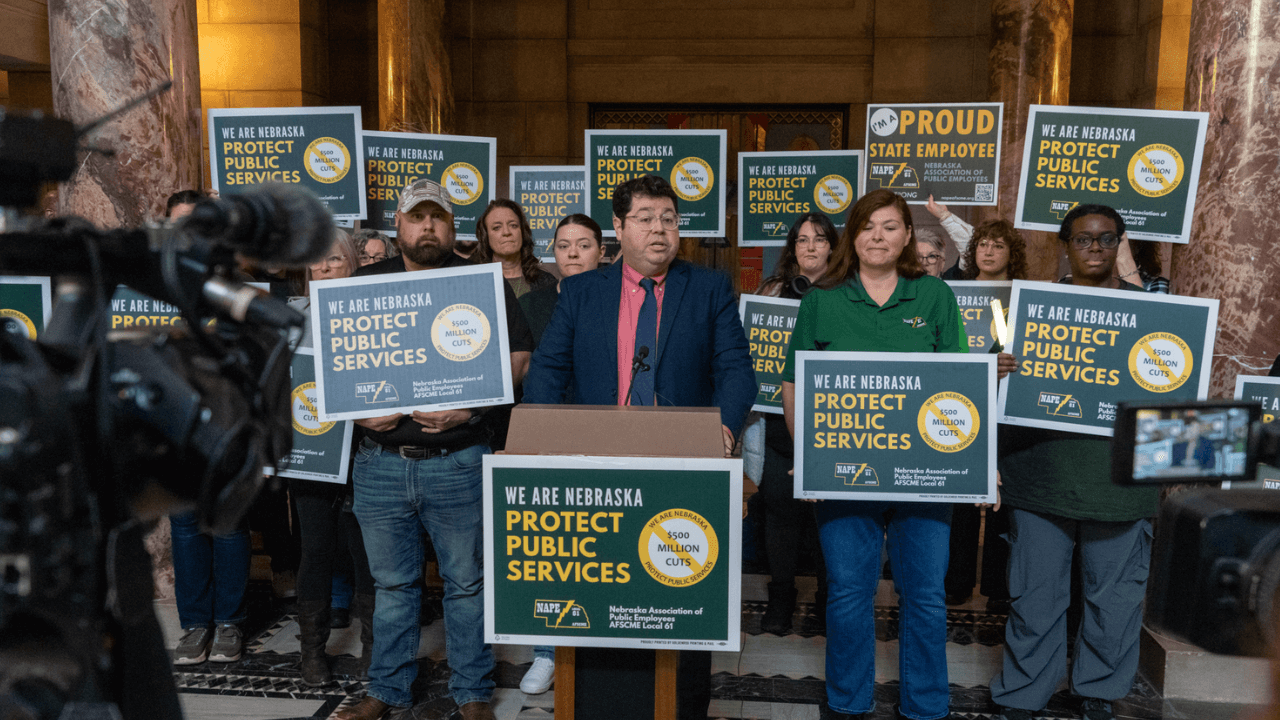
- Nebraska’s Supreme Court heard a return-to-office bargaining case
- The ruling affects more than 8,000 state employees
- A labor court ordered the union to pay $42,234.63 in fees
- The governor’s order mandated in-person work from January 2024
NEBRASKA, UNITED STATES — The Nebraska Supreme Court heard arguments in a pivotal case determining whether the state violated labor law by refusing to negotiate with a public employees union before ordering workers back to the office.
The ruling will define the scope of mandatory bargaining for over 8,000 state employees and could set a precedent with implications for public-sector labor relations nationwide.
Bargaining rights vs. management control
At the heart of the dispute is a fundamental disagreement over what constitutes good-faith bargaining.
According to the Nebraska Examiner, the state, through Principal Deputy Solicitor General Zach Viglianco, argued that its refusal to include specific remote work standards in the 2023 contract was a legitimate “bargaining strategy.”
State officials maintained they “jealously guarded” broad managerial authority over work location, as outlined in a contract clause granting employers the right to “change, modify and alter the composition and site of the [workforce].”
Conversely, union attorney Richard Griffin contended the state’s flat rejection of negotiations on the issue was not bargaining at all. “Bargaining involves give and take,” Griffin told the justices, noting the union received no counterproposals.
The union asserts it never “clearly” or “unmistakably” waived its right to bargain over the implementation of Governor Jim Pillen’s November 2023 executive order, which mandated a return to in-person work beginning January 2024.
“Bargaining involves counterproposals. Even hard bargaining involves some response, and then the parties look to other provisions of the contract where they can reach compromise. This was not bargained over,” Griffin explained.
Legal precedent and chilling effects on labor disputes
A significant secondary issue is the unprecedented financial penalty imposed on the union by the state’s Commission of Industrial Relations.
The three-member labor court, which unanimously upheld the state’s order in July 2024, also ordered the Nebraska Association of Public Employees to pay $42,234.63 in state attorneys’ fees, calling the union’s lawsuit “frivolous” and in “bad faith.”
The state, in a brief, argued affirming this award would deter future frivolous claims, stating, “Affirming the award entered here will reinforce the notion that abuse of legal process, like crime, does not pay.”
The union has challenged this fine, threatening that it will illegally chill legitimate labor conflicts. Griffin contended that the commission’s move was punitive and unprecedented, and that it was beyond its mandate.
The union’s Executive Director, Justin Hubly, stressed the need to protect members’ rights and said that the appeal would provide the necessary clarity in future negotiations, either way. The Supreme Court’s ruling on fees may affect unions’ aggressive litigation of public-sector contract disputes.
“The idea that nobody is working remotely is just not true, but it is significantly reduced from where it was,” Hubly said.
The Nebraska Supreme Court’s impending ruling on whether remote work policies are a mandatory subject of bargaining will not only define operational flexibility for public employees but could also fundamentally reconfigure the balance between managerial authority and collective bargaining rights, setting a legal and financial precedent that may either empower or chill union challenges in the evolving post-pandemic workplace.
U.S. public sector return-to-office wars escalate
The battle between remote work and the obligation to return to offices is escalating between urban governments and the federal government, with public-sector unions opposing it.
In a CBS News report, Philadelphia Mayor Cherelle Parker is being sued by unions representing thousands of city employees who claim her directive that all offices be fully occupied by July 15 infringes on collective bargaining agreements made during the pandemic.
Meanwhile, in another report, Governor Gavin Newsom of California has recently agreed to a one-year suspension of his four-day-a-week requirement for state engineers in exchange for temporary telework maintenance as part of a payroll compromise to address a budget deficit.
A new stage of conflict occurred when a federal memo instructed agencies to unilaterally cancel leagues of union-negotiated telework agreements, claiming they are not a negotiable aspect of management.
According to a FEDweek report, the memo notes, “We will request information regarding your Agency’s actions to end DEI/DEIA programs and have employees report to an office.”
The unions have a concerted case against such requirements, claiming that the required provisions do not allow for good-faith bargaining over fundamental working terms.
The policies are justified by officials, such as Mayor Parker, as necessary to support cooperation, promote equity, and resuscitate downtown economies where occupancy remains lower than before the pandemic.
At the heart of the argument are unresolved questions about whether mass teleworking affects or improves the productivity and morale of the public service. In the end, the battles are an indication of a fundamental renegotiation of the workplace of the public sector, with the results set to affect labor relations and urban healing in the future.
Related news
- Workplace battle shifts from office to flexible hours: JLL study · 7 Jan 2026
- U.S. agency to probe corporate DEI programs for illegal discrimination · 9 Jan 2026
- U.S. employee happiness gap exposes hidden labor market risk: BambooHR · 3 Feb 2026
Disclosure: Outsource Accelerator uses AI tools in the backend of its editorial workflow. Every article is reviewed and verified by a human editor before publication.
Stay ahead of the outsourcing industry. Join thousands of business leaders who rely on Outsource Accelerator for the news, trends, and expert insights that matter. Subscribe to our free newsletter and never miss an update.








