
CMS drops 24/7 RN staffing rule for U.S. nursing homes

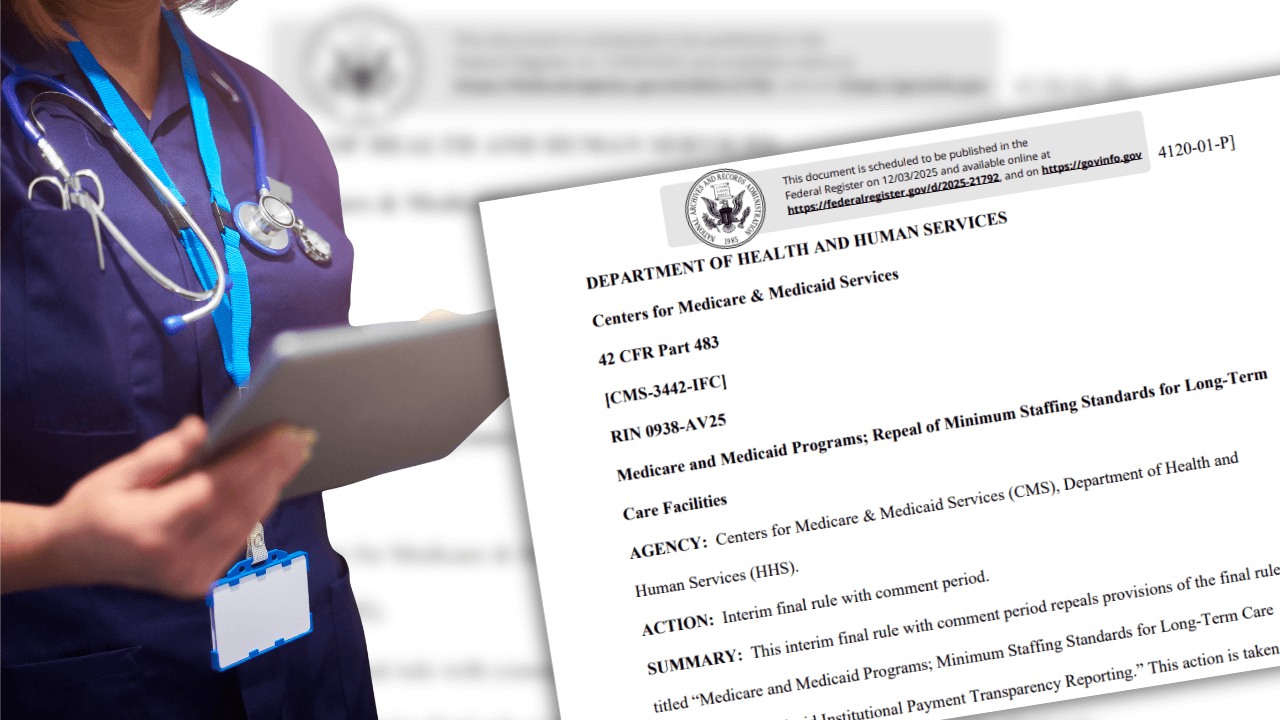
- CMS withdrew the 24/7 registered nurse mandate for nursing homes
- A Texas federal judge struck down the requirement
- The standard reverts to eight hours of RN staffing daily
- Other rules remain, including 3.48 nursing hours per resident per day
ILLINOIS, UNITED STATES — The Centers for Medicare & Medicaid Services (CMS) has walked back one of its most controversial staffing mandates for long-term care facilities, withdrawing the requirement for nursing homes to have a registered nurse (RN) on-site 24/7.
This move affects many health systems, and post-acute operators say it provides urgent relief amid persistent workforce shortages.
Texas court ruling drives CMS reversal amid workforce shortages
According to a report from Becker’s Hospital Review, the agency’s decision follows a Texas federal judge’s ruling that struck down the 24/7 RN mandate, finding the requirement exceeded CMS’ authority.
In an interim final rule published December 2, CMS confirmed it will revert to the existing federal standard: eight hours of RN staffing per day, seven days per week.
CMS acknowledged that legal uncertainty and implementation challenges factored heavily into the reversal. While the agency chose not to appeal the ruling, it has kept other elements of the 2024 staffing rule intact, specifically, the requirement of 3.48 hours of nursing care per resident per day, including 0.55 hours from RNs and 2.45 from nurse aides.
Healthcare organizations, many of which had warned that the rule would stretch the workforce beyond capacity, widely welcomed the change.
“Today’s decision to repeal the one-size-fits-all staffing requirement in long-term care facilities is a good day for patients’ access to care,” said Charlene MacDonald, executive vice president of public affairs at the Federation of American Hospitals.
She noted that rolling back the mandate recognizes flexible staffing coupled with innovation improves the quality of care, reduces staff burnout and keeps facilities’ doors open.
The American Hospital Association (AHA) echoed that view.
“The AHA has repeatedly raised concerns that the requirements could exacerbate workforce shortages, lead to facility closures and jeopardize access to care, especially in rural and underserved communities,” said AHA executive Stacey Hughes.
For hospitals, integrated delivery networks, and clinics that rely on smooth transitions across care settings, the decision averts what many feared would be a deeper strain on regional RN supply.
Leaders say the 24/7 requirement risked pushing more nurses toward post-acute roles at a time when inpatient and outpatient units are still rebuilding their staffing pipelines.
What the rollback could mean for offshore clinical and back-office functions
The shift also raises questions about how health systems may rebalance their staffing strategies, including the growing reliance on offshore clinical support and administrative roles.
While CMS’ rule targets on-site nursing staff in United States facilities, providers have increasingly leaned on offshore teams to mitigate shortages in areas such as care coordination, documentation support, case management assistance and revenue cycle operations.
With on-site RN pressure temporarily eased, some executives may accelerate these offshore partnerships to stabilize workforce gaps and protect bedside capacity.
The rollback does not reduce demand for support functions—it may heighten it, as organizations refocus limited clinical labor on high-acuity care while delegating background tasks to offshore teams trained in U.S. clinical workflows.
Healthcare providers welcome relief as nurse shortage continues
Despite the repeal, the staffing landscape remains uncertain. CMS emphasized that the 24/7 RN mandate was only one part of a broader quality improvement strategy and said it will continue to offer technical assistance, training, and financial incentives to long-term care providers.
The new regulation has a short-term positive impact on hospitals and health systems, but does not change the fact that the national RN shortage remains a key factor in operational decision-making.
Many leaders see the repeal as a pause, not a permanent reprieve, as the sector prepares for the remaining phases of CMS’ staffing rule, originally scheduled to begin rollout in 2026.
Related news
- Healthcare CFO turnover in U.S. hits crisis, boards urged to act fast · 11 Dec
- Health experts push to close digital mental health gaps for youth · 10 Dec
- CMS to pilot tech-enabled chronic care model for U.S. patients in 2026 · 9 Dec
Disclosure: Outsource Accelerator uses AI tools in the backend of its editorial workflow. Every article is reviewed and verified by a human editor before publication.
Stay ahead in healthcare outsourcing. Join thousands of healthcare and business leaders who rely on Outsource Accelerator for the news, trends, and expert insights shaping medical BPO and the future of care delivery. Subscribe to our free newsletter and never miss an update.








