
Trump signs order to override state AI laws, reshape global tech

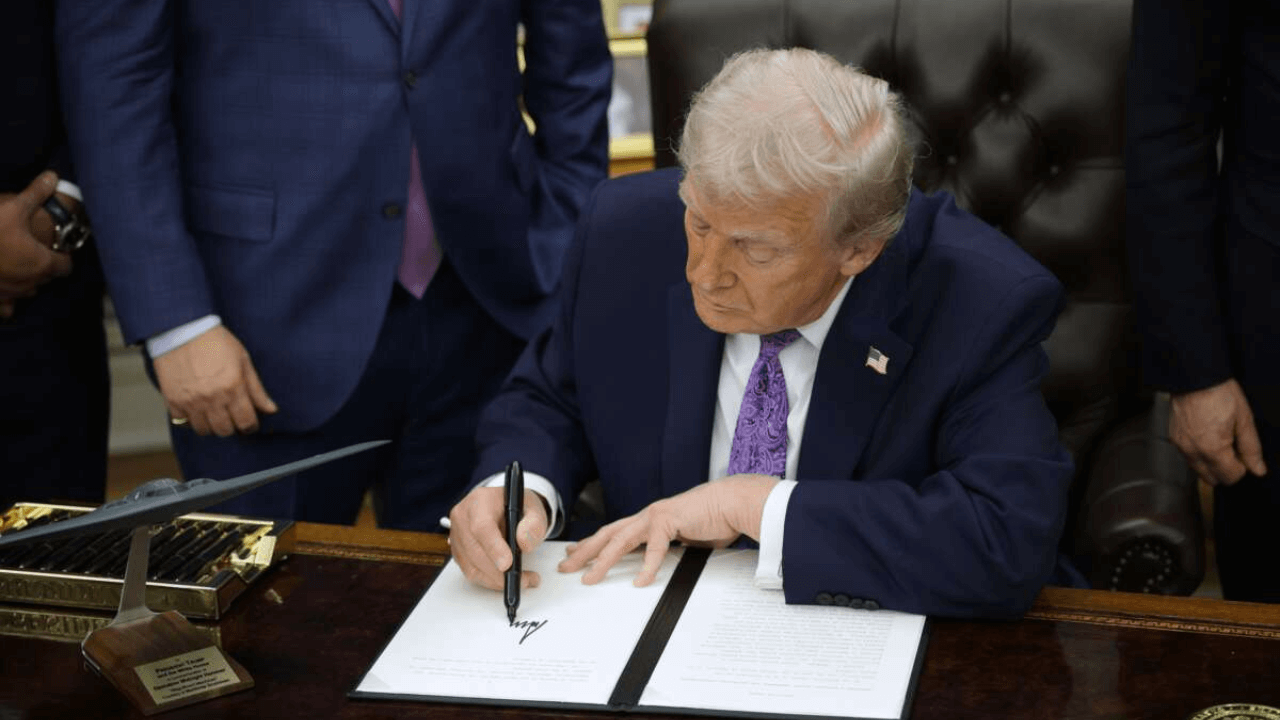
- Trump signed an executive order targeting state AI restrictions
- It seeks a single federal AI framework
- California and Colorado require safety testing of major models
- South Dakota banned deepfakes in political ads near elections
NEW YORK, UNITED STATES — President Trump signed an executive order on December 11 aimed at neutering state-level restrictions on artificial intelligence (AI), a move hailed by tech companies but criticized by child safety and consumer advocates.
Trump spoke in the Oval Office and emphasized the need for a unified regulatory framework to keep the United States ahead in the global AI race.
“It’s got to be one source,” he said. “You can’t go to 50 different sources.”
Trump’s federal AI framework challenges U.S. state laws
According to a report from The New York Times, the executive order seeks to establish a single federal AI framework, overriding the patchwork of state laws that have emerged amid rapid AI expansion.
Trump has increasingly positioned himself as a champion of the AI industry, signing orders to limit regulation, provide companies access to federal data, and ease infrastructure development.
The same week he also removed barriers to exporting AI chips and praised the leaders of major tech firms.
However, the move has sparked broad bipartisan opposition. Legal experts warn that states and consumer groups may challenge the order in court, arguing that only Congress has the authority to override state laws.
Wes Hodges, acting director of the Center for Technology and the Human Person at the Heritage Foundation, noted, “Doing so before establishing commensurate national protections is a carve-out for Big Tech.”
U.S. AI safety laws clash with Trump’s deregulation push
Several U.S. states have rushed to fill the federal regulatory void, enacting measures to protect consumers and children from potential AI harms.
California and Colorado require major AI models, including ChatGPT and Google Gemini, to undergo safety testing and disclose results.
South Dakota banned deepfakes in political ads within months of an election, while Utah, Illinois, and Nevada have introduced chatbot and mental health regulations.
Critics argue that the federal order could undermine these protections.
“Blocking state laws regulating A.I. is an unacceptable nightmare for parents and anyone who cares about protecting children online. States have been the only effective line of defense against A.I. harms,” said Sarah Gardner, chief executive officer (CEO) of the Heat Initiative.
AI companies have long lobbied for reduced regulation, citing the “50-state patchwork” as a barrier to innovation.
Marc Andreessen of Andreessen Horowitz argued that fragmented laws are “a startup killer,” highlighting the tension between rapid tech growth and consumer safeguards.
New U.S. AI rules could reshape global outsourcing markets
The order also carries potential implications for the global outsourcing sector. A unified federal AI framework could streamline compliance for U.S. companies outsourcing AI development or data services abroad, reducing regulatory uncertainty.
Conversely, states’ previous rules had forced service providers to implement multiple safeguards, particularly around child safety and data privacy, which added costs but enhanced consumer trust.
The move toward federal oversight may accelerate AI-driven outsourcing initiatives while reshaping risk management strategies for international partners.
Related news
- TCS Q3 profit soars 12%, revenue misses forecasts · 10 Jan
- BPO firms drive change with responsible outsourcing strategies: OIR 2025 · 22 Dec
- India’s Andhra Pradesh lures Cognizant, 8 IT firms to new Vizag hub · 20 Dec
Disclosure: Outsource Accelerator uses AI tools in the backend of its editorial workflow. Every article is reviewed and verified by a human editor before publication.
Stay ahead of the outsourcing industry. Join thousands of business leaders who rely on Outsource Accelerator for the news, trends, and expert insights that matter. Subscribe to our free newsletter and never miss an update.








