
U.S. generational divide strains workplace unity, Zety report finds

- The survey covered 1,026 U.S. employees on November 28, 2025
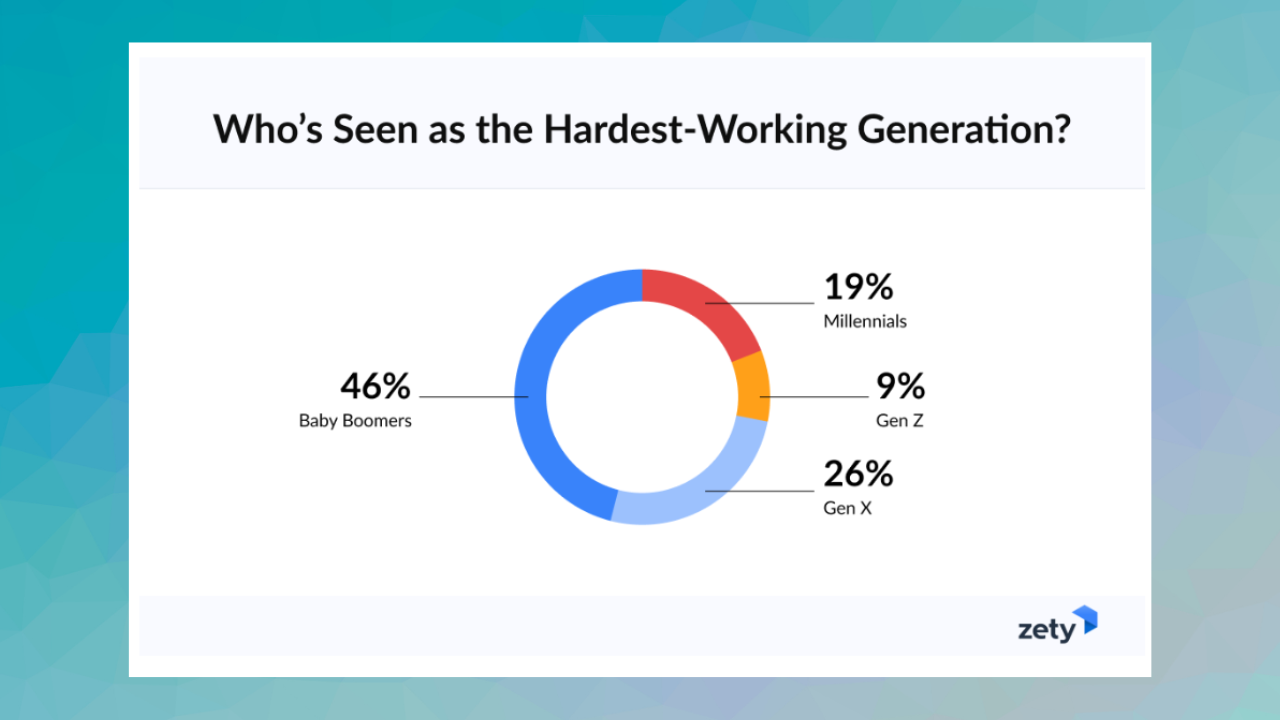
- 46% rate baby boomers as having the strongest work ethic
- 46% find Gen Z communication hardest in meetings
- 49% do not want to become managers
NEW YORK, UNITED STATES — A Zety report reveals deep generational fissures in United States workplaces, citing clashing communication styles and conflicting perceptions of work ethic.
The Zety Generational Leadership Report, based on a nationally representative survey of 1,026 U.S. employees conducted by career advice platform Zety via Pollfish on November 28, 2025, found that nearly half of employees see Gen Z’s approach as the most difficult in meetings, while younger workers remain ambitious for leadership roles.
Perceptions of work ethic and communication gaps
The surveyed U.S. employees gave baby boomers the top score for the strongest work ethic, with 46% of the 1,026 respondents, followed by Gen X with 26%. Millennials followed the latter at 19%, and Gen Z at 9%.
This impression is further aggravated by the long-standing stereotype of job-hopping, with 66% of all workers thinking that younger generations are more likely to job-hop.
These perceptions coexist with real-life tensions in day-to-day group work, which revolve around communication style. Even though 71% affirm that multigenerational collaboration is among their workplace strengths, 29% affirm that it is the cause of workplace conflict.
Communication is the biggest challenge: 46% of participants say Gen Z’s communication style is the hardest to negotiate during a meeting. This implies that, despite most bodies recognizing the importance of age-diverse teams, there remains a problem with integrating them.
The management paradox and career ambitions
A large part of the workforce is actively shunning conventional career progression that is marked by the management of people.
According to a survey, 49% of employees said they are not interested in becoming managers, and 59% of workers cited the most common reason: avoiding the stress and people-management aspects that come with it.
Other reasons include concerns about work-life balance (15%) and a lack of confidence or capacity to manage (10%). But this tendency does not mean that they are not ambitious enough, especially young workers.
Even though young workers are not typically seen as engaged in career development, 36% of millennials and 35% of Gen Z respondents say they would like to become people leaders or people managers.
As the report notes, these findings are “pointing to a new era of Gen Z leadership that may redefine what management looks like in the modern workplace.”
These findings reveal a workplace at a crossroads, where bridging the divide between generations through mutual understanding and adaptive communication is not just about harmony but the essential key to unlocking a collaborative, effective future of work.
Related news
- U.S. workforce ages as firms seek experience, Revelio Labs study finds · 22 Jan
- U.S. workers fear violence and burnout at work, survey finds · 17 Jan
- AI widens global economic gap as productivity gains lag: Anthropic · 30 Jan
Disclosure: Outsource Accelerator uses AI tools in the backend of its editorial workflow. Every article is reviewed and verified by a human editor before publication.
Stay ahead of the outsourcing industry. Join thousands of business leaders who rely on Outsource Accelerator for the news, trends, and expert insights that matter. Subscribe to our free newsletter and never miss an update.








