
49% of U.S. workers fear pay won’t match 2026 living costs: Resume Now

- The survey covered 1,011 employed U.S. adults in December 2025
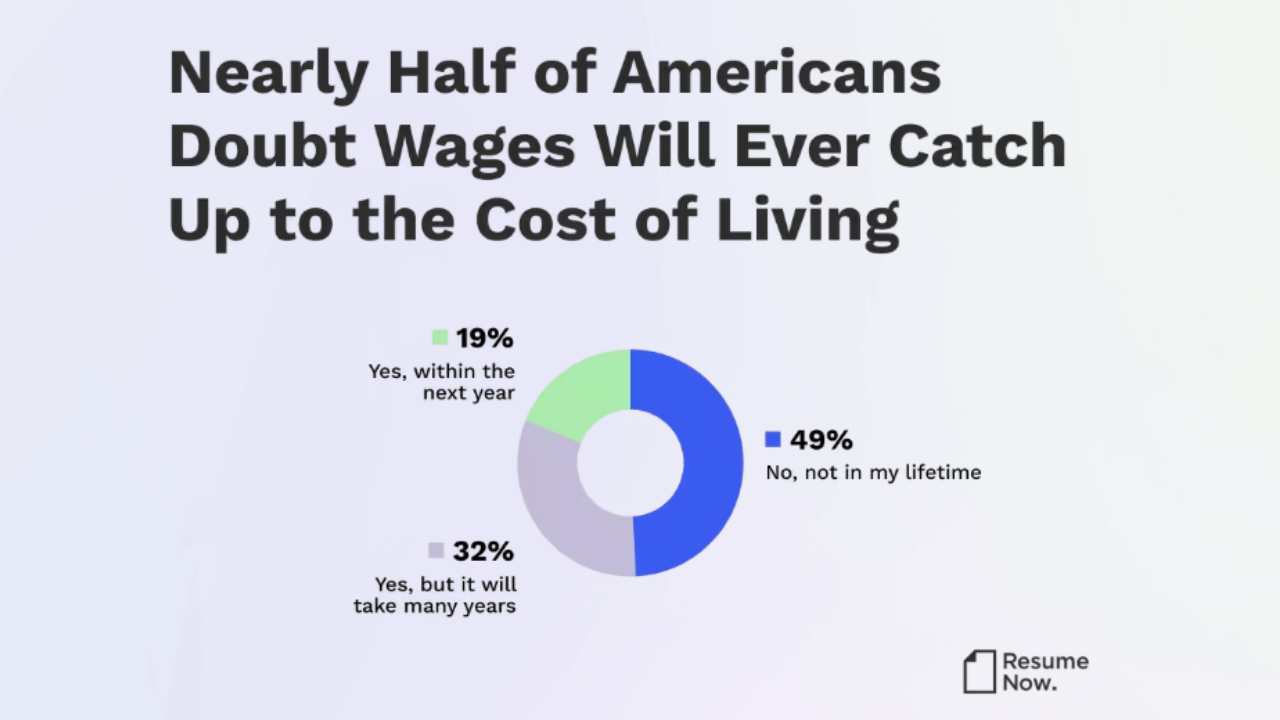
- 49% believe wages will never catch up to living costs
- 69% feel underpaid while only 2% feel overpaid
- 48% have delayed a major life milestone
NEW YORK, UNITED STATES — A new survey reveals a profound pessimism among American workers, with nearly half believing their wages will never catch up to the rising cost of living.
The 2026 Financial Outlook Report from Resume Now, based on a December 2025 survey of 1,011 employed United States adults, indicates that financial stress is forcing widespread delays in major life decisions and is expected to worsen in the year ahead.
U.S. workers losing faith in wage growth
The survey data reveal an inherent view that wage growth is permanently uncoupled from inflation.
A sharp 49% of working Americans say they will never see the cost of living match their salaries throughout their lives, and 32% say it will be many years before they can afford the same. The few who have any hope that income will match expenditure in 2026 are in the minority, less than 1 in 5 (19%).
This is reinforced by the prevalence of the perception of being unfairly compensated. 69% feel underpaid and dissatisfied with their salaries, and 27% are dissatisfied with their low salaries.
Conversely, only 2% feel they are overpaid, which is a testament to the almost universal feeling of compensation insufficiency among the workforce.
The report notes, “Feeling underpaid can affect both morale and productivity, cause worker burnout, and may lead employees to seek higher-paying opportunities.”
“With a significant amount of workers dissatisfied with their compensation, businesses may face increasing pressure to adjust wages and improve retention.”
Cost-of-living raises go to savings, bills, and debt
The economic stress is so extreme that any extra income is spent on the basics of survival and not on leisure and investment.
Asked how they would use a cost-of-living increase, 37% of workers would save more, 32% would use it to cover daily expenses, and 26% would use it to pay off debts.
“This response reflects the ongoing struggle many workers face as wages lag behind the rising cost of living, the report stated.
This division emphasizes fiscal survival. The combination of these would mean only the insignificant 5% would be used as optional expenditures on vacation (3%), education and career development (2%), so that the additional money at most is used up in basic needs and by other commitments that may exist, not allowing lifestyle changes or advancement in career.
High living costs delay major life milestones
Long-term personal planning is directly and significantly affected by economic pressures. The poll found that 48% of Americans have delayed a significant milestone in their lives because of rising costs.
The choices that lead to these deferrals are purchasing a new home, having a child, changing workplaces, or obtaining an education related to the work.
This tendency shows that the low pace of wage increases relative to inflation is transforming traditional career paths. Economic unpredictability is causing a large proportion of the populace to shelve substantial personal and financial goals, with long-term societal and economic consequences.
ResumeNow suggests that this trend “highlights how financial pressures are forcing individuals to adjust their long-term plans and priorities.”
Low pay transparency fuels anxiety at work
Many employees (most of them) say that they have no understanding of the compensation in their respective companies, which makes them experience financial anxiety.
The findings indicated that 77% of workers are unclear about salary ranges, increases, or bonus systems at their workplaces.
While 23% of respondents described their employer as “very transparent” regarding remuneration, 43% called them “somewhat transparent,” and 34% rated them “not very” or “not at all” transparent.
As ResumeNow notes, “This lack of clarity can affect trust, engagement, and confidence in career growth.”
With most workers now believing their pay will permanently lag behind prices, forcing them to postpone major life decisions and spend solely on essentials, the very premise of career progression and economic stability now forms a sobering new baseline for the American economy.
Related news
- Mid-career workers ‘age-proof’ CVs to beat ageism in tough job market · 13 Feb
- RTO mandates backfire as 72% of workers see ‘stealth layoff’ — Enhancv · 1 Apr
- AI cuts entry-level jobs while enabling one-person businesses · 2 Apr
Disclosure: Outsource Accelerator uses AI tools in the backend of its editorial workflow. Every article is reviewed and verified by a human editor before publication.
Stay ahead of the outsourcing industry. Join thousands of business leaders who rely on Outsource Accelerator for the news, trends, and expert insights that matter. Subscribe to our free newsletter and never miss an update.








