
AI-written job applications are backfiring on candidates

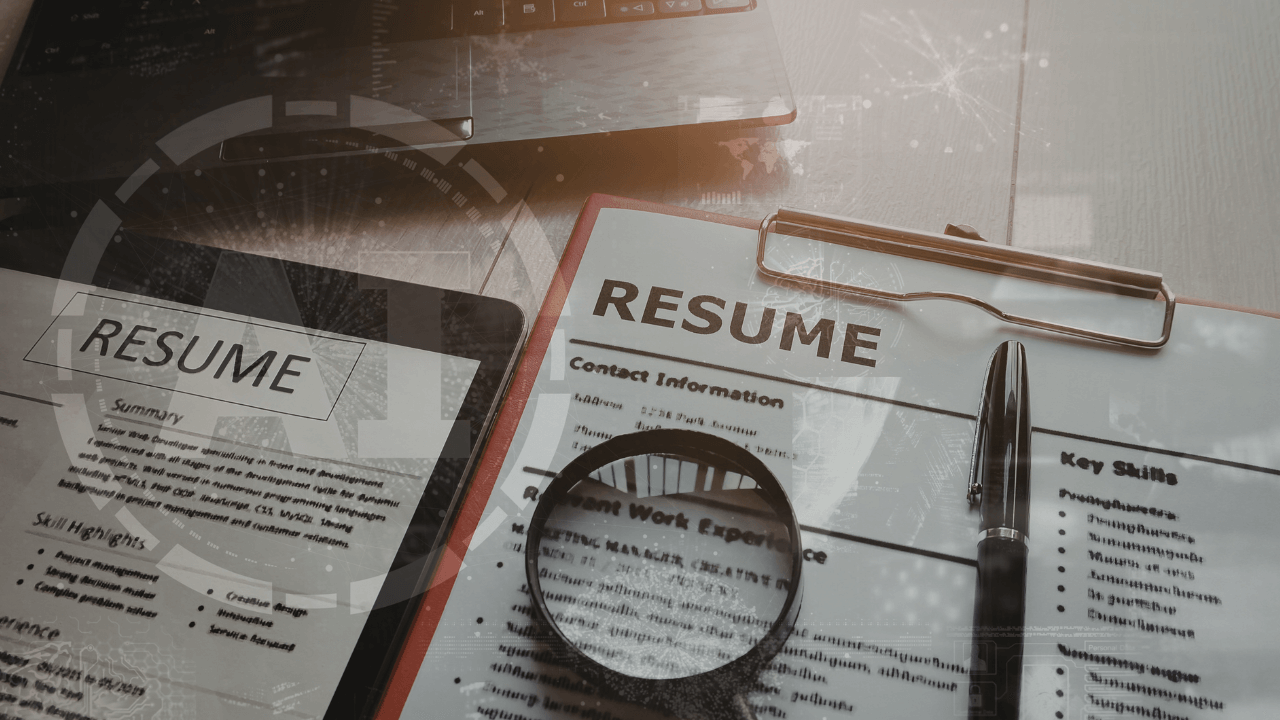
WASHINGTON, UNITED STATES — Oceans, an outsourcing and offshoring company, recently asked candidates to submit a video answering one question about their personal workplace convictions, only to discover that more than 300 responses were nearly identical.
The flood of eerily similar applications, which Chief Experience Officer Matt Wallaert said were “abundantly clear” to be the work of artificial intelligence (AI), has left hiring teams struggling to differentiate qualified candidates in a tight labor market where both sides increasingly rely on automation.
How employers spot AI-generated resumes, applications
The Washington Post reports that employers across industries report that candidates’ over-reliance on AI tools is creating a sea of indistinguishable applications that obscure genuine talent and personality.
Wallaert described the situation as candidates making the “laziest possible” effort by failing to share their personal beliefs, resulting in responses that followed identical structures and used the same vocabulary.
This homogenization compels hiring managers to spend more time filtering out which candidates are actually qualified and which are merely getting through automation, despite the most promising candidates becoming just another statistic buried in the mass of content generated by machines.
Certain red flags have been identified in AI-aided applications, such as executive summaries that appear disturbingly similar among job seekers and strange expressions one would not ordinarily use in conversation.
Joseph Eitner, Chief Human Resources Officer at Eaton Capital Management, noted that while he has no objection to candidates using AI for keyword optimization or grammar cleanup, the technology becomes problematic when it replaces authentic self-expression.
The situation worsens with auto-apply AI tools that misinterpret application questions and fill in inappropriate fields with incorrect information, creating patterns that become obvious when hundreds of applications share identical issues, even though they are harder to spot individually.
Why job seekers use AI vs. the power of authentic resumes
Job seekers say the way employers use technology to rank candidates—with recent estimates showing that as many as 98.4% of Fortune 500 companies leverage AI in the hiring process—has prompted them to adopt AI tools.
San Antonio job seeker Stephen Harris described this tension directly, saying he would no longer use AI to write a resume when recruiters no longer use AI to screen him.
Harris and other candidates state that AI can assist in customizing applications, which they view as among the first, offsetting what they see as employers paying too much attention to seeking ideal applicants and losing flexible talent in the human resources process.
The effectiveness of authentic applications over AI-generated ones became evident to job seekers who experimented with both approaches, with some finding dramatic improvements after eliminating automation from their process.
Sneha Sharma used ChatGPT and Autoproxy to apply to up to 300 jobs in half a year, but did not receive any interviews. She stopped this by leaving all of AI behind and creating her resume from scratch, including personal information about her migration to the United States. This resulted in her securing seven interviews in two weeks and a job in less than two months.
Sharma notes, “Don’t be blinded by the internet and that ChatGPT will do everything,” she said. “Use your brain, keep changing and experimenting.”
Prateek Singh, the founder and Chief Executive Officer (CEO) of the New Delhi-based LearnApp, confirmed this observation, stating that more authentic applicants, including their weaknesses and quirks, tend to stand out in a pool of 100 applicants using AI-generated content.
“This is the best time for you to stand out based on all of your flaws and eccentricity,” he said.
As candidates increasingly rely on AI to produce job applications, their gambit has backfired: the resulting flood of homogenized, automated responses has made authentic self-expression the only reliable way to differentiate oneself in a crowded market.
Related news
- Gen Z 5x more likely to lie on resumes, AI Resume Builder reveals · 20 Jun 2025
- Zillow uses CloudHQ remote work model to boost talent, cuts costs · 31 May 2025
- Mid-career workers ‘age-proof’ CVs to beat ageism in tough job market · 13 Feb
Disclosure: Outsource Accelerator uses AI tools in the backend of its editorial workflow. Every article is reviewed and verified by a human editor before publication.
Stay ahead of the outsourcing industry. Join thousands of business leaders who rely on Outsource Accelerator for the news, trends, and expert insights that matter. Subscribe to our free newsletter and never miss an update.








