
1 in 3 adults use AI for health advice: KFF report

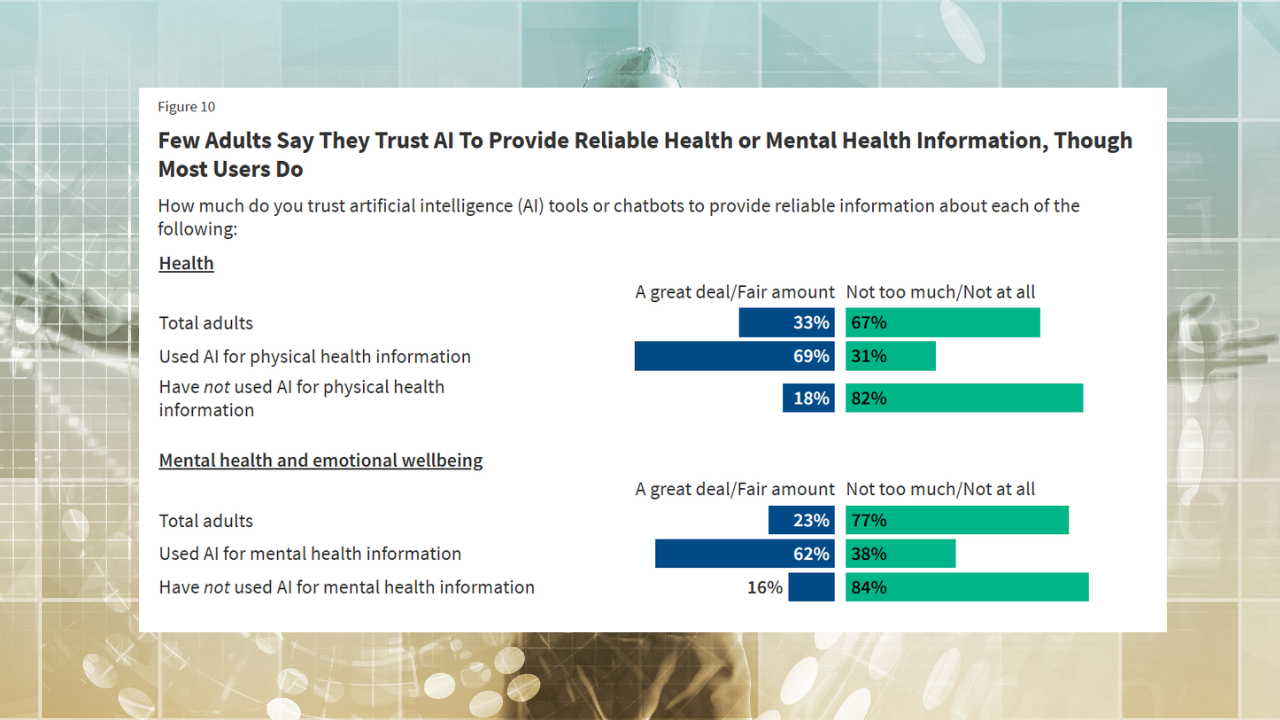
- Nearly 30% of adults used AI tools for physical health advice
- One in six sought mental health guidance
- The poll surveyed more than 1,300 adults
- More than 40% uploaded personal medical records into AI tools
CALIFORNIA, UNITED STATES — About one-third of United States adults are turning to artificial intelligence (AI) for health information and guidance.
The findings signal a growing shift in how patients interact with the healthcare system. The trend raises questions for hospitals, clinics, and health providers about patient behavior, data privacy, and the integration of AI into care delivery.
AI adoption driven by convenience and access gaps
According to a recent report from the Kaiser Family Foundation (KFF), KFF’s poll, which surveyed more than 1,300 adults, found that nearly 30% of respondents used AI tools for physical health advice over the past year, while 1 in 6 sought mental health guidance.
According to a report from Healthcare Dive, “Respondents said their top reasons for using AI include the desire for quick health advice and researching information before seeing a provider,” the report stated.
Access challenges are also pushing patients to AI. About 1 in 5 users said that not having a healthcare provider or difficulty getting an appointment were key drivers of their AI use.
Younger adults and low-income populations, in particular, reported turning to AI more frequently due to affordability issues and limited access to care.
For healthcare providers, this trend underscores a dual challenge: while AI can guide patients and potentially reduce routine inquiries, it can also complicate care if patients act on incomplete or inaccurate advice.
About 6 in 10 adults who used AI for physical health consulted a provider afterward, but younger adults were less likely to follow up, suggesting that hospitals and clinics may need to develop strategies to engage digitally savvy patients.
Opportunities and caution for healthcare systems
The rise of AI health tools presents opportunities for health systems to streamline patient engagement and triage.
Tech giants like OpenAI, Microsoft, and Amazon are offering AI platforms that allow patients to connect medical records for personalized advice. The tools can help patients navigate complex care pathways, potentially reducing administrative burdens for clinics and providers.
Yet, data privacy remains a significant concern. More than 40% of users reported uploading personal medical records into AI tools, while over three-quarters expressed worry about how their information is protected.
“Health data privacy is also a concern. More than three-quarters of adults say they’re very or somewhat concerned about the privacy of personal medical information uploaded into AI tools,” KFF noted.
Outsourcing certain digital services to specialized providers could help healthcare organizations manage AI integration safely, from secure patient data handling to AI-driven patient triage.
By combining in-house clinical expertise with outsourced AI support, hospitals and clinics can leverage technology without compromising privacy or care quality.
As AI becomes a regular part of health information-seeking behavior, providers will need to balance innovation with oversight, ensuring patients benefit while minimizing risk.
Related news
- AI health chatbots can miss medical emergencies, study warns patients · 5 Mar
- Healthcare drives U.S. job growth amid aging population · 26 Mar
- Nearly half of U.S. colorectal cancers now under 65: ACS · 4 Mar
Disclosure: Outsource Accelerator uses AI tools in the backend of its editorial workflow. Every article is reviewed and verified by a human editor before publication.
Stay ahead in healthcare outsourcing. Join thousands of healthcare and business leaders who rely on Outsource Accelerator for the news, trends, and expert insights shaping medical BPO and the future of care delivery. Subscribe to our free newsletter and never miss an update.








