
Philippines BPO workers call for $21 wage increase as inflation bites

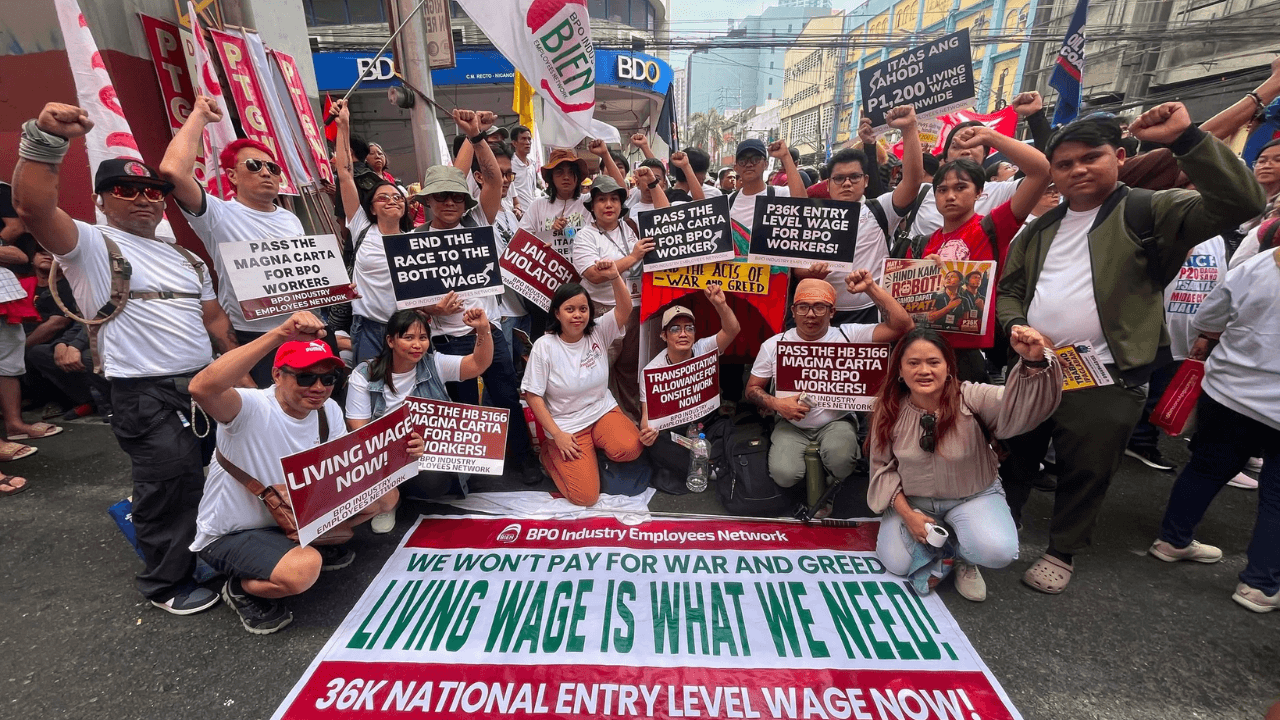
- BPO workers petitioned for a PHP1,200 daily minimum wage in Metro Manila
- The current non-agricultural minimum is PHP695 a day
- IBON Foundation puts a family of five’s daily need at PHP1,266
- About 20% of BPO workers earn PHP15,000 to PHP17,000 monthly
MANILA, PHILIPPINES — A network of Philippine business process outsourcing (BPO) workers has petitioned the country’s Department of Labor and Employment for a PHP1,200 (about US$21) daily minimum wage in the National Capital Region — nearly double the current rate — citing rising costs of goods, fuel price spikes, and a weakening peso just days before Labor Day.
The BPO Industry Employees Network (BIEN) Philippines filed the petition Wednesday before the Regional Tripartite Wages and Productivity Board in Pasay City, escalating pressure on a sector that employs more than 1.7 million Filipinos and underpins much of the country’s service exports.
According to a report from Inquirer.net, the move signals mounting wage tension inside the world’s second-largest BPO market and a potential cost recalibration for U.S. and European firms that rely on the Philippines for offshore customer service and back-office work.
A demand anchored in constitutional rights and cost-of-living data
BIEN Philippines framed the petition as a constitutional right under Article XIII, Section 3 of the Philippine Constitution, which mandates that the state “afford full protection to labor.”
The network cited a computation by the IBON Foundation showing that a family of five in the NCR needs a daily wage of PHP1,266 (about $22) to meet basic needs — far above the current P695 (about $12) daily minimum for non-agricultural workers, last raised by PHP50 (about $0.87) in July 2025.
A BIEN Philippines survey conducted in February found that roughly 20% of BPO workers earn between PHP15,000 and PHP17,000 (about $260 to $295) monthly, while 13% earn PHP18,000 to PHP20,000 (about $312 to $347), exposing a wide gap between current pay and the proposed living wage.
“Granting a meaningful wage increase is therefore both just and equitable to preserve workers’ standards of living amid worsening economic conditions,” BIEN Philippines said in a statement.
Inflation, energy pressure, and a labor day showdown
The network argued that rising oil prices, sustained commodity inflation, the declining purchasing power of the Philippine peso, and a national energy emergency linked to the Middle East conflict all justify an immediate wage review. The petition lands at a moment when Filipino households are absorbing higher utility, transport, and food costs that have outpaced existing wage adjustments.
BIEN Philippines also urged BPO workers to join Labor Day mobilizations, joining the National Wage Coalition’s broader push for a PHP200 (about $3.47) daily wage hike, expanded income tax exemptions, and accountability for corrupt government officials. The coordinated protests are expected to draw participation from major labor groups across the country.
The wage push reflects a broader recalibration unfolding across the global outsourcing industry, where rising worker expectations in offshore hubs are colliding with enterprise demands for cost stability. As the Philippines competes with India, South Africa, and Latin America for BPO contracts, the outcome of this petition will signal whether the country’s traditional cost advantage holds — or whether providers will need to absorb higher labor expenses while differentiating on quality, AI integration, and service depth.
Related news
- Philippine BPOs seek expanded WFH as global fuel costs rise · 13 Mar
- 1.9Mn Philippine BPO workers gain credit access in Maya-IBPAP deal · 12 Mar
- Bangladesh call centers struggle to compete globally — report · 5 Mar
Disclosure: Outsource Accelerator uses AI tools in the backend of its editorial workflow. Every article is reviewed and verified by a human editor before publication.
Stay ahead of the outsourcing industry. Join thousands of business leaders who rely on Outsource Accelerator for the news, trends, and expert insights that matter. Subscribe to our free newsletter and never miss an update.








