
Companies shift to hybrid workforce mixing humans, AI agents

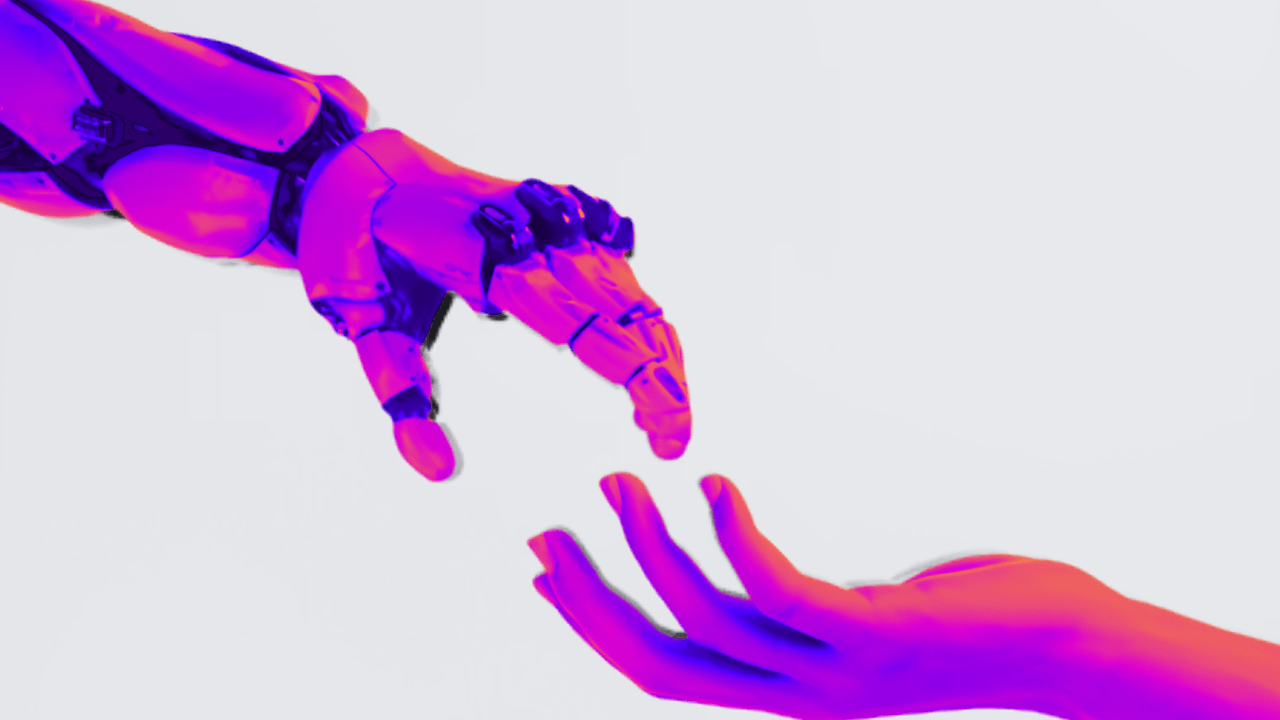
CALIFORNIA, UNITED STATES — Companies are restructuring how work gets done by combining permanent employees, contingent labor, and digital workers — including artificial intelligence (AI) agents and robotic process automation (RPA) bots — into a new hybrid workforce model.
The shift marks a fundamental rethinking of workforce strategy, with organizations no longer focused on headcount but on how work should be allocated across human and machine workers.
According to a report released this week by Staffing Industry Analysts, the move signals a defining moment for enterprises, outsourcing providers, and HR leaders navigating the next phase of AI-augmented operations.
The new logic of workforce design
The report identifies two categories of digital workers reshaping enterprise operations: AI agents and RPA bots.
AI agents use large language models and neural reasoning to handle tasks requiring interpretation, context, and decision-making — including customer support, text summarization, and content generation.
RPA bots handle rule-based, repeatable tasks like data extraction, form population, and report generation.
“Instead of asking how many people are needed, organizations are increasingly asking how work should be allocated across employees, contingent labor and digital workers,” the report states.
Human workers are increasingly being deployed for complex, interpersonal, and judgment-based activities, while rules-based tasks shift to automation.
Leading AI agent providers cited in the report include Anthropic, Google Gemini/Vertex AI, OpenAI, ServiceNow, and Workday, while top RPA vendors include UiPath, Appian RPA, WorkFusion, and AutomationEdge.
Adoption is early, but the restructuring has begun
Despite growing enterprise interest, the report finds that adoption remains in the early stages, with many organizations still experimenting with AI agents rather than scaling them across operations.
The pace of deployment is uneven, but the directional shift is clear — digital workers are reshaping roles and compressing organizational layers rather than triggering wholesale job elimination.
“Rather than eliminating jobs outright, digital workers tend to reshape roles and compress organizational layers,” the report notes.
The finding pushes back against the dominant AI layoff narrative and signals that hybrid models — not mass workforce reduction — will define the next phase of enterprise transformation.
The report, authored by SIA’s John Nurthen and Brian Wallins, covers additional topics including AI orchestration, pricing, and build-versus-buy decisions for digital workers.
The hybrid workforce shift reflects a broader recalibration unfolding across the global outsourcing industry, where business process outsourcing (BPO) and IT services providers are racing to integrate digital workers alongside human agents to deliver enterprise clients faster, cheaper, and more scalable services.
As the line between staffing and automation continues to blur, providers that build flexible delivery models combining permanent staff, contingent labor, and AI agents are positioned to win the next wave of enterprise contracts — while those still selling labor capacity alone face mounting pressure to evolve.
Related news
- UK firms shift customer support to South Africa, Poland, Ukraine · 5 May
- AI not replacing customer service jobs: Gartner leader · 28 Apr
- Philippines expands WFH to 90% for IT-BPM sector · 14 Apr
Disclosure: Outsource Accelerator uses AI tools in the backend of its editorial workflow. Every article is reviewed and verified by a human editor before publication.
Stay ahead of the outsourcing industry. Join thousands of business leaders who rely on Outsource Accelerator for the news, trends, and expert insights that matter. Subscribe to our free newsletter and never miss an update.








