
Philippines CX sector eyes 5% revenue growth as AI adoption gaps emerge

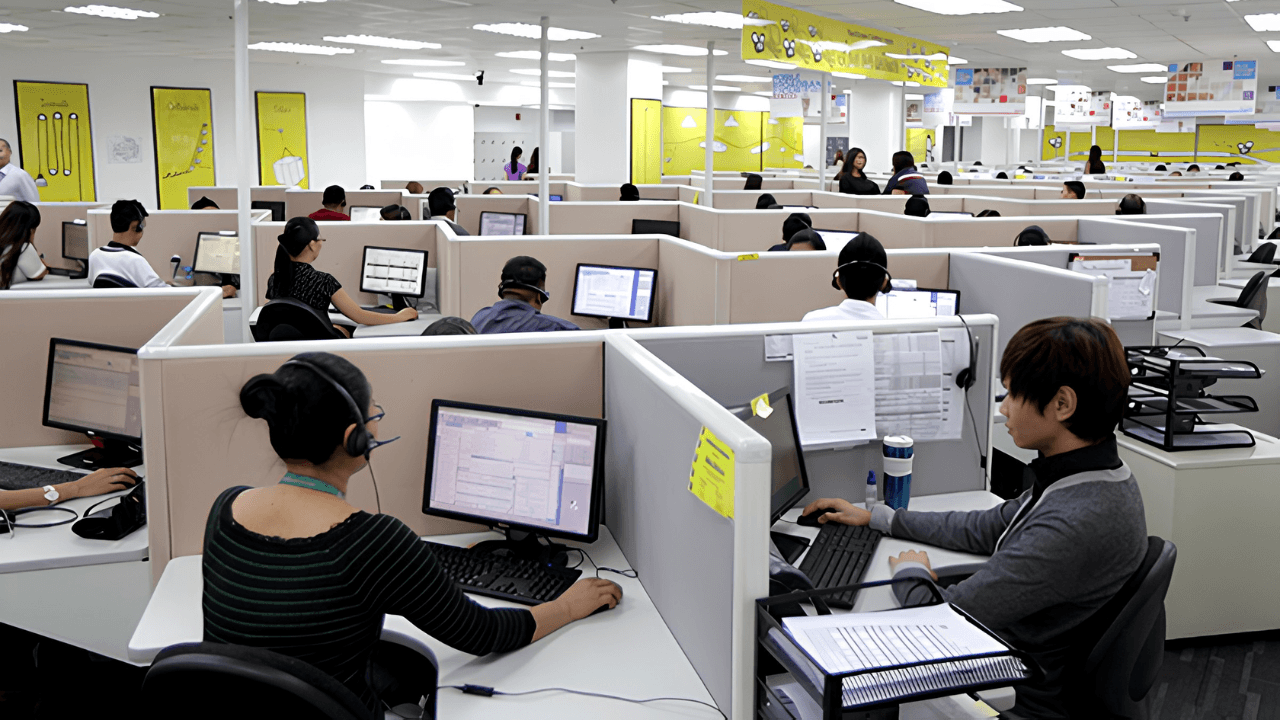
- CXAP projects $35.7 billion in 2026 contact center revenue
- That is a 5% increase over 2025’s $33.9 billion
- Employment should reach 1.73 million workers in 2026
- The sector is 84% of the country’s $40.3 billion IT-BPM revenue
MANILA, PHILIPPINES — The Customer Xperience Association of the Philippines (CXAP) projects the country’s contact center sector will generate US$35.7 billion in revenue in 2026 — a 5% increase over 2025’s US$33.9 billion — despite headwinds from geopolitical instability, Western policy shifts, and AI disruption.
The sector accounts for 84% of the Philippines’ total IT-BPM revenue of US$40.3 billion.
CXAP projects $35.7B revenue on 5% growth rate
According to a report from Philstar.com, the 5% forecast marks a deceleration from 7% growth in 2025 but maintains positive trajectory. Employment is projected to reach 1.73 million workers in 2026, growing from 1.68 million in 2025 — a net gain of approximately 50,000 during a year when AI’s impact on the workforce is the sector’s most closely watched variable.
The CC-BPM sector accounts for 89% of total IT-BPM industry employment in the Philippines — a concentration that makes the sector’s workforce trajectory a near-direct proxy for the country’s IT-BPM labor market overall.
“The CC-BPM sector’s performance is on track and is expected to remain strong, aligning with the 2028 roadmap targets of the IT-BPM industry,” said Mitch Locsin, CXAP Chairman.
AI adoption gaps emerge across half the sector
CXAP’s 2026 Executive Survey found 52% of respondents in the moderate AI adoption stage — tools are deployed, but workflow integration, workforce training, and data infrastructure have not been fully restructured around AI-enabled delivery.
Forty-three percent are in the scaling stage and 41% have reached operational efficiency, with generative AI, predictive analytics, chatbots, agentic AI, and robotic process automation cited as the top adopted technologies across the sector.
AI scaling constraints identified by executives — talent availability, implementation cost, data quality, organizational change management, and client demand — indicate the gap is structural, not solely a technology readiness issue.
The most in-demand AI skills — AI/automation proficiency, digital and IT capability, CRM, data analytics, and leadership — represent the workforce gap that must close for moderate adoption to become genuine operational integration.
“Our people are no longer simply handling transactions. They are solving problems, building relationships and creating value. As the industry evolved, we realized our identity needed to evolve with it,” said Haidee Enriquez, CXAP President.
For enterprise CX buyers expanding Philippine offshore contracts, CXAP’s data signals a sector in active transition but not yet uniformly AI-delivered: 52% at moderate adoption means AI capability varies by provider, and buyers should test for integration depth rather than taking sector-level positioning at face value.
The 5% revenue projection confirms the market is stable. The adoption data confirms the transformation is uneven and still in progress.
Related news
- Leadership inertia, not tech, blocks AI in the Philippines · 20 May
- Philippines eyes BPO expansion into Paraguay after historic visit · 19 May
- Philippines GCC market eyes $55B by 2030 as micro-GCCs surge · 2 Jun
Disclosure: Outsource Accelerator uses AI tools in the backend of its editorial workflow. Every article is reviewed and verified by a human editor before publication.
Stay ahead of the outsourcing industry. Join thousands of business leaders who rely on Outsource Accelerator for the news, trends, and expert insights that matter. Subscribe to our free newsletter and never miss an update.








