
Japan’s hospital outsourcing market to nearly triple by 2033: DataM

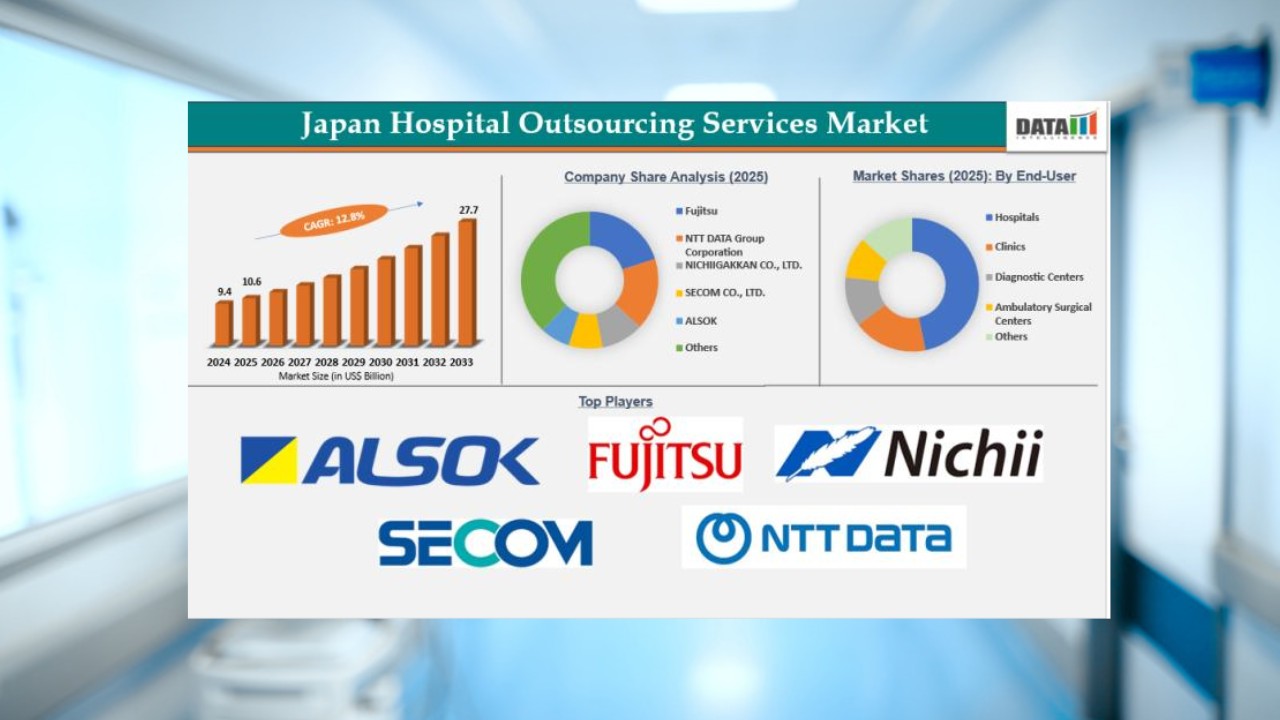
- Japan’s hospital outsourcing market should grow from $10.60 billion to $27.70 billion
- That runs from 2025 to 2033 at a 12.8% CAGR
- Fujitsu, NTT DATA and NICHIIGAKKAN hold over 40% of the market
- The Kanto region accounts for 38.4% of demand
HYDERABAD, INDIA — Japan’s hospital outsourcing services market is projected to grow from $10.60 billion in 2025 to $27.70 billion by 2033 — a 12.8% compound annual growth rate — as the country’s aging population, persistent healthcare workforce shortages, and accelerating digital transformation create structural demand for third-party hospital services.
Clinical outsourcing, healthcare IT management, and facility services are the growth engines.
Ageing population and staff shortages drive Japan’s hospital outsourcing
According to a press release, Japan’s rapidly aging population and high hospitalization rates — with thousands of hospitals managing disproportionately elderly patient bases — are creating structural demand for outsourced clinical, administrative, IT, and facility management services that domestic staffing levels cannot fill at pace.
The $17.10 billion market expansion projected between 2025 and 2033 reflects a structural reorientation of Japan’s healthcare delivery model: hospitals are shifting from in-house operations toward specialist third-party providers across every service category from medical billing to facility management.
Persistent shortages of nurses, administrative staff, and support personnel are accelerating outsourcing adoption — with hospitals outsourcing non-core functions specifically to allow clinical staff to concentrate on patient care rather than operational management.
Fujitsu, NTT DATA, and NICHIIGAKKAN hold 40% of market share
Fujitsu (15.6%), NTT DATA (13.8%), and NICHIIGAKKAN (11.7%) together account for over 40% of Japan’s hospital outsourcing market — a concentration that reflects deep healthcare IT infrastructure requirements and the compliance demands of operating within Japan’s regulated hospital environment.
The Kanto region holds 38.4% of market demand, anchored by Tokyo’s dense hospital network and large elderly patient volume, with Kansai (24.6%) and Chubu (15.8%) as the next-largest regional markets.
Long-term managed services contracts are the dominant outsourcing model — hospitals preferring comprehensive, continuous outsourcing partnerships over project-based engagements, which drives higher contract value and longer client tenure for established providers.
Healthcare IT outsourcing — covering EHR and EMR systems, IT infrastructure management, cybersecurity, and digital hospital management platforms — is the fastest-growing segment, fueled by Japan’s government-backed digital transformation push across hospital networks.
For BPO and healthcare IT outsourcing operators evaluating Japan as a growth market, the 12.8% CAGR projection signals sustained structural demand across clinical support, administrative services, IT management, and facility operations through 2033.
Japan’s offshore outsourcing segment — currently secondary to domestic provision — represents a strategic entry point for international operators as hospitals manage simultaneous cost and workforce pressures.
Related news
- Hyderabad woman credits $262 BPO job for landing Amazon role · 13 Jun
- Global healthcare BPO market to surpass $600bn by 2033: DMI · 21 Apr
- U.S. drug tariffs disrupt global pharma and outsourcing markets · 24 Oct 2025
Disclosure: Outsource Accelerator uses AI tools in the backend of its editorial workflow. Every article is reviewed and verified by a human editor before publication.
Stay ahead of the outsourcing industry. Join thousands of business leaders who rely on Outsource Accelerator for the news, trends, and expert insights that matter. Subscribe to our free newsletter and never miss an update.








