
Musk: AI to make work optional, office jobs to vanish first

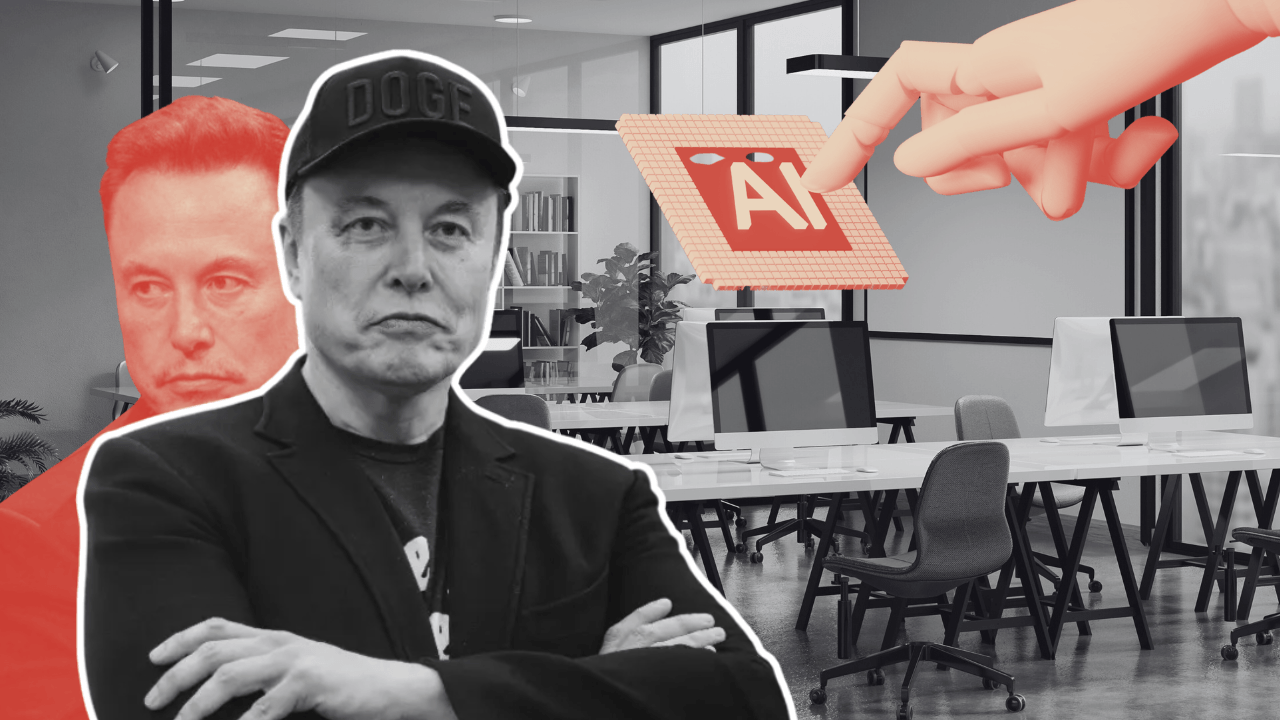
LONDON, ENGLAND — The prospect of artificial intelligence (AI) rendering human labor obsolete has shifted from science fiction to a tangible possibility, with tech billionaire Elon Musk predicting that work will soon become optional for millions.
Musk’s vision suggests that as AI systems replace office-based jobs, a new economic model could emerge where a universal basic income, funded by corporate taxes, frees humanity from the daily grind of traditional employment.
AI job losses: Why office workers will be replaced first
In a recent opinion piece for The Guardian, columnist Gene Marks highlights Musk’s assertion that the transition will be swift and will initially target a specific segment of the workforce.
Musk’s previous predictions that AI and robotics could make work optional within the next 10 to 20 years are underscored by warnings that office workers may be the first casualties of the shift.
“Anything digital, anyone sitting at a computer producing files, that’s what goes first,” said Musk.
This might displace the employment of hundreds of millions of people worldwide, since AI agents will be able to perform jobs that office workers have been doing.
It is easy to gauge the extent of potential job loss by comparing the scale of tasks AI can already perform or will be able to perform in the near future.
Bots will presumably handle order placement, account reconciliation, email and messaging, cash receipt application, proposal creation, invoice writing, and the full range of administrative and clerical tasks.
For countless office workers, the daily reality of commuting, sitting at a desk for 10 hours, dealing with co-workers, and enduring performance evaluations may soon become artifacts of a pre-AI era.
Universal basic income: Funding an AI work-optional society
Musk’s prediction extends beyond job displacement to envision a fundamental restructuring of how society provides for its citizens.
The theory is based on historic business productivity and profitability in a world run by AI, which would enable governments to tax more of corporate income and redistribute taxes to the population.
The effect of this universal basic income would be to offer adequate income not only for necessities but also for luxuries, and to render employment optional rather than a necessity for survival.
The fact that individuals on their deathbeds never complain about not spending more time in the office indicates that humans instinctively tend to engage in activities such as reading, playing, family time, and personal interests rather than being in cubes reading reports.
Marks notes in his column, “Instead of being afraid of the future, maybe it makes more sense to embrace it.”
If this prediction comes true, the future of work may be defined less by permanent employment and more by how governments, businesses, and workers manage the economic and social transition from office-based labor to AI-driven productivity.







