
‘Godfather of AI’ warns mass unemployment, backs Gates and Musk

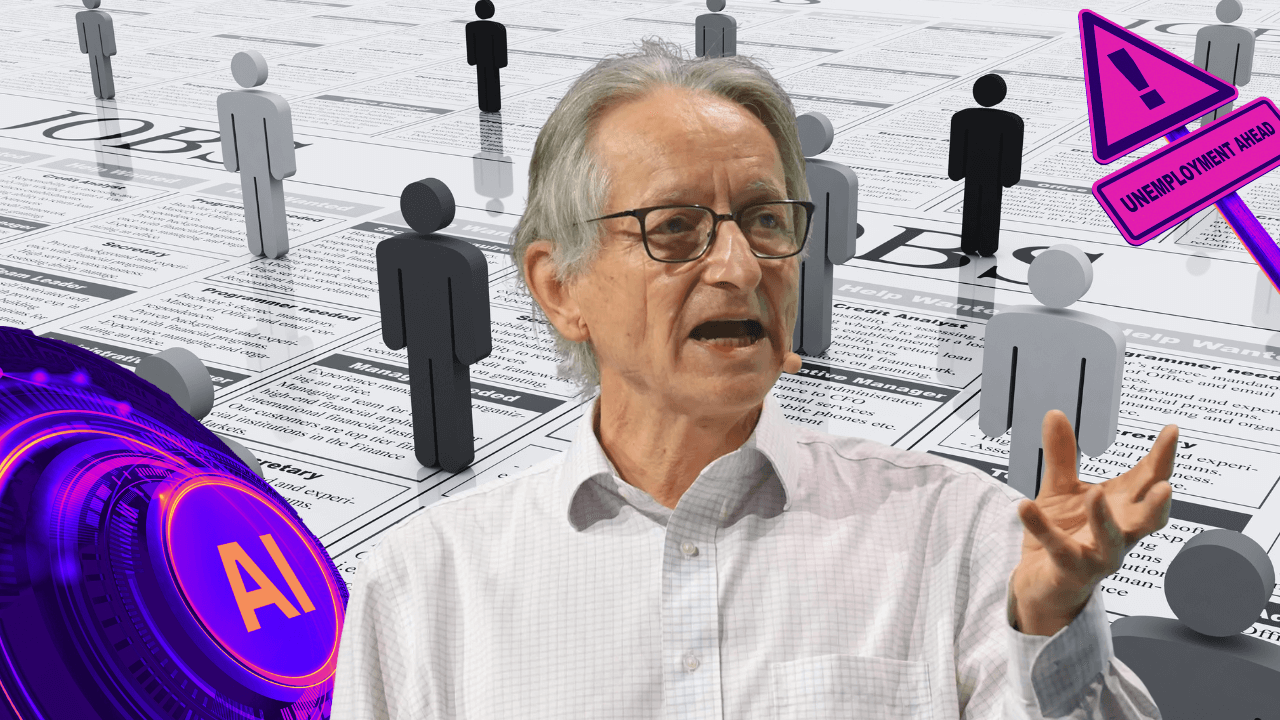
NEW YORK, UNITED STATES — Geoffrey Hinton, known as the “Godfather of AI,” has aligned himself with predictions by Elon Musk and Bill Gates, warning that mass unemployment due to artificial intelligence (AI) is a likely outcome, according to a Fortune report.
Hinton stated that tech giants are financially betting on AI systems replacing human workers, a transition he discussed in a recent forum with Senator Bernie Sanders, though he cautions that long-term predictions remain deeply uncertain.
“It seems very likely to a large number of people that we will get massive unemployment caused by AI,” Hinton said.
Tech giants bet on worker replacement
Hinton explained that the trillion-dollar investments in data centers and chips are partly justified by the prospect of selling AI that performs work more cheaply than people.
“These guys are really betting on AI replacing a lot of workers,” Hinton stated, characterizing the industry’s drive as fueled by short-term profit motives rather than pure scientific progress.
Musk previously stressed that technological disruption would necessitate a universal high income. Still, his prediction of a work-optional society within decades hinges on a daunting socioeconomic reorganization that economists warn lacks both the current technical scalability and the political will for equitable distribution.
This economic calculus is unfolding as the financial scale of AI becomes clearer. OpenAI, the creator of ChatGPT, is not projected to become profitable until at least 2030 and may require over $207 billion to sustain its growth, per HSBC estimates.
The push to develop these systems, therefore, is directly linked to a business model in which automating human roles delivers a key return on these colossal investments, setting the stage for a sweeping economic reshuffling.
Political alarms sound over scale, speed of disruption
The potential societal impact of AI-driven job loss is triggering urgent warnings from U.S. lawmakers, who fear a crisis is brewing without adequate preparation.
Sanders, citing analysis partly generated by ChatGPT, has warned that nearly 100 million U.S. jobs are at risk, spanning from fast food and customer service to white-collar roles in accounting, software development, and nursing.
Sanders frames the threat not just in economic terms, but as a fundamental blow to human purpose, questioning what happens when the vital aspect of contributing through work is removed.
Other senators highlight the specific demographic dangers and the historical failure to regulate technology. Senator Mark Warner warned that disruption could hit young people first, potentially driving unemployment among recent college graduates to 25% over the next two to three years.
Warner draws a parallel to the unregulated rise of social media and warns that “if we make that same response on AI and don’t put guardrails, I think we will come to rue that day.” This indicates increased agreement among the political establishment that guardrails must guide the AI transition to reduce extreme human costs.







