
AI may shrink workweek to 3-4 days, says Zoom CEO

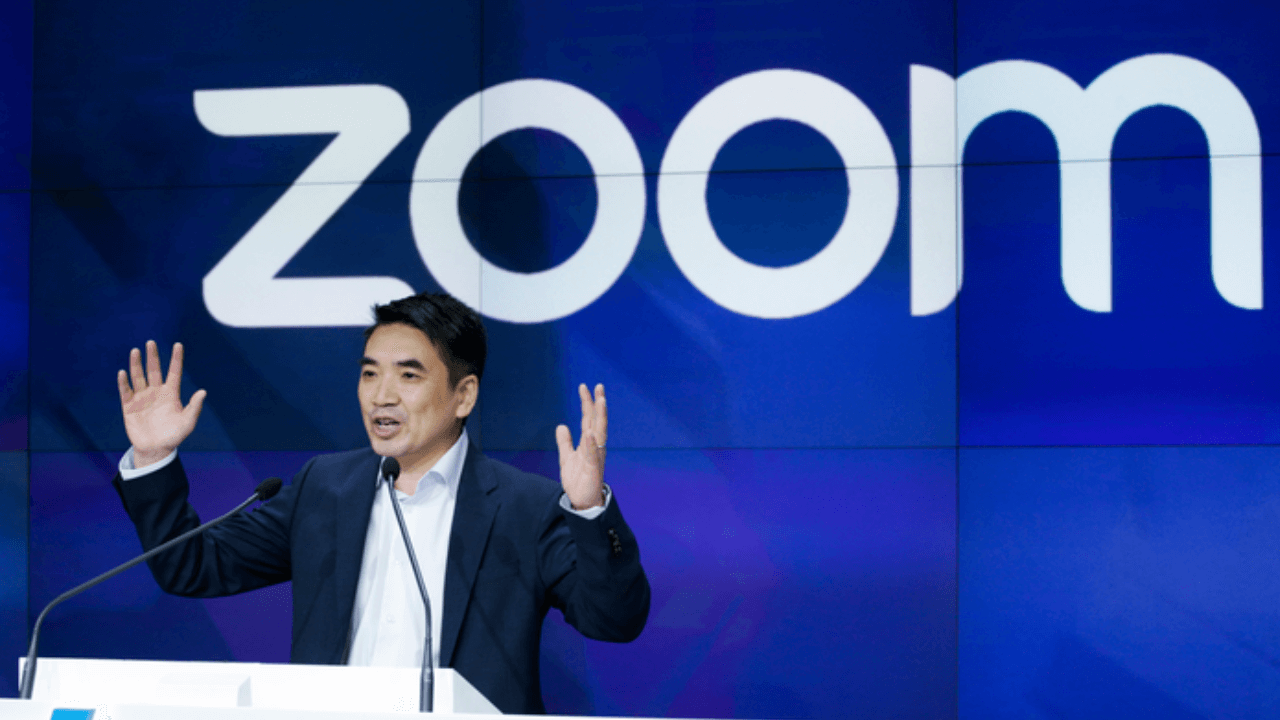
CALIFORNIA, UNITED STATES — Zoom Chief Executive Officer (CEO) Eric Yuan agrees that artificial intelligence will fundamentally reshape the modern workweek, potentially reducing it to just three or four days.
In an interview with The New York Times, Yuan cites AI’s ability to automate tasks and boost productivity, though he acknowledges the transition will inevitably eliminate some roles entirely.
AI productivity could make five-day weeks obsolete
Tech executives state that the biggest effect of AI will be a significantly higher productivity through automation, rendering the five-day workweek redundant.
On one occasion, Microsoft Co-founder Bill Gates told Jimmy Fallon on The Tonight Show, “What will jobs be like? Should we just work like 2 or 3 days a week?”
The idea of Yuan suggests that once AI reaches high levels of efficiency and quality of life, working five days a week will no longer be necessary, leading to the widespread adoption of three- or four-day workweeks.
These are the sentiments voiced by Nvidia CEO Jensen Huang, who in his opinion, the rate of the AI revolution is likely to result in a four-day working week but cautions that work will intensify, saying on Fox Business Network’s The Claman Countdown that, “I have to admit that I’m afraid to say that we are going to be busier in the future than now.”
Job displacement likely alongside opportunity
Despite the optimistic vision of more leisure time, executives openly concede that AI adoption will lead to significant job losses, particularly in roles centered on repetitive tasks.
Yuan acknowledges that a technological “paradigm shift” means some job opportunities will disappear, using the example of entry-level engineers whose coding tasks can now be automated by AI.
This aligns with the view of JPMorgan Chase CEO Jamie Dimon, who stated AI would “of course” replace some jobs even as it improves work-life balance for others. “Your children are going to live to 100 and not have cancer because of technology,” Dimon said in an interview with Bloomberg TV in 2023. “And literally they’ll probably be working 3 and a half days a week,” he added.
The transformation is compared to historical industrial revolutions, where technological advances created new roles while rendering others obsolete.
Yuan emphasizes that while AI may write code, humans will still be needed to manage it, and the creation of “digital agents” will generate demand for people to oversee those systems, suggesting an evolution rather than a simple eradication of work.
The definition of a “shorter” workweek remains ambiguous, with some suggestions implying more intense work compressed into fewer days rather than a genuine reduction in labor.







