
AI overhauls corporate hierarchies, forcing HR-IT convergence

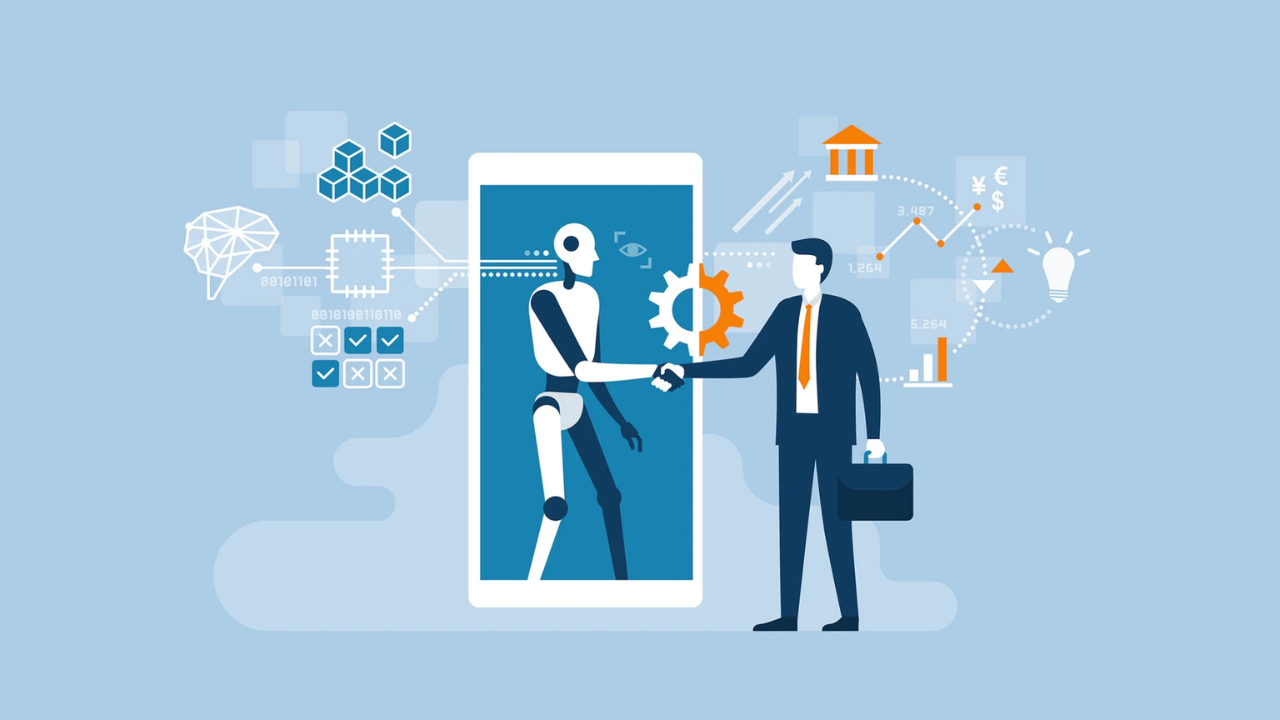
NEW YORK, UNITED STATES — Driven by artificial intelligence, a corporate overhaul is eliminating layers of management and forcing unprecedented collaboration between technology and human resources leaders to build a more agile workforce.
This shift signals a flatter, skills-based team pushing a fundamental re-engineering of how companies operate.
AI-driven reorganization challenges traditional corporate hierarchy
A consensus emerging from tech leadership, discussed at The Wall Street Journal Leadership Institute’s Technology Council Summit, is that the traditional corporate hierarchy is becoming obsolete. The new model prioritizes a larger number of individual contributors—staff focused on executing work—with fewer layers of middle management.
According to The Wall Street Journal, this results in an organizational shape that Apoorv Agrawal, a Partner at technology-focused investment firm Altimeter Capital, described as a “barbell,” with a small cadre of leaders directly overseeing a broad base of specialized talent.
For example, NVIDIA Chief Executive Officer (CEO) Jensen Huang was cited as a precursor to this trend, as he personally oversees more than 50 people, demonstrating a significantly widened span of control.
This reorganization makes a more multidisciplinary and dynamic approach to project work inevitable. Forming teams is becoming increasingly ad-hoc, and they consist of engineers, product developers, and business specialists who try to find solutions to a particular problem and then dissolve.
This fluid model boasts high speed and flexibility, as it transcends the usual reporting line and leverages diverse skill sets.
HR, IT merge strategies to enable AI-powered work planning
To execute this transformation, an unprecedented collaboration is occurring between technology and human resources departments.
The traditional separation between HR, which plans for people, and IT, which plans for systems, is breaking down in favor of a unified strategy. Moderna exemplifies this trend, having formally merged its technology and HR functions under Chief People and Digital Technology Officer Tracey Franklin.
This merger acknowledges that in the AI era, planning for work must holistically consider both human skills and technological capabilities.
“And we looked at that and said: It’s actually all how work gets done. And so we need to start doing something that we call work planning,” Franklin said. This necessitates a continuous reassessment of roles in light of the evolving partnership between humans and machines.
“The rapid advancement of AI, it’s just really a catalyst to say humans, machines, robotics are all going to be integrated,” she added.
The very calculus of hiring is changing, with leaders like Agrawal noting that investment decisions now directly weigh the cost of hiring human engineers against the cost of purchasing additional AI compute power, such as GPUs.
This fusion of departments is essential to manage the scale of change anticipated, with TIAA’s Sastry Durvasula predicting a shift in jobs due to the adoption of AI.
“I believe that 80% of the jobs will change at least 20% by AI. And 20% of the jobs will change as much as 80%,” Durvasula explains.
The convergence of flatter organizational structures and a unified human-technology strategy is forging a new, agile enterprise built not on static roles, but on the dynamic and integrated collaboration between human talent and artificial intelligence.
Related news
- AI will replace customer service jobs first, OpenAI CEO predicts · 25 Sep
- AI, slowdown squeeze entry-level hiring for Gen Z: Fed chair · 25 Sep
- Millennials outpace Gen Z in adopting generative AI for work · 25 Sep
Disclosure: Outsource Accelerator uses AI tools in the backend of its editorial workflow. Every article is reviewed and verified by a human editor before publication.
Stay ahead of the outsourcing industry. Join thousands of business leaders who rely on Outsource Accelerator for the news, trends, and expert insights that matter. Subscribe to our free newsletter and never miss an update.








