
AI smart sensor detects fatigue with 92% accuracy

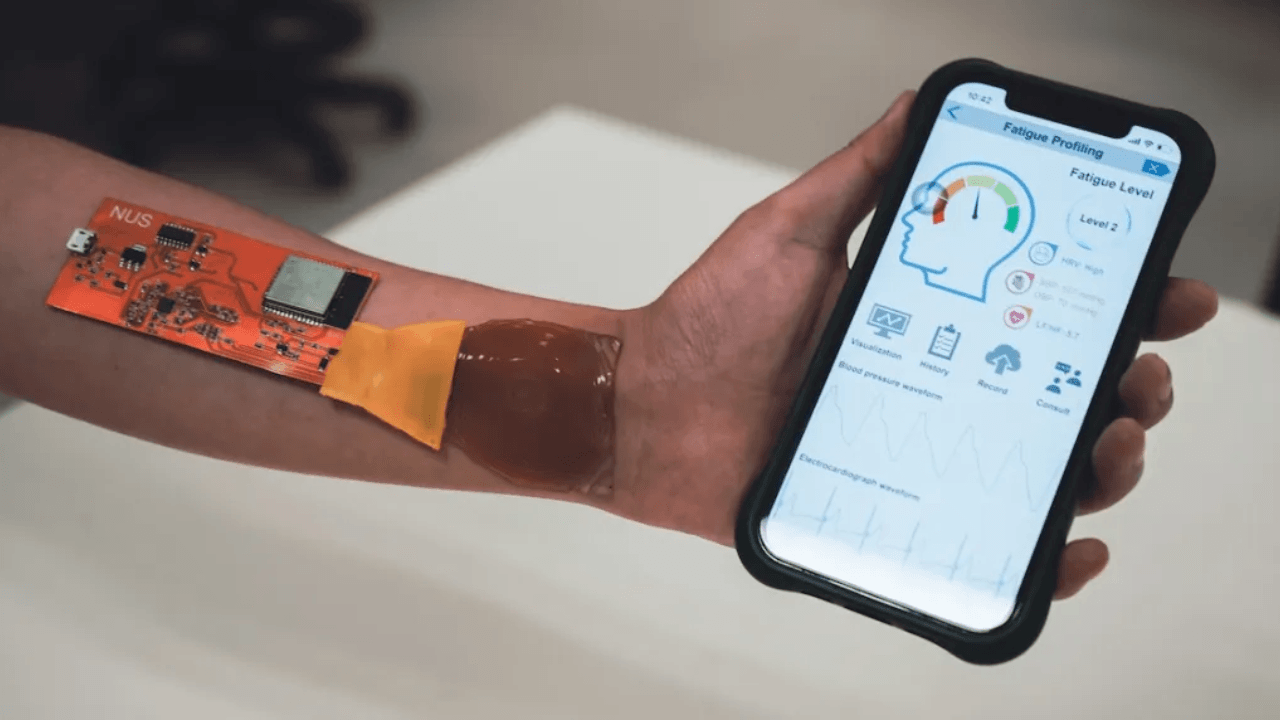
KENT RIDGE, SINGAPORE — A new AI-powered wearable sensor developed by researchers at the National University of Singapore can detect fatigue with 92% accuracy, offering healthcare providers a potential tool for continuous, objective monitoring of patients’ mental and physiological states.
According to a report from MobiHealthNews, the metahydrogel-based sensor platform captures subtle cardiovascular signals linked to fatigue, such as heart rate variability and electrocardiogram (ECG) patterns, even during movement.
Findings published in Nature Sensors suggest the technology could address longstanding gaps in how fatigue and mental health conditions are assessed in clinical and real-world settings.
Clinical-grade monitoring could reshape patient care
Unlike traditional wearables, the sensor is engineered to filter noise at the point of contact with the body. A nanoparticle structure reduces motion-related vibrations, while a liquid component allows key signals to pass through. A machine learning algorithm then refines the data further.
The result is a significant leap in signal clarity.
“Current smartwatches typically achieve ECG signal-to-noise ratios of 10-20 dB, which can decrease by approximately 40% under motion due to artefacts and unstable contact. Our system achieves around 37 dB during daily activities,” said Dr. Tian Guo, the study’s first author, in a media release.
For United States hospitals and clinics, the implications are notable. Fatigue, often linked to burnout, chronic illness, and mental health disorders remains difficult to measure objectively.
Providers largely rely on intermittent, self-reported assessments, which can miss early warning signs.
By enabling continuous monitoring, the sensor could support earlier interventions, improve patient safety, and enhance care for high-risk groups, including frontline healthcare workers and patients with cardiovascular or neurological conditions.
Operational impact and outsourcing opportunities
Beyond clinical benefits, the technology may also reshape healthcare operations. Continuous streams of high-quality physiological data could place new demands on health systems, particularly in data analysis, monitoring, and patient follow-up.
“By capturing real-time, dynamic signals directly from the body, it becomes possible to move from episodic, perception-based assessment to a more objective and continuous understanding of mental and physiological states,” said study lead Professor Ho Ghim Wei.
However, scaling such capabilities may require strategic support. U.S. providers facing workforce shortages could increasingly turn to outsourced clinical monitoring services and AI-driven analytics partners to manage data interpretation and remote patient oversight efficiently.
Researchers emphasized that improving signal quality at the source is key. As Dr. Tian noted, software-based approaches “typically work after noise has already entered the system,” making it harder to preserve meaningful data.
While still in the research phase, the team is working to expand datasets and validate the system across broader populations.
“Looking ahead, scaling the dataset remains a key priority,” Professor Tian said.
As healthcare systems continue shifting toward proactive and remote care models, innovations like this AI sensor could play a central role—provided infrastructure and operational strategies evolve alongside the technology.







