
AI to disrupt 93% of jobs years ahead of schedule, Cognizant projects

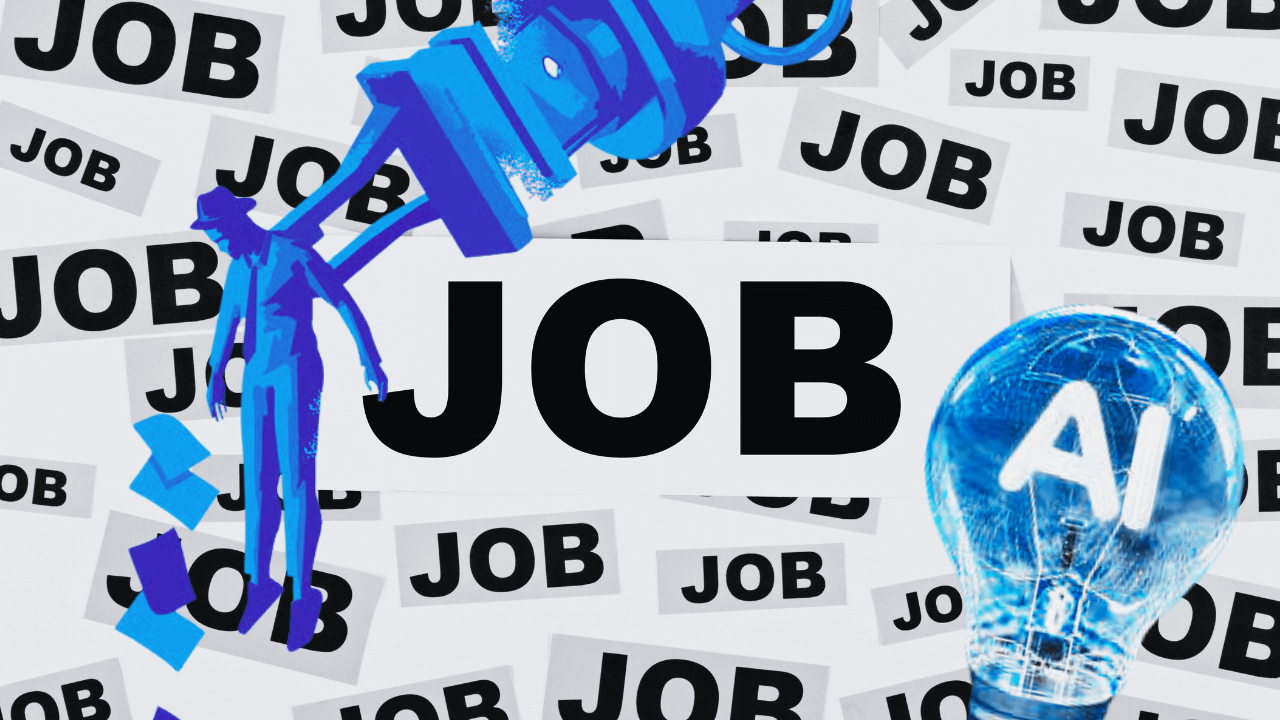
NEW JERSEY, UNITED STATES — The artificial intelligence (AI) job disruption is accelerating faster than thought, with a new study projecting 93% of roles worldwide will feel the impact—forcing a potential $4.5 trillion economic labor shift.
AI’s job impact is outpacing earlier forecasts
The pace at which AI is transforming work has dramatically outstripped expert forecasts. A Cognizant Research study reveals that a decade-long prediction is now becoming a reality.
The research, which reassessed 18,000 tasks across 1,000 professions, found that nearly 100% of jobs could be affected by AI—six years ahead of earlier projections. This represents a significant increase from the 90% disruption rate forecasted for a decade out just three years ago.
This acceleration is quantified by soaring “exposure scores,” which measure how automatable or assistable a job is by AI. Average exposure scores are now 30% higher than the levels forecasted for 2032, with the annual rate of increase jumping from 2% to 9%.
The economic scale of this shift is monumental, with an estimated $4.5 trillion in United States labor value potentially exposed to AI. As the report notes, “Across the board, AI-driven change is both more extensive and happening more quickly than anticipated.”
Three AI breakthroughs reshaping work
Three concurrent advancements in AI technology fuel the unprecedented acceleration in job impact:
The first is multimodality, where AI systems can now parse images, diagrams, and video, connecting digital intelligence to the physical world.
This capability has sharply increased exposure for jobs involving design review, product testing, maintenance, and quality control, which previously relied on visual comprehension beyond AI’s reach.
“Combined with sensor data and robotic integration, multimodality extends automation into the tactile and perceptual fabric of work. As a result, these types of jobs have climbed the exposure scale sharply,” the report stated.
Second, expanded AI reasoning allows systems to demonstrate consistent, transparent chains of thought for complex cognitive work. This has reclassified analytic tasks in consulting, finance, and law from being partially to mostly assistable. As the report notes, “Planning, forecasting, and diagnostic problem-solving are now within the operational domain of AI systems.”
Third, agentic AI enables systems to take meaningful action, moving beyond analysis to execution. This allows AI agents to work with business platforms to complete complex workflows, pulling administrative, coordination, and even managerial tasks into higher exposure categories.
The report stressed, “The boundary between ‘knowledge work’ and ‘process work’ is fading as systems handle execution as well as instruction.”
Together, these capabilities create a compounding effect, enabling AI to tackle practical, everyday tasks involving planning, sequencing, and inspection.
AI exposure rising fastest in white‑collar and specialist roles
The AI-driven transformation is affecting the entire labor market, but the degree and velocity of change vary significantly between job families.
Roles in business/financial operations, management, and office support are experiencing the most intense and rapid change, with average exposure scores rising from 14% to 21% in 2023 to 60% to 68% today, alongside high-velocity scores. For example, financial managers now have an exposure score of 84%.
Meanwhile, specialized sectors like healthcare, education, and law are on a fast “on-ramp” to AI influence. Exposure scores for healthcare practitioners climbed from 10% to 39%, and for lawyers, from 9% to 63%, as AI moves beyond administrative tasks to assist with diagnosis, student assessment, and legal analysis.
In contrast, jobs involving physical labor, once considered a haven, are beginning to see disruption, with exposure scores in construction and transportation rising significantly due to multimodal AI.
Human-centered jobs remain more resilient to AI
However, roles that demand deep human empathy, trust, real-time adaptation, and complex judgment—such as protective services, hands-on personal care, and installation/repair—have lower exposure and slower velocity, as these human qualities remain difficult to automate.
The report notes, “Regulatory and policy decisions, manager accountability, organizational strategies, and workforce adaptability will play a critical role in shaping adoption.”
This unprecedented acceleration signals not merely a disruption of tasks but the irreversible economic restructuring of human comparative advantage across nearly every sector.
Consequently, a viable response is for organizations to build operational elasticity and real-time skilling infrastructure, ensuring the workforce can adapt in lockstep with the technology that is redefining its purpose.







