
BPO workers join transport strike over rising fuel costs

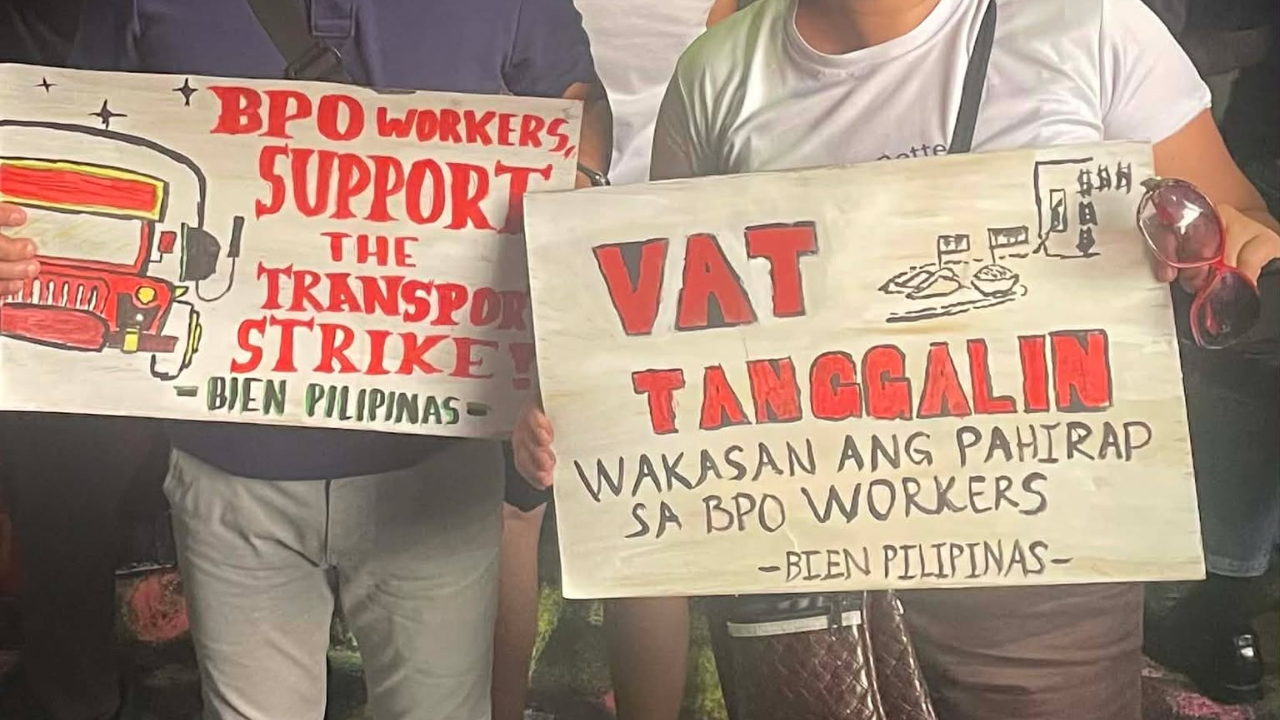
MANILA, PHILIPPINES — Business process outsourcing (BPO) workers in the Philippines have joined a two-day nationwide transport strike, citing soaring fuel prices as a threat not only to jeepney drivers but also to workers across industries who rely on public transport.
The move underscores growing concerns over the economic ripple effects of rising energy costs on both labor mobility and income.
Rising fuel costs cripple jeepney drivers
In a statement, BIEN Pilipinas, a progressive group representing BPO workers, said jeepney drivers can no longer make a living with diesel prices reportedly hitting ₱120 (US$2.02) per liter.
This surge has pushed daily operating expenses to around ₱3,600 (US$60.48).
“The drivers won’t earn anything… and they still have to pay their other fees,” the group said in Filipino language, emphasizing that drivers would be forced off the road if fuel costs continue to climb.
The statement highlighted the precarious situation faced by public transport operators, many of whom are struggling to balance costs against declining income.
Wider impact felt across industries
BIEN Pilipinas also warned that the effects of the strike would extend far beyond transport operators.
“If the drivers can no longer operate, the operators won’t earn anything either. Workers, professionals, students won’t have any way to commute… Even us night-shift heroes are affected,” the group said in Filipino language, pointing to the challenges faced by BPO workers and other professionals who depend on daily commuting to maintain their livelihoods.
The protest illustrates the interconnectedness of public transportation and workforce productivity, particularly in sectors like BPO, where shifts often run late into the night and workers rely heavily on affordable, reliable transport.
From the industry perspective,the strike also signals a broader economic pressure point for the outsourcing industry. While BPO companies are considered resilient due to strong international demand, disruptions in mobility can affect employee attendance and overall operational efficiency.
Rising fuel prices may not directly hit office costs, but they can indirectly challenge worker reliability and prompt companies to consider alternative commuting solutions or flexible scheduling.
As the Philippines navigates these intersecting pressures, the BPO sector’s involvement in labor actions highlights a growing awareness among workers that transport costs are no longer just a driver issue—they are a workforce-wide concern.







