
China-U.S. hospitals team up to advance critical care

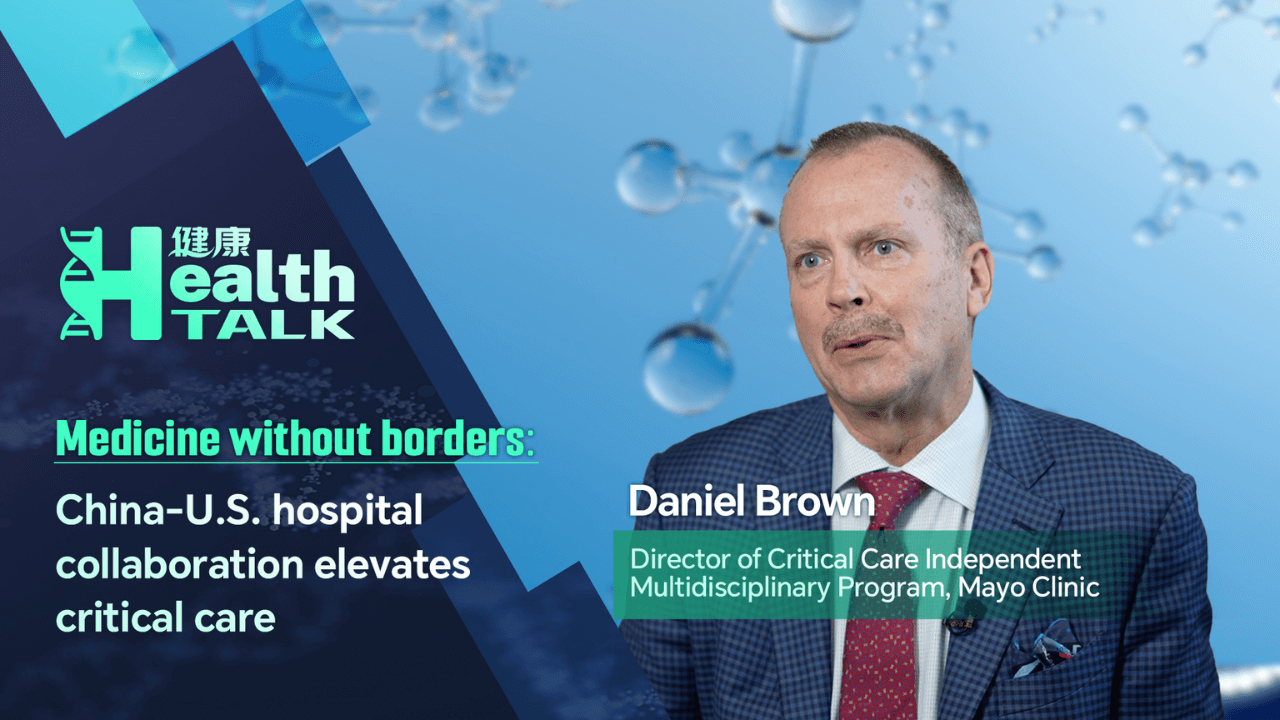
BEIJING, CHINA — China and the United States are charting a new chapter in global health collaboration, as West China Hospital of Sichuan University and the Mayo Clinic deepen their joint efforts to advance critical care medicine, according to a report from CGTN.
For U.S. healthcare providers, the partnership offers more than cultural exchange; it provides insight into new models of scaling intensive care, managing high bed volumes, and accelerating innovation at a pace rarely seen in Western systems.
China’s ICU expansion offers a model for U.S. hospitals
Dr. Daniel Brown, director of the Critical Care Independent Multidisciplinary Program at Mayo Clinic, said China’s rapid progress in critical care has left “a strong impression on the international medical community,” highlighting the growing value of cross-border knowledge-sharing.
At the heart of this collaboration is an acknowledgment of China’s speed and coordination, qualities that U.S. hospitals often struggle to match.
Brown noted that China’s ability to scale critical care resources has been “astounding,” emphasizing, “We could not move that fast. We could not coordinate everything the way it is done here.”
He pointed to the country’s capacity to rally around a unified vision as “one of the strengths of Chinese medicine.”
For U.S. hospital leaders evaluating how to expand ICU capacity, streamline multidisciplinary workflows, or implement system-wide upgrades, China’s approach offers a real-world model of centralized decision-making and rapid deployment.
As U.S. systems deal with staff shortages, increasing numbers of patients, and higher expenses, lessons from China’s busy hospitals could help in planning strategies, like how to assign beds, use digital triage, and improve teamwork across different specialties.
The partnership already spans seven medical specialties and has involved more than 30 clinician exchanges, underscoring the depth of engagement.
The research exchange between the two hospitals has also opened new avenues for clinicians to analyze differences in patient management and adopt best practices that can be applied back home.
“We pick those things that make sense in our own practices and bring those back to us,” Brown said.
Shared patient-first values drive China-U.S. care model
Despite vast differences in healthcare structures, both sides share the same mission. “We want to help our patients. We look, and we place them as our primary focus,” Brown emphasized.
This shared value forms the foundation of a partnership designed not only to improve care delivery but also to humanize it.
For U.S. clinicians, the collaboration reinforces the idea that global partnerships can strengthen domestic practice. The Mayo Clinic has already implemented changes inspired by West China Hospital, demonstrating concrete value for U.S. providers seeking to refine protocols, validate methodologies, or rethink long-held assumptions.
Brown believes the global appetite for such cooperation will only grow.
“The more people we have working toward a common goal, the more likely and more rapidly we will achieve what we want to achieve,” he said.
As U.S. healthcare systems look for ways to modernize critical care, reduce operational bottlenecks, and elevate patient outcomes, the China–U.S. partnership offers a blueprint, one grounded in shared learning, humility, and the belief that medicine, at its core, knows no borders.







