
Firms blame AI for layoffs amid executive fear and uncertainty

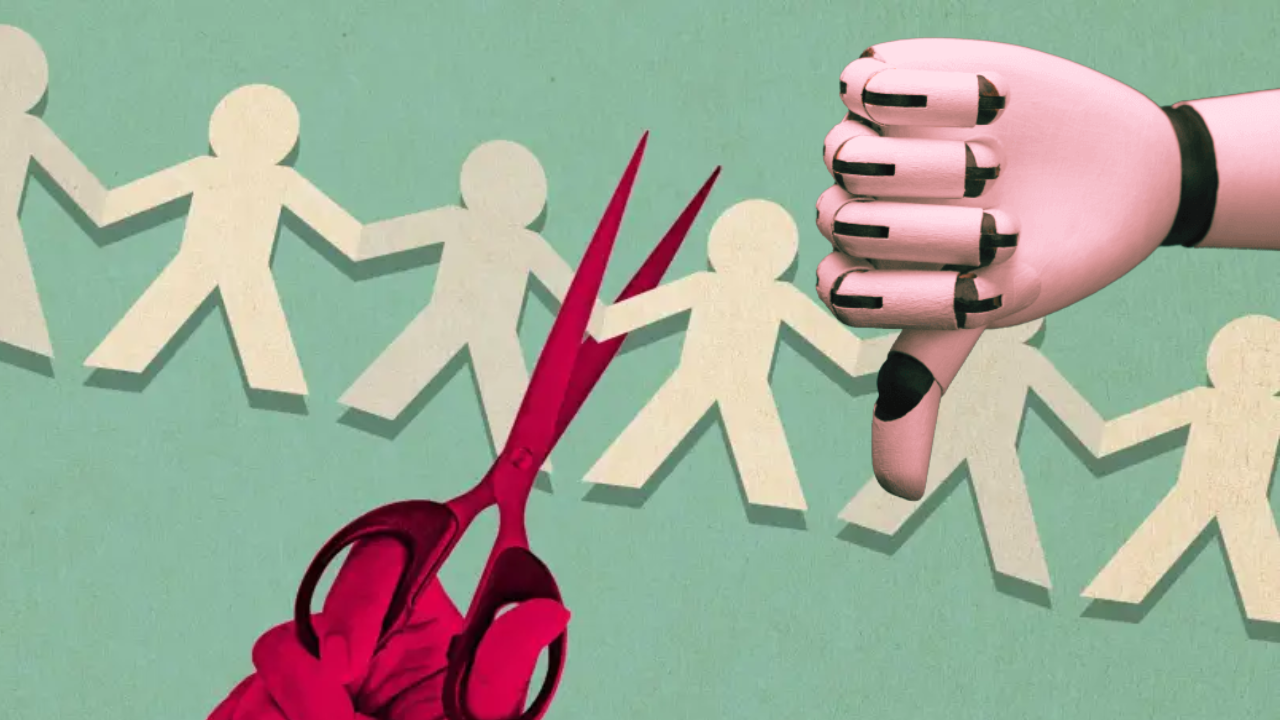
CAMBRIDGE, ENGLAND — Corporate leaders are using generative AI as a public pretext for job cuts, and the true catalyst is a deep-seated fear of making strategic missteps.
Thomas Roulet, an organizational sociologist and leadership professor at the University of Cambridge, highlighted the potential long-term stunting of worker development and career mobility in an interview with Business Insider.
“The broader perspective is that firms are reluctant to make any HR decisions with such a high level of uncertainty,” Roulet said.
Executive fear halts career growth
The report notes that technological disruption is not the main cause of the recent workforce downsizing, but rather an all-around corporate insecurity.
This fear has seen a general paralysis of HR decisions, especially in the United States, which not only covers the hiring and firing processes, but also the promotions, pay increases, and lateral hires.
This organizational stagnation has big implications for the labor force. Employee motivation is bound to decline when there are no evident ways of progression or approaches to create new opportunities within a company.
Amid a climate of profound economic uncertainty, corporate leaders are leveraging the narrative of an AI-driven future as a convenient pretext for layoffs. At the same time, the underlying reality is a paralysis of strategic HR decision-making born from executive fear.
AI narrative masks HR indecision
Companies are publicly justifying layoffs by stating that it is necessary to strategically switch to an AI-dominated future.
Large technology companies such as Meta, Workday, and HPE specifically attribute their staff layoffs to performance management or a restructuring of cost base to an AI-based approach, portraying the cuts as a way of future-proofing their companies.
Similarly, AI-native companies like xAI and Snorkel AI have cut roles in legacy or generalist functions while simultaneously expanding specialist AI teams.
However, layoffs at firms like PwC and Scale AI were attributed to traditional issues like low employee attrition, overhiring, and profitability, not AI integration.
While some firms cloak workforce reductions in the strategic veneer of an AI pivot, the persistence of traditional justifications like overhiring reveals that, for many, this remains a convenient narrative for necessary cost-cutting.
Related news
- Firms blame AI for layoffs, but data tells a different story · 30 Oct
- Elon Musk predicts work will be optional by 2045 due to AI, robotics · 25 Nov
- Leadership expert urges shift from control to connection for modern teams · 21 Oct
Disclosure: Outsource Accelerator uses AI tools in the backend of its editorial workflow. Every article is reviewed and verified by a human editor before publication.
Stay ahead of the outsourcing industry. Join thousands of business leaders who rely on Outsource Accelerator for the news, trends, and expert insights that matter. Subscribe to our free newsletter and never miss an update.








