
7 in 10 U.S. managers see Gen Z oversight as parenting: ResumeTemplates

WASHINGTON, UNITED STATES — A new survey by ResumeTemplates.com found that a majority of U.S. managers supervising Gen Z employees liken the experience to parenting or babysitting rather than providing professional guidance.
The July poll of 1,000 managers revealed that 68% say managing Gen Z feels like parenting, while 54% describe it as babysitting.
More than half (61%) report their Gen Z team members require frequent “hand-holding,” and 52% say they struggle to follow even basic instructions.
Two-thirds of managers check in with Gen Z employees at least twice daily, with one in five doing so four or more times each day.
Foundational workplace skills gap
Nine in 10 managers say they’ve had to teach Gen Z foundational workplace skills, or tasks typically expected to be known before entering a job. These include accepting feedback without taking it personally (59%), interacting appropriately with clients and coworkers (46%), multitasking effectively (45%), conflict management, and even email etiquette.
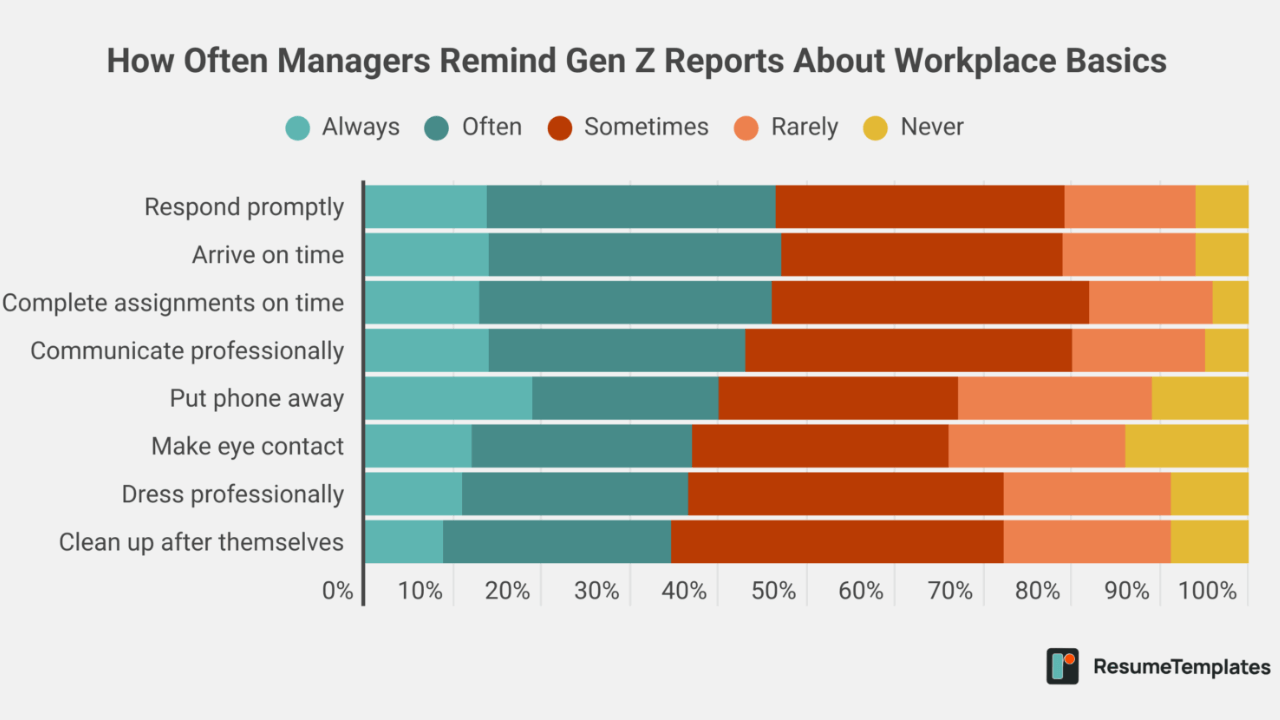
Many managers also remind Gen Z workers of basic workplace expectations, such as arriving on time (48%), putting away phones (41%), and dressing appropriately (37%).
“Gen Z’s entry into the workforce looked really different from previous generations because of the pandemic. Many had to take classes or internships online, so they missed out on receiving in-person training, experiencing casual learning opportunities, and observing basic workplace norms,” explained ResumeTemplates’ Chief Career Strategist Julia Toothacre.
“On top of that, many companies have cut back on onboarding and early career support due to reductions in human resources staff.”
Managers report frustrations with Gen Z work ethic
“Most of the time I feel like a babysitter trying to teach children lessons they refuse to learn. The worst challenges are time management and staying off their phones,” one anonymous manager said.
Another reported, “They act like I am their parent. They come to me with personal things that have no bearing on our workplace.”
Other managers expressed concern about work ethic, with one calling this generation “adults who still act like teenagers.”
Need for greater support, training
Toothacre warns that a lack of organizational resources for onboarding and training can heighten tensions. “When managers are stretched thin, it affects the whole team,” she noted, suggesting improved group training and better internship programs as ways to prepare young workers for professional life.
“Organizations need to do more to support managers, otherwise they risk burnout, frustration, and disengagement,” she added.







