
Gig workers worldwide face rising fraud, weak protections: TransUnion

ILLINOIS, UNITED STATES — Nearly one-third of gig workers in the United States have been defrauded by consumers, driving demands for stronger platform protections, while underreporting of incidents obscures the true scale of the problem, according to a new TransUnion Gig Economy report.
The survey, conducted in collaboration with research provider Toluna, surveyed 1,012 current, former, or prospective gig workers. It found that these fraudulent acts are a primary catalyst for workers demanding enhanced protections from the digital platforms they use.
“As the gig economy continues to expand, so do the complexities of maintaining trust and safety among the people and platforms that drive its growth,” the report notes.
Gig worker fraud and tip-baiting statistics
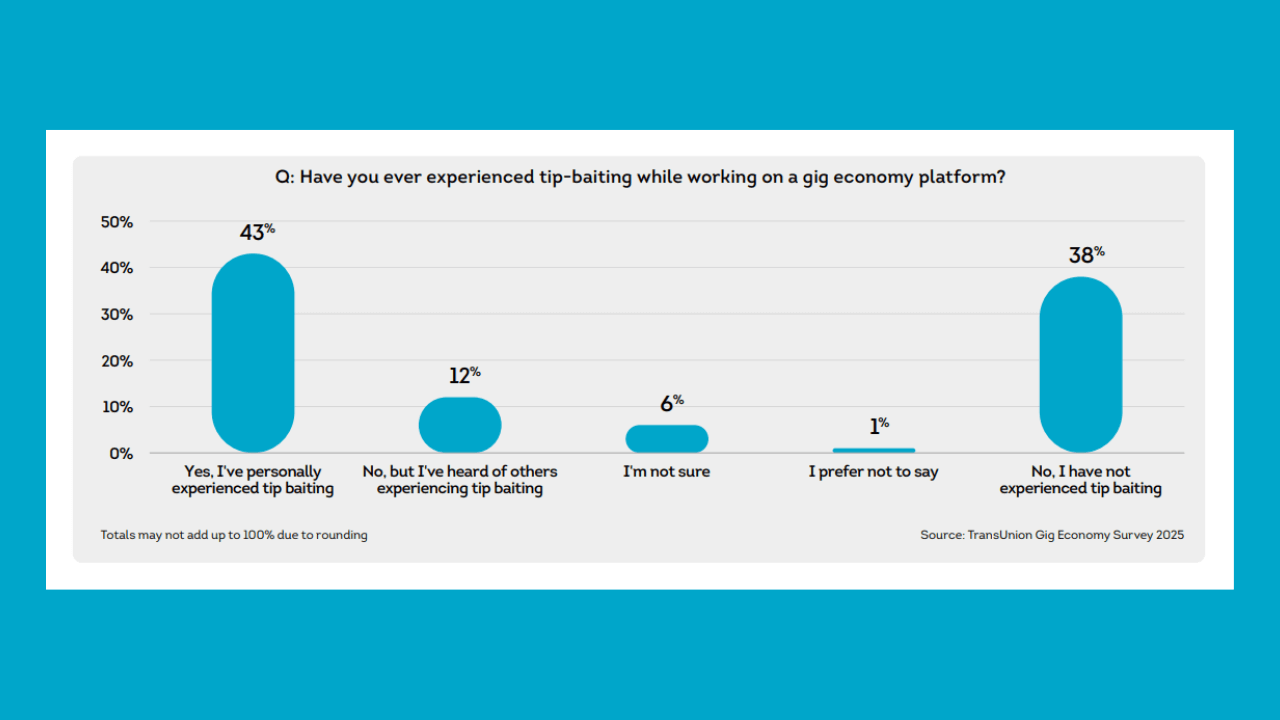
Overall, 34% of current and former gig workers reported being defrauded by a consumer while working. Outside of outright fraud, 43% claimed they were victims of so-called tip-baiting, in which a user offers a worker a huge tip but, after service delivery, dramatically reduces it.
These adverse experiences directly influence workers’ anticipated platform safety. A high percentage of earners, especially those who have been victimized in the past (64%), insist on tighter user background checks and tougher identity verification of users during sign-up and the elimination of bad users.
Interestingly enough, the workers who were victimized before (32%) are less likely to anticipate in-app safety measures, such as emergency buttons, to keep them safe, which implies a paradigm shift in trust to preventative identity tools rather than reactive ones.
The report stressed, “A secure and trustworthy experience for all parties involved isn’t just a nice-to-have — it’s essential for personal safety, customer satisfaction and long-term economic sustainability.”
Safety incident reporting gaps
A critical finding is the significant gap between incidents experienced and those officially reported, preventing platforms from accurately assessing risks.
Only 69% of workers reported incidents to the platform provider, and merely 49% involved law enforcement. This underreporting can lead to a skewed perspective, resulting in safety features that inadequately address real problems or onboarding gaps that erode trust.
The survey notes that this reporting gap may be compounded by economic pressure. Twenty-five percent of respondents expressed a desire to quit gig work after a fraud incident but felt unable to do so due to financial need.
“When workers underreport incidents, platform operators can develop a skewed perspective of the pervasiveness of certain issues,” the report notes.
This economic dependency may force workers to self-censor reports to platforms, further distorting data and perpetuating unsafe conditions as they continue working out of necessity.
Account renting and fake profiles threaten platforms
The report details challenges to platform integrity from both sides of the marketplace. On one hand, 45% of surveyed workers admitted to renting or selling their gig work accounts—a practice typically banned by terms of service—with Millennial and Gen Z workers most likely to engage in it, potentially due to economic pressures.
On the other hand, workers also face threats from malicious users: one-third encounter fake user accounts, and 30% see counterfeit listings.
“Renting and selling worker accounts places consumers, workers, and platforms at risk. Allowing someone who has not been vetted and verified to provide services leaves consumers prone to fraud and physical danger, and it exposes the account owner and the platform to liability for any harm that occurs,” said Colleen Thiry, Director of TransUnion’s gig economy business.
Despite these issues, platforms may lack strong incentives to aggressively combat fake accounts. The survey found that a platform’s reputation for counterfeit users and listings ranks low among factors workers consider when choosing where to work. Only 29% of workers ranked “reviews from platform workers” in their top three deciding factors.
Furthermore, less than half (45%) of workers felt their platforms have very effective identity verification processes to prevent unauthorized users.
Future of trust in the gig economy
The systemic underreporting of fraud and safety incidents, while workers remain economically tethered to these platforms, creates a distorted risk that threatens to erode the very trust and sustainability upon which the future of the gig economy depends.
To build sustainable trust, platforms must pivot from reactive safeguards to proactive, data-driven verification of all parties, leveraging consortium intelligence to preempt fraud while marketing these robust protections as a core competitive advantage to retain and recruit a wary workforce.







