
Greenland rejects Trump’s hospital ship offer, backs public healthcare

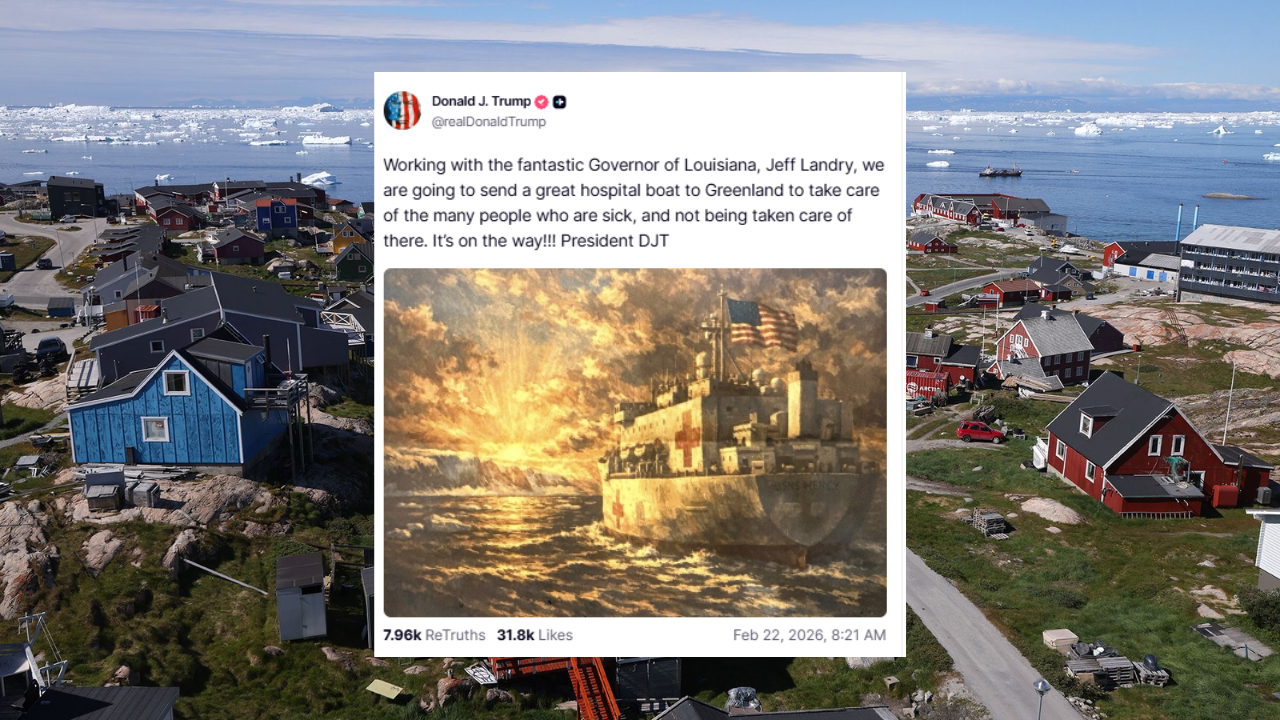
GREENLAND, DENMARK — Greenland’s prime minister has firmly rejected President Donald Trump’s pledge to send a United States Navy hospital ship to the Arctic island, defending the territory’s universal healthcare system and pushing back against what he described as unilateral political theatrics, Common Dreams reports.
“It will be a no thanks from here,” Prime Minister Jens-Frederik Nielsen wrote on a Facebook post after Trump announced on Truth Social that a great hospital boat was “on the way” to care for “the many people who are sick, and not being taken care of there.”
Nielsen countered that Greenland’s healthcare model is both intentional and foundational.
“We have a public health service where treatment is free for citizens. It is a conscious choice. And a fundamental part of our society,” he said.
“It is not like that in the USA, where it costs money to go to the doctor,” he added.
Trump’s post contained an image that seemed to be AI-generated, that depicted the USNS Mercy hospital ship that belongs to the U.S. Navy. The USNS Mercy functions as a Mercy-class hospital ship, which the U.S. Navy operates through its Military Sealift Command to provide surgical medical services from its floating medical facility.
However, maritime reports indicated the 1,000-bed vessel has been undergoing scheduled maintenance in Mobile, Alabama.
The exchange follows months of diplomatic strain over Trump’s interest in expanding U.S. access and control in Greenland, which remains a self-governing territory within the Kingdom of Denmark.
Universal healthcare vs U.S. medical system
For U.S. healthcare leaders, the entire episode reflects a glaring divide between two systems.
Danish Prime Minister Mette Frederiksen said she was “happy to live in a country where there is free and equal access to health care for everyone,” adding that it is “not insurance and wealth that determine whether you get proper treatment.”
“The same approach is followed in Greenland,” she added.
Danish Defense Minister Troels Lund Poulsen said that Greenlanders receive the healthcare they need either locally or in Denmark for specialized care.
“It’s not as if there’s a need for a special healthcare initiative in Greenland,” he said.
The current situation shows how international healthcare systems treat access to medical services as a basic public right, while U.S. hospitals and clinics deal with reimbursement problems and their uncollected patient expenses, and the loss of Affordable Care Act subsidies, which used to support their operations.
The U.S. frequently ranks behind other wealthy nations on access and health outcomes, which drives providers and policymakers to demand systemwide changes in healthcare delivery.
Building sustainable healthcare over symbolic U.S. aid
Greenland’s system is not without challenges. Officials acknowledge staffing shortages in remote areas—a global hurdle that frequently drives healthcare networks to explore telehealth and offshore clinical support solutions—and Greenlandic lawmaker Aaja Chemnitz noted the territory’s healthcare system is “deeply challenged.”
But she argued that sustainable solutions lie in closer cooperation with Denmark, “Not the United States, which has its own problems with healthcare.”
Chemnitz dismissed the ship proposal as symbolic. “It seems rather desperate and does not contribute to the permanent and sustainable strengthening of the healthcare system that we need,” she said.
For American healthcare leaders, the debate raises broader questions about preparedness, infrastructure investments and the optics of emergency deployments versus long-term system building, at home and abroad.







