
Global KPO market to hit $271Bn by 2031: Research and Markets

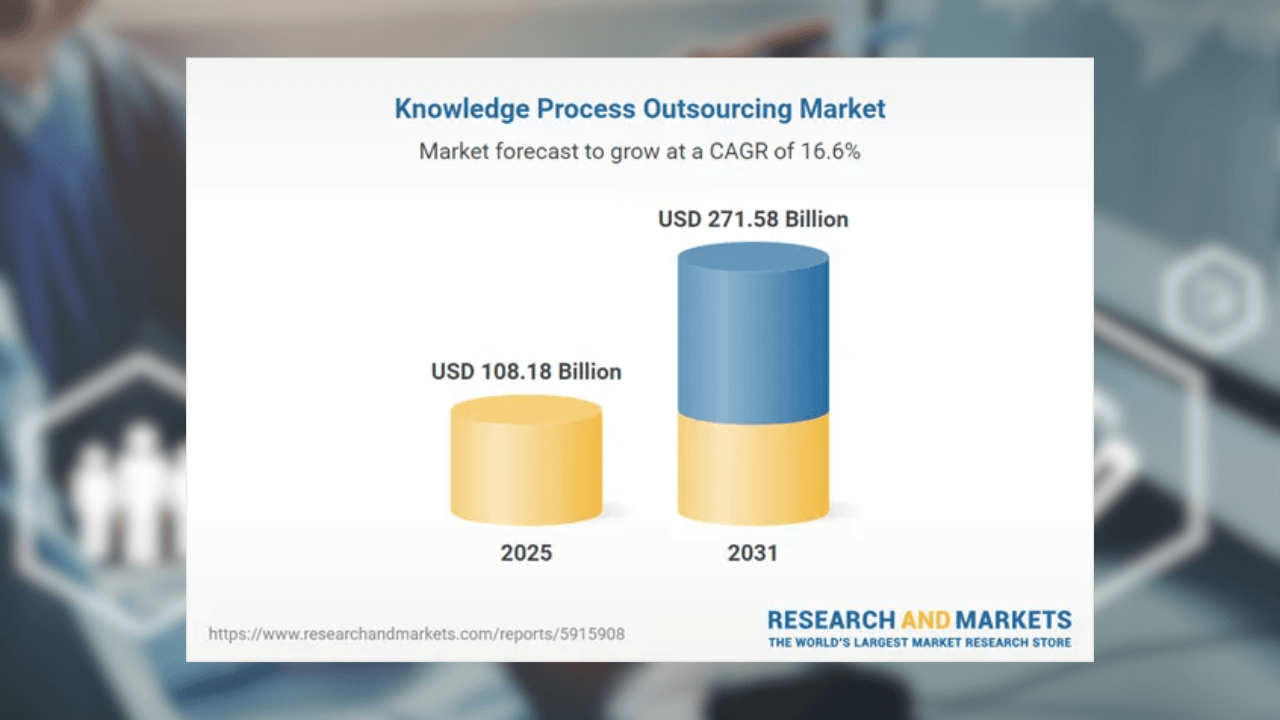
DUBLIN, IRELAND — The global knowledge process outsourcing (KPO) market is poised for rapid expansion, projected to grow from US$108.18 billion in 2025 to US$271.58 billion by 2031, according to a new forecast from Research and Markets.
The rise in demand for specialized analytics services, finance, and legal expertise is driving businesses to hire external experts who help them achieve cost savings and operational efficiency improvements.
AI, finance, and legal services fuel KPO demand
KPO is differentiated from conventional outsourcing by primarily handling highly-targeted, information-generating tasks such as market research, data analytics, and legal support.
“Businesses also leverage KPO to boost scalability and concentrate internal efforts on core strengths to support growth,” the report noted.
Artificial intelligence (AI) and machine learning technology implementation drives organizations to develop automated systems for handling contract assessment, financial analysis, and data extraction tasks.
“Seventy-seven percent of tax and legal experts anticipate that AI will exert a high or transformational influence on their roles within five years,” the report stated.
Financial services are a major engine spurring growth, as corporations increasingly turn to outside experts for regulatory compliance and advanced data analytics.
The report cites JPMorgan Chase’s US$17 billion technology budget in 2024 as evidence of the scale of operations requiring expert oversight.
Outsourcing hubs like India and the Philippines continue to see significant revenue growth, with Nasscom reporting US$48.9 billion in Indian business process management revenue and US$38 billion generated in the Philippines in 2024.
Talent gaps, rising costs reshape delivery models
The sector experiences strong growth yet encounters multiple challenges. NASSCOM reports that India currently faces a 25 percent talent shortage because skilled professionals who can perform complex knowledge-intensive tasks are in short supply.
Rising labor costs and competition for qualified staff may limit providers’ ability to scale and meet increasing demand.
The report also identifies emerging nearshore and hybrid delivery frameworks as a strategic trend. By forming global capability centers (GCCs), companies combine in-house oversight with offshore execution, ensuring greater alignment with corporate objectives.
Thomson Reuters reported that 71 percent of corporate leaders now consider environmental, social, and governance (ESG) investments as a competitive advantage because businesses increasingly require environmental, social, and governance requirements and sustainability reports.
The KPO market expansion will provide companies with a competitive advantage when they successfully adopt AI together with specialized employees and new delivery methods.
The sector’s growth proves that knowledge-intensive outsourcing has become more valuable while businesses need solutions that help them adopt new technologies and fill workforce shortages in today’s complex global market.







