
U.S. lawmakers urge higher loan caps for advanced nursing students

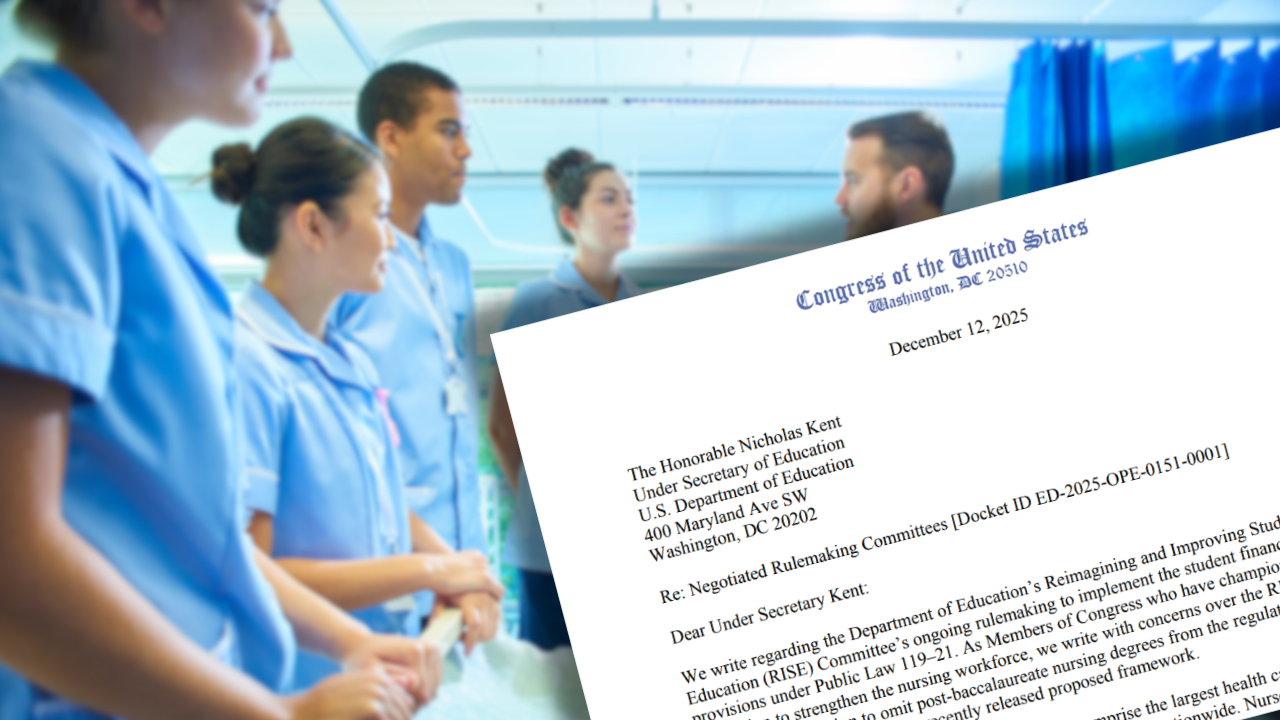
ILLINOIS, UNITED STATES — A bipartisan group of more than 140 members of the United States Congress is urging the Department of Education to reconsider proposed federal student loan rules that could limit borrowing for advanced nursing students, warning the changes could further strain the nation’s healthcare workforce.
According to a report from Becker’s Hospital Review, lawmakers say the reforms, passed under the One Big Beautiful Bill Act, risk reducing enrollment in critical nursing programs at a time when hospitals, clinics, and health systems nationwide face staffing shortages.
Congress urges ‘professional degree’ status for advanced nursing
In a December 12 letter to Nicholas Kent, undersecretary of education, lawmakers called on the department to revise its definition of professional degrees to include post-baccalaureate nursing programs.
Under the new rules, professional degree students can borrow up to $200,000, but the Education Department’s proposed definition excludes nursing, capping graduate nursing students at $100,000.
“Classifying these programs as graduate programs would result in these students having to take out additional student loans to cover the remainder of their tuition, which will limit the ability for students to complete their advanced degree,” the letter stated.
Lawmakers stressed that advanced nursing programs require licensure and meet the department’s own criteria for professional degrees, making the current classification inconsistent with federal guidelines.
Potential impact on U.S. healthcare systems
Healthcare providers warn that lower borrowing limits could have ripple effects across hospitals, clinics, and health systems, particularly in primary care, anesthesia, and rural health settings.
“At a time when our nation is facing a healthcare shortage, especially in primary care, now is not the time to cut off the student pipeline to these programs,” the lawmakers wrote.
Industry experts note that restricting access to advanced nursing programs could slow the training of nurse practitioners, nurse anesthetists, and other specialized nurses, limiting hospitals’ ability to fill critical roles.
Clinics and rural health facilities, which already struggle to attract advanced practice nurses, could see patient care delayed or reduced.
The Education Department is preparing a proposed rule at the advice of the advisory committee convened by the department and is expected to finalize the rule in 2026.
Meanwhile, elected officials and healthcare interests are urging prompt changes to ensure graduate nursing program participants receive effective updates to ensure the continued flow of federal assistance to the next generation of expert nurses in the U.S.







