
Philippines BPOs race to upskill in AI age, says IBPAP chief

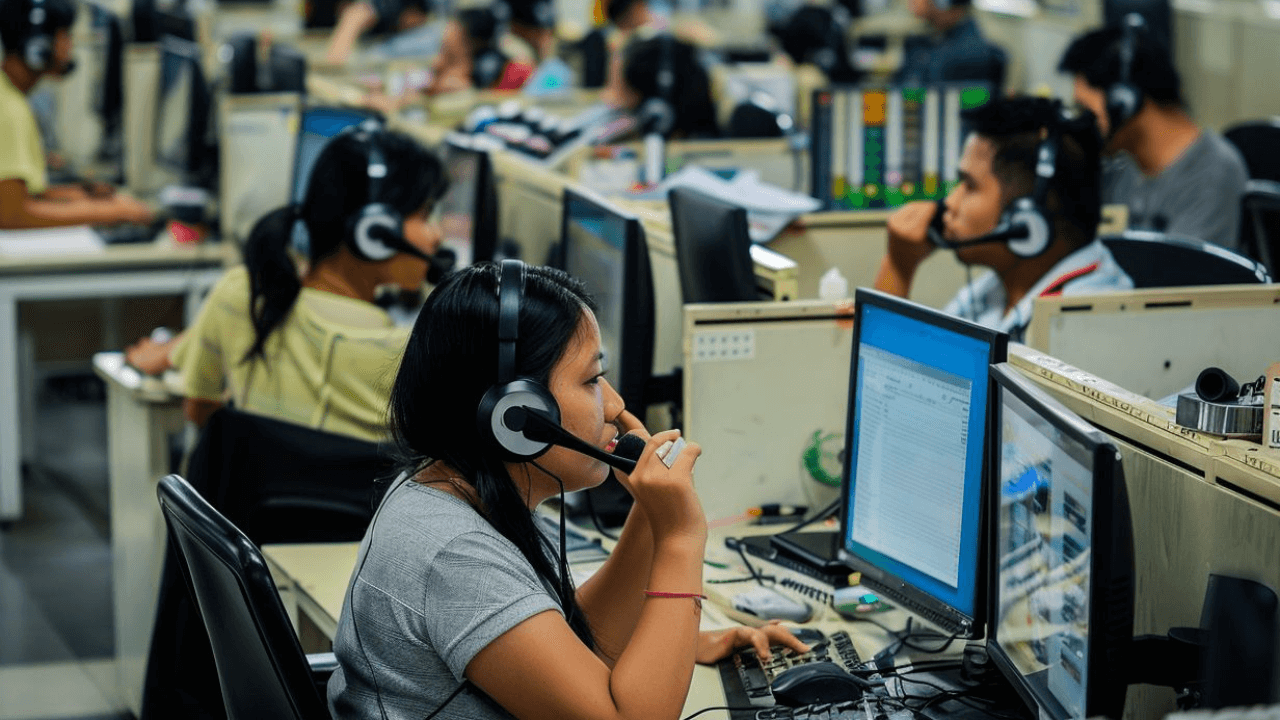
- Philippine IT-BPM revenue reached $40 billion in 2025
- The sector created 80,000 new jobs
- About 1.9 million digital Filipino workers power the industry
- It accounts for 8.5% of GDP, with $42 billion targeted for 2026
MANILA, PHILIPPINES — The Philippine business process outsourcing (BPO) industry, long powered by call centers and back-office services, is undergoing a significant transformation as artificial intelligence (AI) reshapes global work.
In an interview with Bilyornayo News Channel, Jack Madrid, president and CEO of IBPAP, said the sector reached US$40 billion in revenue in 2025, creating 80,000 new jobs. But he warned that the model that fueled decades of expansion must evolve.
According to the IT and Business Process Association of the Philippines (IBPAP), “Our industry is in a transformative phase. What took us to where we are today will not be enough to take us where we want to be,” Madrid said.
From labor arbitrage to capability arbitrage
The Philippines continues to be one of the world’s leading outsourcing hubs, with around 1.9 million digital Filipino workers powering the industry. It also accounts for 8.5% of the country’s gross domestic product (GDP), and the sector is aiming to grow its revenues to US$42 billion in 2026.
Madrid said the shift is structural. “Where we began as call center, contact center, voice services, relied on our ability to hire people at scale,” he said, describing the earlier model as “more about labor arbitrage.”
With AI, he added, the sector is moving toward “a capability arbitrage situation.”
Generative AI has already begun augmenting frontline agents.
“It began with GenAI, which is really about providing our agents with data faster and in a more efficient way, and we found that GenAI has augmented the average performing agent,” Madrid said.
The result, he noted, is “much higher customer experience and satisfaction.”
Agentic AI goes further. “Agentic AI is more autonomous. If you train it and build it properly, it will be capable of managing an entire workflow, hopefully with a human still at the core managing this team of agents,” he said.
BPO upskilling, GCC growth and global competition
As automation deepens, Madrid urges workers to adapt. “Learn how to work with AI, rather than worry about your job being disrupted by AI,” he said.
“Never before have the digital Filipino workers’ skills of communication, comprehension, problem-solving, empathy [been] more important than [they are] in this age of AI,” Madrid added.
Growth opportunities are emerging in higher-value services, including global capability centers (GCCs) in banking, financial services, and healthcare. Still, competition is intensifying from India and newer destinations such as Poland, Egypt, and Vietnam.
Madrid identified talent upskilling as the biggest opportunity and “the ease of doing business” as the biggest risk.
For the global outsourcing industry, the Philippines’ pivot reflects a broader reckoning: scale alone is no longer enough. As AI takes on routine workflows, countries that pair technology adoption with human-centered skills and regulatory stability are likely to capture the next wave of high-value, knowledge-driven work.
Related news
- BPO industry advances UN SDGs with climate focus in 2025 · 3 Nov 2025
- Philippines IT-BPM SMEs tap AI to boost productivity, skills: study · 24 Feb
- AI-powered CXA reshapes contact center operations model · 17 Apr
Disclosure: Outsource Accelerator uses AI tools in the backend of its editorial workflow. Every article is reviewed and verified by a human editor before publication.
Stay ahead of the outsourcing industry. Join thousands of business leaders who rely on Outsource Accelerator for the news, trends, and expert insights that matter. Subscribe to our free newsletter and never miss an update.








