
Quess builds an Indo-Japan corridor for India GCCs

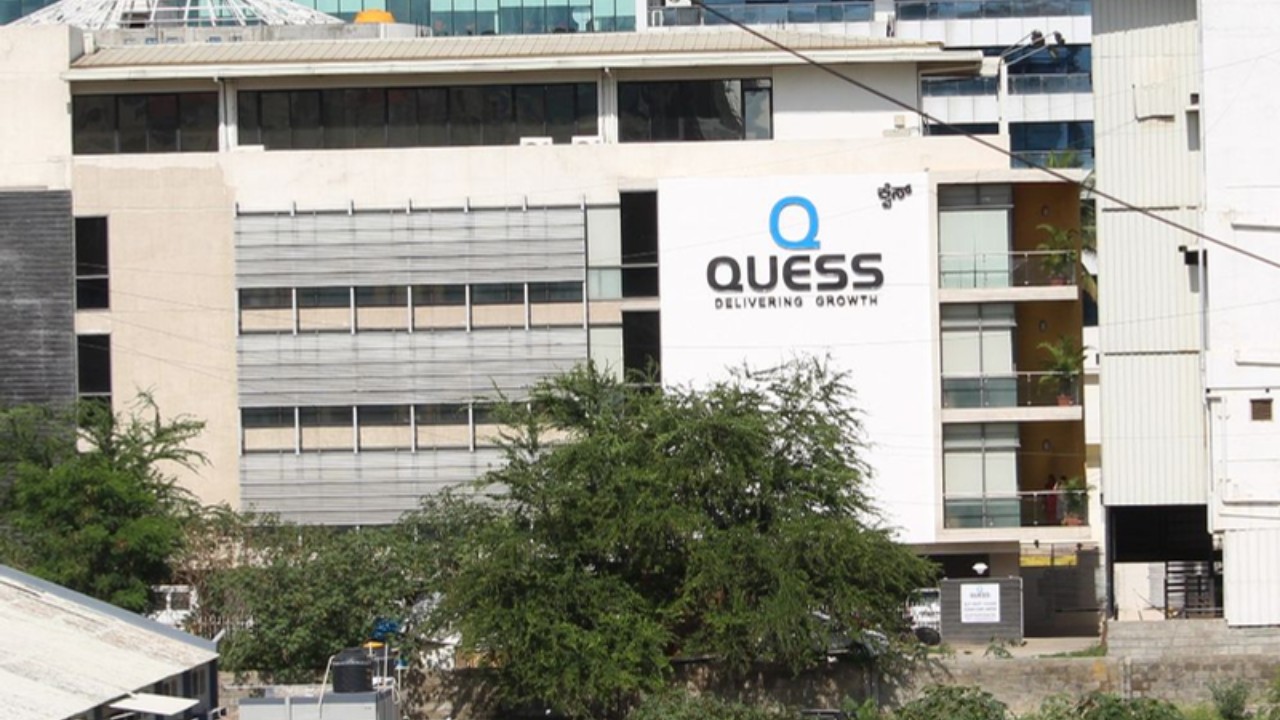
- Quess formed an Indo-Japan GCC corridor with IGS and Indo-Pacific Advisory
- Japan faces a shortfall of 790,000 IT and engineering professionals by 2030
- Quess employs 479,000 people across eight countries
- Japan has committed 5 trillion yen of investment in India by 2027
KARNATAKA, INDIA — Quess International Services has formed a three-party strategic collaboration with Japan’s Institution for a Global Society (IGS) and Singapore-headquartered Indo-Pacific Advisory (IPA) to build a structured Indo-Japan GCC Corridor — a managed entry pathway for Japanese enterprises to establish and scale Global Capability Centers (GCC) in India across AI, engineering, cybersecurity, BFSI, and digital transformation.
The corridor targets Japan’s projected shortfall of 790,000 IT and engineering professionals by 2030, with over 70% of Japanese firms already citing acute demand for cloud, AI, and machine learning capabilities.
Japan’s 790K IT shortfall and aging workforce drive structural India GCC demand
According to a report from Business Standard, the partnership combines Quess Corp’s GCC execution and workforce capability — 479,000 employees across eight countries, 2,200+ clients — with IGS’s deep Japanese market access and IPA’s cross-border advisory expertise to address the three friction points that have historically slowed Japanese enterprise India entry: cultural navigation, regulatory complexity, and talent sourcing at speed.
The three-party structure is purpose-built for the full GCC lifecycle — from market assessment and pilot team to scaled operations — distributing Japan-side cultural knowledge, India market navigation, and workforce execution across three specialists rather than asking any one party to deliver all three.
Japan has committed to investing 5 trillion yen in India by 2027, with a bilateral agreement targeting 10 trillion yen in private investment over the next decade — the government-level architecture that gives the Quess-IGS-IPA corridor institutional momentum alongside its commercial mechanics.
“As we enter the era of AI agents, Japanese companies find themselves at a crossroads — a shortage of the advanced talent needed to execute corporate strategy, compounded by a shrinking and aging workforce,” said Masahiro Fukuhara, Founder and CEO, Institution for a Global Society.
Indo-Japan bilateral framework provides institutional backing for GCC corridor launch
The corridor supports Japanese enterprises across AI, cybersecurity, engineering, BFSI, and digital transformation — the five sectors where Japan’s 790,000-professional shortfall is most acute and where India’s GCC talent base is already most developed.
Japan-India technology collaboration has accelerated alongside the bilateral investment commitment, with Indian aerospace, semiconductor, and AI talent increasingly being matched to Japanese enterprise demand through both formal and informal corridors — the Quess-IGS-IPA structure is the first purpose-built managed corridor to formalize that matching at GCC scale.
For Japanese enterprises evaluating India market entry, the corridor addresses the risk profile that has made India a slower choice than Southeast Asian alternatives — by integrating Japanese business culture expertise, Singapore-based advisory infrastructure, and India’s largest staffing firm into a single managed pathway.
The Quess-IGS-IPA corridor formalizes what informal Japan-India enterprise interest has lacked: a structured pathway that reduces the Japan-to-India GCC timeline from a multi-year exploratory process to a managed market entry with defined execution milestones.
“Through this collaboration, we are establishing a structured Indo–Japan GCC corridor that enables Japanese companies to build and scale operations in India, while creating meaningful, high-skilled employment opportunities for Indian professionals,” said Lohit Bhatia, Executive Director and Group CEO, Quess Corp.
For BPO and outsourcing operators in India, the Quess Indo-Japan GCC Corridor formalizes a bilateral technology axis that has been building informally for years — and Japan’s 790,000-professional IT shortfall is large enough to support multiple simultaneous GCC entry corridors, not just the one Quess is opening.
Related news
- Japan now India’s top GCC contributor in Asia: Deloitte · 8 Jul
- AI could replace 80% of India’s outsourcing jobs, Dubai tycoon warns · 4 Feb
- India IT-BPM sector seeks labor clarity, AI push in 2026 budget · 29 Jan
Disclosure: Outsource Accelerator uses AI tools in the backend of its editorial workflow. Every article is reviewed and verified by a human editor before publication.
Stay ahead of the outsourcing industry. Join thousands of business leaders who rely on Outsource Accelerator for the news, trends, and expert insights that matter. Subscribe to our free newsletter and never miss an update.








