
Salesforce Agentforce launch at enterprise connect upends BPO CCaaS

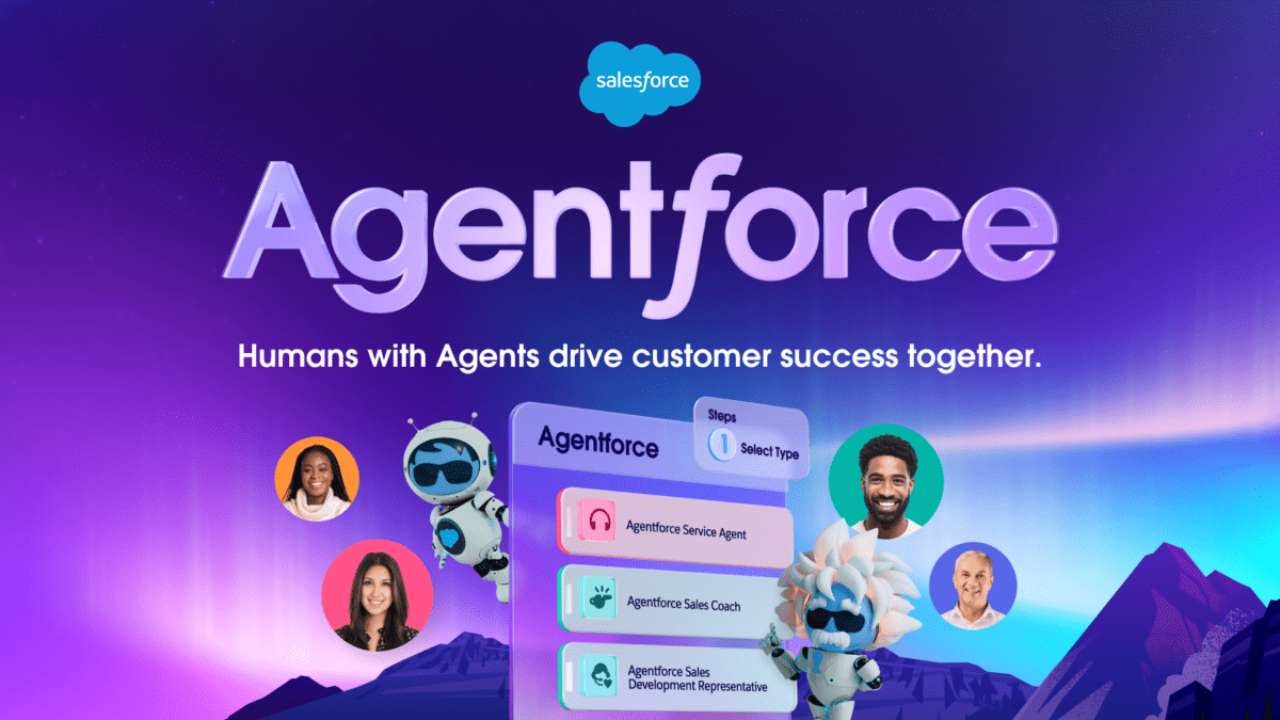
NEVADA, UNITED STATES — Salesforce’s launch of Agentforce, a native CCaaS platform, at Enterprise Connect 2026 is prompting business process outsourcing (BPOs) to rethink strategies reliant on third-party contact center software, SalesforceDevops reports.
The conference, held March 10–12 at Caesars Forum with over 2,700 attendees, marked a pivotal week as moves by Amazon Web Services, Zoom, and RingCentral accelerate the convergence of CRM, CCaaS, and cloud infrastructure into unified stacks.
Salesforce upends the CCaaS partnership model
The defining announcement of Enterprise Connect 2026 was Salesforce’s general availability of Agentforce Contact Center, a platform that natively unifies voice, digital channels, customer relationship management (CRM) data, and artificial intelligence (AI) agents in a single system.
The product represents a 14-year transition: from the launch of Open CTI in 2012 to what SalesforceDevops.net senior industry analyst Vernon Keenan described bluntly as the moment Salesforce “became a contact center company.”
The practical implication for BPOs is acute. Salesforce currently maintains relationships with 17 contact centre vendors through its ecosystem, yet now competes directly with those same partners.
As BC Strategies observed in its post-event analysis, the Agentforce announcement is “already influencing vendor strategies and positioning” — combining the CRM system of record with the CCaaS system of engagement in a single proprietary stack.
BPO firms that have built service delivery around platform-agnostic contact center stacks must now assess whether enterprise clients will consolidate onto Salesforce, AWS, or Microsoft, bypassing the outsourcer’s platform layer entirely.
Hyperscalers compounded that pressure. According to Futurum Group’s post-conference assessment, companies such as AWS and Microsoft are embedding contact center and customer engagement capabilities directly into their broader cloud and AI platforms — forcing traditional CCaaS vendors to compete not only with one another but with cloud infrastructure giants.
Salesforce’s move is separately covered in detail by Outsource Accelerator’s reporting on the Agentforce Contact Center launch and its implications for the partner ecosystem.
Agentic AI forces a BPO pricing reckoning
Enterprise Connect 2026 also surfaced a deeper commercial question that extends well beyond technology selection.
Opus Research analysts Ian Jacobs and Peter Headrick identified at the conference that in an agentic AI era, legacy per-seat and per-minute pricing models “don’t appear long for this world” — and that the industry needs frank conversations about value-based pricing and measurable ROI.
For BPOs that still price primarily by FTE headcount, that pressure is existential: the industry is already shifting away from headcount-based billing toward outcome- and consumption-based commercial models, a trend documented across major outsourcing contracts.
Data governance added a further dimension. Data sovereignty surfaced repeatedly at the event, with enterprises increasingly focused on controlling and governing the voice, messaging, and interaction data that powers AI systems.
For BPOs handling sensitive client data across multi-tenant environments, the tension between AI ambition and compliance obligation represents a governance challenge as much as a technology one — particularly as clients demand tighter control before committing to AI-powered CX deployments.
The conference’s overarching signal — that the industry has shifted its debate from AI capability to deployment, governance, and measurable ROI — maps directly onto the mounting pressure BPOs face as agentic AI reshapes the outsourcing sector.







