
AI, tech to drive U.S. healthcare growth amid 2026 pressures: McKinsey

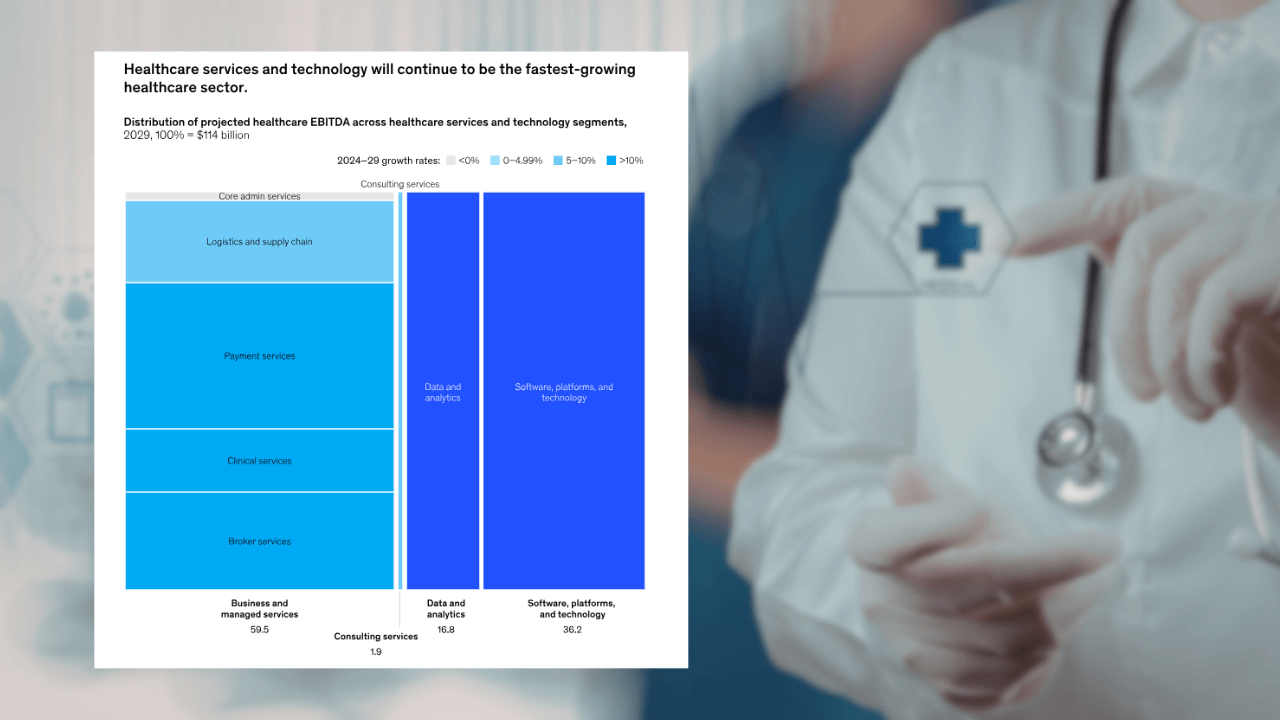
NEW YORK, UNITED STATES — As the United States healthcare system heads into 2026, providers are bracing for financial pressures while new technology and artificial intelligence (AI) promise growth opportunities.
According to an industry outlook from McKinsey & Company, hospitals, clinics, and health systems face rising uncompensated care, policy-driven enrollment shifts, and persistent cost challenges, but segments such as health services and technology (HST), specialty pharmacy, and ambulatory care offer a path forward.
Financial headwinds for U.S. healthcare
The U.S. healthcare system continues to operate under tight margins.
“Industry EBITDA as a percentage of national health expenditures (NHE) fell from 11.2 percent in 2019 to 8.9 percent in 2024,” the report noted.
“Payers and providers have borne the brunt of the decline to date and will continue to feel financial pressure in the immediate future,” the report added.
Hospitals and clinics, in particular, may face further margin erosion from changes in federal policy, such as site neutrality rules, and rising uncompensated care stemming from Medicaid and Affordable Care Act (ACA) disenrollment.
Providers can expect only modest EBITDA growth in the near term, with projections of just 1 percent annual growth from 2024 to 2027.
Yet segments like ambulatory surgery centers (ASCs), urgent care, home health, and hospice are expected to perform strongly.
The report emphasized that “post-acute and outpatient care continue as bright spots supported by segments such as home health, hospice, and ambulatory surgery centers (ASCs), with an aging population and continued site-of-care shifts fueling growth.”
Technology and AI reshape healthcare delivery
While traditional revenue sources face pressure, technology is emerging as a key growth driver.
HST is projected to grow faster than any other sector, fueled by AI adoption, outsourcing of administrative functions, and data-driven solutions.
“The increasing role of [GenAI]… is already seeing rapid adoption,” the report stated, citing examples like ambient AI medical scribing, which is being implemented by roughly 10 percent of U.S. physicians.
Federal initiatives such as the Rural Health Transformation Program are also supporting AI and telehealth adoption, providing funding to help states and rural providers implement innovative solutions.
For healthcare providers, it signifies the possibility of cutting down on administrative tasks, increasing clinical efficiency, and the range of services provided, with no increase in hiring-related costs.
Specialty pharmacy is another area of robust growth, with ambulatory infusion and hospital specialty pharmacy segments expected to expand at annual rates of 9 percent and 21 percent, respectively, through 2029.
Innovative therapies and new pricing models are reshaping costs and creating both challenges and opportunities for hospital pharmacies and clinics.
Healthcare leaders, the report concludes, must rethink traditional care models and embrace technology.
“Healthcare leaders must rethink traditional models, improve performance, and embrace technology to remain competitive,” the report stated.
Organizations that invest strategically in AI, HST, and post-acute care will be best positioned to navigate financial pressures while capturing emerging growth opportunities.







