
U.S. home healthcare market to hit $210Bn by 2033: Renub Research

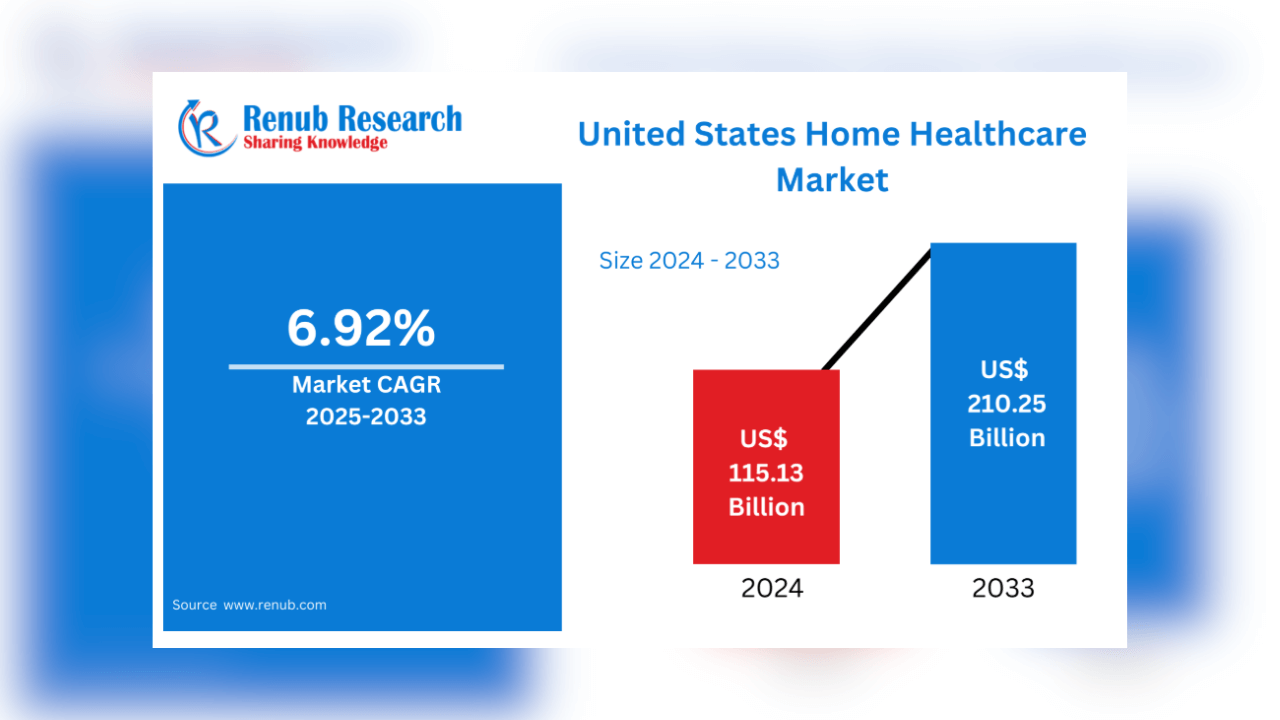
GEORGIA, UNITED STATES — The United States home healthcare market is on track to reach US$210.25 billion by 2033, expanding from US$115.13 billion in 2024, according to Renub Research.
The sector is projected to grow at a 6.92% compound annual growth rate (CAGR), driven by an aging population, rising chronic illnesses, and a strong shift toward home-based care.
For U.S. healthcare providers, hospitals, and clinics, the long-term implications are profound, reshaping care delivery models, reimbursement priorities, and patient expectations.
Aging population and costs drive shift to home care
The growing demand for home-based services is closely tied to demographic realities. As Renub Research notes, the U.S. is experiencing “a rapidly growing population of the elderly,” many of whom need continuous support for chronic illnesses such as cardiovascular disease, diabetes, arthritis, and respiratory conditions.
The report highlights that home healthcare is emerging as a cost-effective, comfortable, and personalized option compared to hospitalization or long-term care institutions.
This shift is already influencing hospital strategy. With inpatient care becoming increasingly expensive, hospitals are under pressure to reduce readmissions, accelerate care transitions, and manage chronic conditions more efficiently.
Home healthcare, now often supported by telehealth, remote monitoring, and connected devices, offers a scalable alternative.
According to the report, remote technologies enable healthcare professionals to provide quality care remotely, detect early warning signs, and act on time.
For health systems, the move could ease congestion, reduce operational costs, and support value-based care programs. Yet it also requires tighter coordination between hospitals, home health agencies, and payers to maintain continuity of care across settings.
Staff shortages, regulation strain U.S. home healthcare providers
Despite the growth, the home healthcare industry is still grappling with major staffing and regulatory issues, which in turn influence the operations of hospitals and clinics directly.
Renub Research points out that the main reason for this situation is the shortage of competent healthcare practitioners, which causes exhaustion, high turnover, and poor service quality.
The situation could limit hospitals in their decisions for safely transferring patients to home care, especially those who are in need of complex or high-acuity care.
Regulatory fragmentation presents another challenge. The report mentions complex regulatory environments and reimbursement issues right across the states and at the federal level, which impact both clinician and patient access.
Smaller agencies also suffer from cash flow problems caused by delayed reimbursements, which is something that hospitals need to be mindful of when working together or organizing post-acute services through partnerships.
Still, the report underscores the broader momentum: home healthcare is becoming an essential part of the American healthcare system, offering solutions that prioritize affordability, patient comfort, and long-term outcomes.
As hospitals, clinics, and health systems confront rising demand, integrating robust home-based care pathways may no longer be optional; it may be central to the future of U.S. healthcare delivery.







