
UK recruiters lose $22K a year to admin tasks: study

LONDON, UNITED KINGDOM — Recruiters in the United Kingdom are spending more than two full working days on manual tasks for every vacancy they fill, costing businesses roughly £17,000 ($22,000) per recruiter in lost productivity each year, according to new research by Totaljobs.
The online survey of 748 HR leaders and 2,025 jobseekers was conducted between June 25 and July 3. It found that recruiters devote an average of 17.7 hours per vacancy to administration. That translates to 8,450 hours annually across typical workloads.
“While recruiters spend valuable time aligning with stakeholders on their requirements and feedback after interviews, manual work such as scheduling, entering post-interview notes and data entry is taking up too much time,” the report notes.
Admin-heavy hiring slows recruitment
The breakdown of tasks highlights the burden of manual work:
- 3.6 hours per vacancy reviewing applications
- 2.5 hours scheduling interviews
- 3 hours processing post-interview notes
Totaljobs said 72% of recruiters believe screening irrelevant applications is the top factor slowing them down, followed closely by delays in stakeholder feedback (71%) and data-entry tasks (61%).
On average, recruiters manage four vacancies a month, adding up to nearly 850 hours of admin work annually. This inefficiency, the report warns, is becoming a major productivity barrier for UK businesses.
Candidate frustrations rising
The study also revealed that 28% of jobseekers have abandoned a hiring process due to unclear communication, lengthy interview rounds or delays. Candidates increasingly expect a smoother experience, with 77% calling for application trackers, 39% wanting more transparency on role requirements, 34% demanding faster feedback, and 30% asking for shorter overall processes.
Poor communication and slow timelines, the survey found, are leading to dropouts and lost talent.
AI adoption growing, but challenges remain
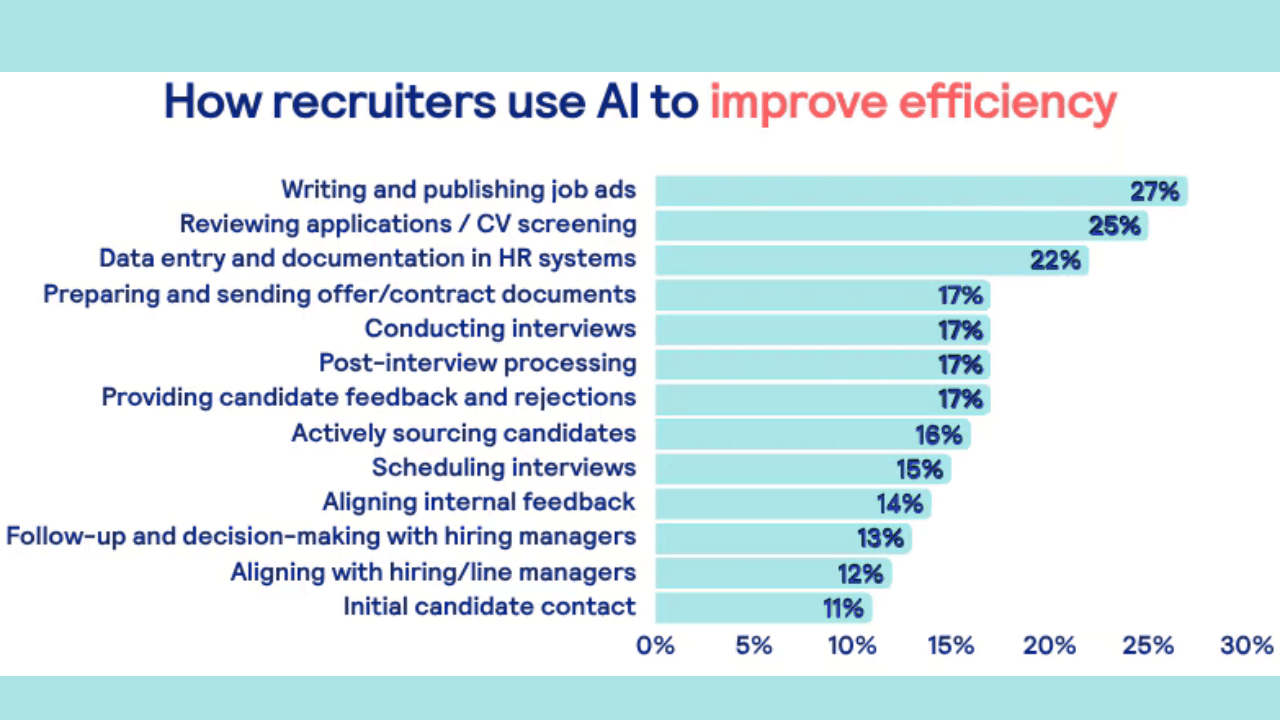
To cut back on admin, one in four recruiters is now using AI tools for tasks such as CV screening, scheduling and feedback. More than three-quarters (77%) believe AI can make hiring more efficient.
But adoption isn’t universal. Barriers include lack of awareness of available tools (37%), concerns about fairness (24%) and integration issues with existing HR systems (23%).“Considering concerns about bias and legal limitations, AI use must be always balanced with human decision-making,” the report adds.







