
TCS scales AI revenue to $2.6Bn as growth holds

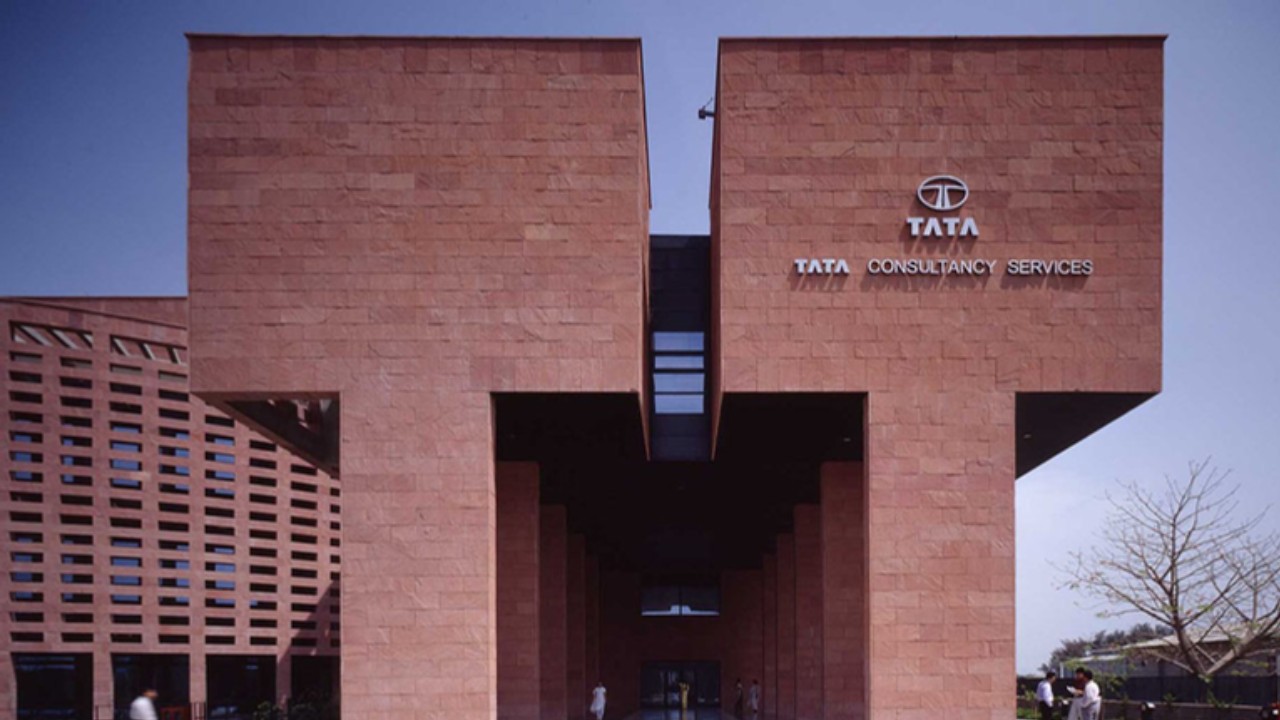
- TCS reported Q1 FY27 revenue of $7.55 billion, up 13.9%
- AI revenue scaled to a $2.6 billion annualized run rate
- The order book reached $9.5 billion
- An $800 million AI transformation deal with SKF anchors it
MUMBAI, INDIA — Tata Consultancy Services reported Q1 FY27 revenue of ₹72,275 crore (US$7.55 billion), up 13.9% year-on-year, with AI revenue scaling to a $2.6 billion annualized run rate, a $9.5 billion order book, and an $800 million AI-led transformation deal with SKF.
The contrarian data point in a week when Indian IT’s 46% market-cap correction and JP Morgan Underweight downgrades dominated financial headlines.
TCS Q1: 13.9% growth and $2.6B AI revenue rate
According to a report from Business Standard, the Q1 FY27 order book includes a landmark $800 million global AI-led transformation deal with SKF — redesigning the Swedish engineering company’s enterprise operations around what TCS describes as ‘an intelligent digital core’ that will make SKF an ‘AI-first industrial manufacturer,’ with TCS providing end-to-end global managed services covering infrastructure, applications, data, and connectivity.
The results land on July 9, five days after JP Morgan downgraded HCLTech and Wipro to Underweight and in the same week that Business Today aggregated India’s top five IT companies’ combined 46% market-cap decline — a sequential context that makes TCS’s 13.9% revenue growth and 9,300 net new employees added in Q1, its strongest quarterly hiring in more than three years, the data points that complicate a uniform compression narrative.
The TCS Q1 print is the polarizing data point: in the same week that the Indian IT market-cap correction reached its peak coverage, India’s largest IT services firm reported 13.9% revenue growth, added 9,300 employees, scaled AI revenue to $2.6 billion, and signed six AI mega-deals across the last five quarters.
“Q1 FY27 reflects continued growth momentum and the strength of our strategic positioning, despite geopolitical and macro-economic headwinds,” said K Krithivasan, Chief Executive Officer and Managing Director of TCS.
SKF’s $800M deal frames AI as enterprise operating system
TCS’s SKF mandate establishes AI as the ‘enterprise nervous system’ — harmonizing fragmented processes, data, and platforms into a self-learning operational backbone that drives predictive decision-making and autonomous optimization across SKF’s global industrial manufacturing operations, with end-to-end managed services encompassing infrastructure, applications, data, and global connectivity.
The $2.6 billion annualized AI revenue run rate — up from $2.3 billion in the prior period — reflects engagements moving beyond pilot projects into large-scale production deployments across banking, manufacturing, insurance and consumer businesses, a trajectory that directly contradicts the AI-demand-destruction narrative that dominated the same week’s market corrections.
Net profit of ₹13,349 crore (US$1.39 billion) rose 4.6% year-on-year, with an operating margin of 24% — down 130 basis points sequentially — and operating cash flow of ₹12,412 crore (US$1.30 billion) representing 93% of net profit, alongside a ₹12 (US$0.13) per share interim dividend with a July 15 record date.
The sector’s future is polarizing: TCS’s 13.9% growth and $9.5 billion order book sit alongside Wipro’s -33% year-to-date share decline and a sector-wide 46% market-cap correction — and both data sets are simultaneously true, with the AI transition compressing the sector at the median while rewarding operators who have moved fastest to production-scale AI delivery.
“As customers accelerate investments in AI, modernization, cybersecurity, sovereign cloud and platform simplification, our strong deal conversion, improving client mining and expanding ecosystem partnerships position TCS well to translate opportunity into sustained growth,” Krithivasan stated.
For business process outsourcing (BPO) operators and vendors tracking the AI transition in Indian IT, TCS’s Q1 FY27 print documents what the winning end of AI polarization looks like — 13.9% revenue growth, $2.6 billion in AI revenue, and an $800 million mandate that installs AI as the operational core of a global industrial manufacturer, not a productivity add-on at the margins of an existing IT contract.
Related news
- Corpshore launch world’s first multilingual AI talent platform · 9 Jun
- Wipro announces $1.56Bn buyback amid margin pressure · 16 Jul
- Corporate AI use surges, but safety measures lag behind: Infosys study · 15 Aug 2025
Disclosure: Outsource Accelerator uses AI tools in the backend of its editorial workflow. Every article is reviewed and verified by a human editor before publication.
Stay ahead of the outsourcing industry. Join thousands of business leaders who rely on Outsource Accelerator for the news, trends, and expert insights that matter. Subscribe to our free newsletter and never miss an update.








